How to grow potted sasanqua camellia? Detailed guide to care methods and precautions
Sasanqua camellia comes in a variety of flower colors, has a long blooming period, and combines gorgeous and delicate beauty. Its tree form is graceful, most of its branches spread horizontally, its shape is full, and it bears many flowers, so it is very suitable for potted appreciation and is one of the ideal flowers for winter bloom viewing. Many people wonder whether sasanqua camellia is actually camellia or plum blossom. Because it has similarities to both, it takes half from each, and thus is named sasanqua camellia. Although sasanqua camellia has a long blooming period and is an excellent choice for flower viewing, daily care still requires extra care. Below is an introduction to the care methods and precautions for potted sasanqua camellia.
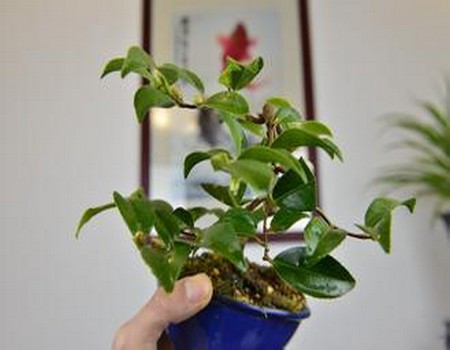
[Soil]
Sasanqua camellia is suitable for growing in loose, fertile, well-drained acidic sandy soil. Alkaline soil and clay soil are not suitable for planting sasanqua camellia. The best is moist, slightly acidic soil rich in humus, with a pH value of 5.5—6.
[Light]
Sasanqua camellia is naturally fond of shade, so it grows best in a semi-shaded, semi-sunny environment. Strong summer light may scorch its leaves and buds, causing leaves to curl and fall off, but appropriate light is still needed to promote flower opening and abundant blooming.
[Temperature]
Sasanqua camellia is cold-tolerant, but when potted it generally should not go below minus 2°C. The most suitable growing temperature is 18°C—25°C.
[Watering]
Watering must be thorough. In summer, water once each morning and evening; in winter, water once every few days. Except in winter, water should also be sprayed on the leaf surface every few days to keep the leaves clean.
[Fertilizing]
Sasanqua camellia should be fertilized lightly, especially during the seedling stage. Generally, in February—March, human waste can be applied 1 or 2 times to promote the growth of branches and leaves; in April—May, apply cake fertilizer water once to promote flower bud differentiation; in September—October, apply phosphorus fertilizer once more to promote good flowering and also help it overwinter.
Many flower lovers' sasanqua camellias develop the phenomenon of stuck flowers, which means their flower buds die early. To avoid this, pay attention to the following points:
1. Avoid too high room temperature
Household potted sasanqua camellia enters a semi-dormant state in the cold winter and early spring, with a suitable temperature of 2~10°C. When the average temperature exceeds 10°C, it will promote vegetative growth, thereby competing for the nutrients needed by the developing flower buds, causing them to gradually wither and drop.
2. Avoid poor air circulation
In winter, households seal windows to keep out the cold. Whether fresh air can be maintained is also key to preventing bud and flower stagnation in home-grown sasanqua camellia. The correct approach is:
(1) Open windows regularly for ventilation. It is best to open windows every morning and evening for about ten minutes each time to keep indoor air fresh.
(2) Avoid contact with harmful gases. First, try not to smoke indoors. After windows and doors are closed, smoke cannot escape and will be harmful to sasanqua camellia. Second, do not place it in dirty places such as kitchens and toilets to prevent poisoning by oil stains, dirt, and gas. Third, do not keep sasanqua camellia “stifled” in newly renovated rooms. If renovation is needed, it is best to choose odorless and non-toxic materials to prevent poisoning.
(3) Air pollution is severe in cities or near industrial and mining areas. When dust accumulates on the leaves, clean them promptly to maintain normal respiration, which helps growth and protects buds and flowers.
3. Avoid frequently changing positions
Some households like to change the placement of potted flowers, which easily disrupts their growth pattern and affects growth and normal flowering. After potted sasanqua camellia is brought indoors in winter, it stops vegetative growth and enters a semi-dormant period of flower bud swelling, so it needs a stable cool and humid environment even more. It is most taboo to have temperatures suddenly rise and fall and light suddenly become strong or weak. Especially when it is about to bloom, more attention should be paid. If, during winter or spring flowering, it is suddenly moved from a balcony with stronger light and lower temperature into a room with dimmer light and higher temperature, or from a north-facing balcony into a south-facing room with higher temperature and ample sunlight, it will not only suffer bud and flower stagnation, but also shed a large number of leaves, and its growth will be setback. Therefore, avoid frequently changing positions.
4. Avoid keeping too many buds
Some households cannot bear to cut off excess flower buds, so at first, when brought indoors, the buds swell encouragingly, but after a period of time they gradually wither and drop. The flower bud gestation period is very long, and some varieties even go through “ten months of pregnancy.” From bud formation to flowering, a large amount of nutrients is consumed. If buds are not thinned promptly and substantially, it is difficult to ensure enough nutrients for later bud development and flowering. As a result, a year of cultivation is often wasted, and not only is not a single normal flower seen, but the plant is also worn out and may even die.
5. Avoid fertilizing before flowering
In winter and spring, during the flower bud development and flowering season, although a large amount of nutrients is needed, fertilizing before flowering often causes the large, about-to-open buds to be “pushed off,” leading to bud and flower stagnation. Therefore, potted sasanqua camellia generally should not be fertilized after being brought indoors in winter. To ensure normal flowering, the focus should be on strengthening fertilizer and water management during the vegetative growth period, and fertilizing can be divided into two stages: spring and summer. In spring, after flowering and before shoot sprouting, apply thin alum fertilizer water 1~2 times promptly. Do not delay during the shoot sprouting period, as fertilizing at this time most easily burns the camellia.
In summer, fertilizing can be done after June, when the spring shoots have matured. At this time, the fertilizer amount can be slightly larger and can be applied continuously (once every ten days, 2~3 times in a row). Stop fertilizing after late September, otherwise bud and flower stagnation easily occurs in winter.
[Precautions]
1. The potting soil must be suitable
For potted sasanqua camellia, choose a culture soil that is loose in texture, fertile, well-drained, and slightly acidic. In the north, it is advisable to use culture soil made mainly from leaf mold or peat soil.
2. Provide shade in midsummer
In midsummer, sasanqua camellia should be shaded. Avoid strong sunlight at noon, and allow more exposure to sunlight in the morning and evening, which is beneficial for flower bud differentiation and flower bud development.
3. Keep warm in winter
In winter, sasanqua camellia should be moved indoors to overwinter. In other seasons, it can be maintained under a shade shed. In winter, room temperature should not exceed 7°C, and is best at 3°C—6°C.