How to grow fuchsia in pots? Detailed guide to care methods and precautions
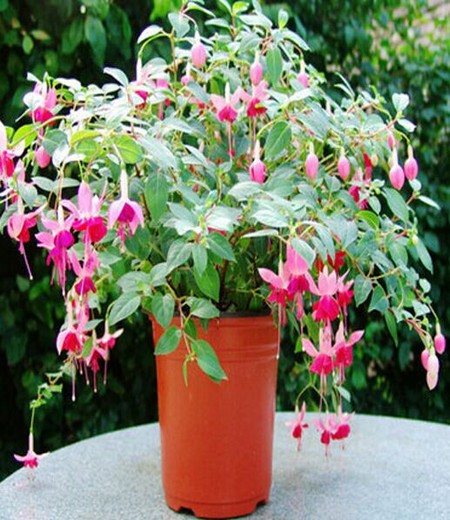
Propagation:
Cuttings, can be done year-round except in summer. April-May or September—October is when cuttings root fastest. Use either the tips of shoots or the middle-to-lower parts, cut into 8 cm-10 cm sections and insert into a pot filled with sandy soil, place in a shaded spot, cover with glass, and roots will form in about 10 days. After another 7 days of growing on, they can be repotted and planted separately.
Soil:
The potting soil is made by mixing sandy garden soil, humus soil and farmyard manure at 1/3 each. Every spring before the growth peak begins, repot and change the soil: remove part of the old soil, trim off some old roots, switch to a slightly larger pot according to the size of the plant, and top up with freshly mixed potting soil. The soil should be loose, fertile and well-drained. If water accumulates, the plant can easily die from root rot. In spring and autumn, loosen the soil appropriately. Potted soil should be loose, fertile and well-drained; waterlogging easily causes root rot and death. Growth is rapid in spring and autumn, so fertilize once every ten days. In summer's high temperatures, stop fertilizing. Place in a cool, airy spot and avoid direct strong sunlight in midsummer. Water frequently to raise air humidity. Fuchsia stems are slender and drooping, so pinching and shaping are needed to encourage branching; move the plant as little as possible during the flowering period to prevent bud and flower drop.
Light and temperature:
In summer, place the plant in a cool, airy spot; the suitable temperature is 15-25°C. In winter, indoor room temperature should stay above 10°C; below 5°C it may suffer cold damage. When autumn temperatures fall below 10°C, it should be kept indoors. Light should not be too strong, especially in summer; avoid prolonged direct sunlight to prevent leaves from curling and dying.
Watering:
Pay attention to watering; keep the potting soil moist during the growing period. Watering fuchsia should generally follow the principle of "water when dry, let dry between waterings"; during flowering, potting soil that is too dry or too wet can easily cause bud drop, flower drop or leaf drop. Long-term waterlogged soil also easily leads to root rot and yellow leaves, and can even kill the plant. In winter, when indoor room temperature is below 10°C, watering must be controlled even more strictly and fertilizing stopped to prevent root rot. After each fertilizing and watering, loosen the soil promptly to let air in.
Fertilizing:
Fuchsia likes fertilizer. For potting, use a growing medium mixed from 4 parts leaf mold, 3 parts garden soil, 2 parts river sand and 1 part decomposed cake fertilizer powder; no separate base fertilizer is needed, to avoid root rot. Repot and change the soil once every spring. Fuchsia grows quickly and can bloom continuously, so during the growing period apply a 10%-15% cake fertilizer solution once every 7-10 days, or a dilute liquid fertilizer combining nitrogen and phosphorus, at a concentration of 0.1%-0.2% urea water plus 0.3%-0.5% superphosphate soaking liquid, or 0.1%-0.2% urea water plus 0.1%-0.2% potassium dihydrogen phosphate fertilizer solution. If nutrients are insufficient, it will be very hard for it to bloom again after flowering once.
Pinching method:
Pinching at the right time is an important measure for making fuchsia branch densely and bloom profusely. In spring and autumn, pinch off the growing tips of the plant to encourage branching, make the plant shape fuller and increase the number of flowers. Pinching should start from the seedling stage. Generally, when the seedling grows to about 10 cm, do the first pinching to encourage branching; about 30 days after the first pinching, when the new branches have grown 6-8 leaves, do the second pinching, keeping about 5 side branches per plant and removing excess side buds.
After the autumn cool arrives, overly long branches can be cut short and overly dense branches thinned out to encourage vigorous new growth. After each pruning, watering should be controlled, and normal watering resumed once new branches grow from the leaf axils. In seasons suitable for growth, new shoots can bloom again 15-20 days after pinching, so pinching multiple times also helps extend the flowering period.
Usually, prune hard after flowering in early summer, and when the autumn cool arrives and the plant is moved indoors, trim the plant shape appropriately and remove excess new buds.
Precautions:
(1) Fuchsia grows quickly and blooms abundantly, so fertilizer and water supply should be strengthened during the growing period. Apart from not fertilizing in the hot summer, fertilize once every 10-15 days at other times. Fuchsia likes a cool environment and enters a semi-dormant state above 30%. In summer, place the plant under a shade frame, spray the leaves frequently or sprinkle water on the ground, and improve ventilation. Control watering so it can pass the summer in dormancy.
(2) When autumn temperatures drop below 10°C, move it indoors, keep the temperature within the range of 10-20°C, and strengthen fertilizer and water management. At the same time, pay attention to pruning. Stop pinching and pruning about 20 days before the intended flowering date; if the temperature is controlled appropriately, it will bloom on schedule.
(3) Fuchsia fears the cold; below 5°C it will suffer cold damage, and in winter the balcony should preferably stay above 10°C. It can be placed in an enclosed balcony with light to ensure sufficient sunlight. When caring for it, pay attention to the relationship between water and fertilizer supply and temperature. If the indoor temperature is above 15°C, flowering plants will bloom continuously. If the temperature is below 5°C, they will die.
(4) Fuchsia grows quickly and has the trait of continuous blooming, so insufficient fertilizing or fertilizing during dormancy can easily lead to fewer flowers. Normal fertilizing should be once every 10-15 days in spring and autumn with dilute decomposed cake fertilizer solution or compound fertilizer; stop fertilizing in summer's high temperatures. After fertilizing, spray water once to prevent the liquid fertilizer from sticking to the leaves and causing rot
(5) The potting soil must not be too dry or too wet, otherwise it easily causes leaf drop, bud drop and flower drop. Keep the soil moist in spring and autumn, and control watering in summer. After pinching and hard pruning, watering should also be controlled, and normal watering resumed once new branches sprout.