How to Properly Handle Amaryllis Root Rot
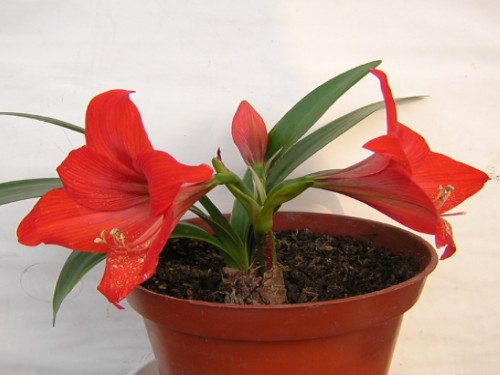
Amaryllis (Hippeastrum) comes in vivid, rich colors with large blooms. It can serve not only as a premium potted flower but also as an excellent ground-cover plant in garden landscapes, and it can even be produced as a high-end cut flower. Amaryllis is a very important ornamental flowering plant, mostly grown in pots, but many people also choose hydroponics. A hydroponic amaryllis sits half-submerged in water in a glass vase, and when it blooms, its snow-white roots and emerald-green leaves set off the bright, lively flowers, making it look especially elegant and beautiful.
Rotting of amaryllis bulbs usually occurs in two forms: rot at the base of the bulb and rot at the core of the bulb. The former is caused by poor water uptake by the bulb in the early planting stage or by carrying pathogens; the latter mostly develops during growth when too much water accumulates in the bulb core or when it becomes contaminated. Compared with the former, the former is easier to spot and deal with: simply clean out the rotted area, apply a disinfectant, and keep it dry and it can heal. The latter, however, is harder to detect and inconvenient to treat, and once it appears, the bulb is usually beyond saving. The best way to prevent bulb rot is frequent inspection and early detection. Once you notice the bulb becoming soft or new leaves growing abnormally, you need to be on your guard.
Root rot in amaryllis is caused by poor care on our part, and the most effective solution is still to pay more attention during routine care. Today let's talk about how to solve the root rot problem in amaryllis! How to Handle Amaryllis Root Rot
[Causes of Amaryllis Root Rot]
1. Overwatering
Amaryllis likes relatively moist soil, but it does not need frequent watering. Too much water makes the soil airless, blocking root respiration and restricting growth. In fact, loose, airy soil is what flowers love most!
2. Fertilizer burn
Over-fertilizing causes the soil to compact, and the fertilizer strength erodes the bulb, affecting growth. If the fertilizer is not diluted in time with watering, the bulb is very prone to rotting.
3. Pests and diseases
Amaryllis itself has strong disease resistance, so the chance of pest or disease infection is very small. If your amaryllis has root rot caused by pests or diseases, then your luck is simply off the charts.
[How to Handle Amaryllis Root Rot]
1. Take the bulb out of the pot, use a sharp knife to cut away the rotted parts, and be careful not to cut too deep, as deep wounds heal poorly.
2. Go to a flower shop and buy some disinfectant agent, dilute it with water. Soak the bulb for half an hour, then let it dry naturally; do not leave it in direct sunlight.
3. Change the soil. It is best to throw away the old potting soil directly and replace it with loose, well-aerated soil, then replant.
4. After planting, be careful not to repeat the same mistakes: water less and tend it carefully.