How to grow potted Enkianthus? Detailed guide to cultivation methods
When Enkianthus is grown in pots, to prevent the soil from drying out and to avoid direct strong sunlight, it should be cultivated in a spot ranging from sunny to half-shade. Especially during high temperatures in summer, avoid direct sunlight and the afternoon sun; if possible, place it where it will not be scorched by the sun. It is deciduous in winter and highly cold-hardy, so no special cold protection measures are necessary.
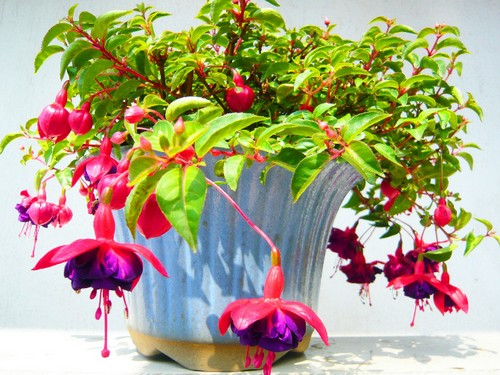
Enkianthus has abundant, dense flowers; a large plant can bear more than 1000 blooms. With its brilliant flower colors and long flowering period, it is an ornamental flower much favored by the public. What follows is an explanation of the cultivation methods and care key points for Enkianthus.
Soil: The substrate for potted Enkianthus should be a fertile, loose, well-draining potting soil. Generally, leaf mold plus sandy loam plus decomposed organic fertilizer and phosphate fertilizer can be mixed evenly; no base fertilizer is needed, to avoid root rot. Heavy, compacted soil is unfavorable for the growth of Enkianthus, and is even less suitable for newly rooted cuttings.
Light: Although Enkianthus prefers shade, this does not mean it does not need sunlight. When lacking sunlight, it not only tends to grow leggy, but also causes the flower color to fade, the flowers to become smaller, or even the buds to drop. Therefore, when growing Enkianthus at home, it can be placed on a sunny balcony or terrace so that it can carry out photosynthesis.
Temperature: The growing temperature for Enkianthus is 10—28°C, and the summer temperature must not exceed 30°C, so cooling measures should be taken in summer. In winter, full sunlight is required, and the potting soil temperature must not fall below 5°C, otherwise frost damage will occur, and insulation measures must be taken. In addition, attention should be paid to ventilation in both winter and summer.
Watering: For Enkianthus, watering should normally follow the principle of watering when dry and letting it dry between waterings. In dry spring weather and hot, high-temperature summer seasons, water can be sprayed on the branches and leaves 1—2 times a day. Too much watering will cause waterlogging in the pot. When winter room temperatures are low, watering should be strictly controlled and fertilizing stopped to prevent root rot. After each fertilizing and watering, loosen the soil promptly to improve aeration.
Fertilizing: Because Enkianthus grows quickly and blooms many times, during the growing period, apply light fertilizer frequently, about once every 10 days with dilute cake fertilizer or compound fertilizer. During the flowering period, also apply a liquid fertilizer mainly of phosphorus and potassium once a month, but stop fertilizing in high-temperature seasons. Before fertilizing, the potting soil should be on the dry side; after fertilizing, spray water once with a fine nozzle to prevent leaf rot.
Pruning: After flowering is the best time to prune. Because in summer it will produce flower buds for the following year's bloom, pruning after that will cut off the flower buds and will inevitably reduce the number of flowers the next year. If done at the proper time, even relatively heavy pruning will not greatly affect the following year's flowering.
Care key points:
Enkianthus prefers slightly acidic sandy loam rich in humus and well-draining. Heavy, compacted soil is unfavorable for the growth of Enkianthus, and is even less suitable for newly rooted cuttings.
During the growing period, Enkianthus requires a cool climate, with 10—15°C being suitable; in winter it requires full sunlight and can tolerate low temperatures of 3—5°C; in summer it is in a semi-dormant state, disliking heat and preferring semi-shade. In the south, shading is needed from May to October, and it grows most rapidly at temperatures of 15—23°C.
Getting Enkianthus safely through the summer is the key to cultivation technique. When the temperature rises to 30°C, it is unfavorable for its growth, and cooling measures should be taken; it can be placed under a ventilated shade shed, but must be protected from rain soaking, and can also be cut back and pruned.
In summer, stop fertilizing and control watering so that it gradually enters dormancy. After flowering, when the leaves begin to turn yellow, prune and leave only 20 cm from the base, so that it sends out new shoots, which helps it get safely through the summer. Enkianthus is afraid of waterlogging; when potting young plants, do not start with too large a pot, to avoid poor drainage and soil waterlogging that causes death. Only as the plant grows should it be gradually moved to a pot one size larger.