How to grow morning glory in pots? A detailed guide to cultivation methods
I like morning glory, not because it is also a flower, but because it has tenacious vitality. It does not even have the slightest floral fragrance, needs no sowing, no watering, no fertilizing and no pest control by people, fears neither wind and rain nor the scorching sun, stands strong and self-reliant, year after year, cycle after cycle, with luxuriant branches and leaves, clusters of blossoms, quietly unknown, adorning nature.
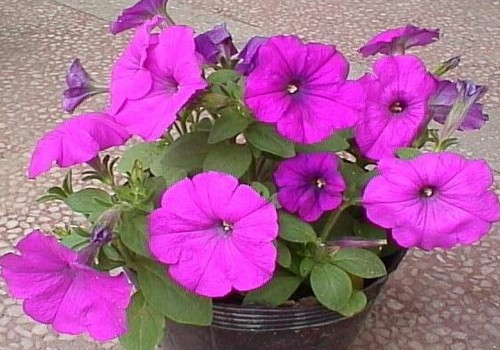
The vines of the morning glory are tender and gentle yet tough and tenacious, and the flowers are calm and elegant yet graceful and beautiful, like a plain and lovely village girl dancing joyfully in the fields beside a path. When the breeze blows, the round blue and round purple are like a group of young girls dancing and spinning in swirling skirts. When the autumn wind sweeps past or after a rain that withers a hundred flowers, those morning glories are still stubbornly blooming, sending their fragrant and quietly elegant dream to the distant edge of the sky, to stir the drifting clouds in the blue sky. With her stretching arms, she dots every corner with her beauty and fragrance, to dispel the desolation of autumn. Whether or not you care about her, she blooms without complaint or regret, delivering autumn's blessings to people. The morning glory always climbs and extends tirelessly, lifting her tender green tips toward the azure sky. She has a spiritual strength that commands admiration and a deep spirit of unremitting pursuit and tireless striving upward!
Morning glory cultivation methods:
[Soil selection]
For potted morning glory, it is best in early April to choose half ordinary potting soil and half plain sandy soil. Potted morning glory should either be sown or dug directly from outside. When potting the seedlings, pay attention: one plant per pot, do not damage the root system, and keep a small amount of soil around the roots to reduce damage.
[Water and fertilizer requirements]
Morning glory is very easy to grow. As long as the environment has sufficient light and good ventilation, the only remaining issue is watering. If the potting soil is chosen appropriately, water whenever the surface of the potting soil turns white. As for fertilizing, do it once every half month, choosing a nitrogen-phosphorus-potassium compound fertilizer, and be careful not to use too much nitrogen fertilizer, lest the stems and leaves grow too luxuriantly.
[Timely pruning]
Morning glory is a vine plant, and its branches and leaves have a very strong ability to multiply, so after planting, it is best to set up a support. Insert a bamboo pole in the middle of the flower pot, or place the pot by a railing, and let it grow by twining.
But this is still not enough; it must also be pruned in time. When the vines grow to 6-7 leaves, pinch off the growing tip. This ensures larger flowers and continuous blooming, and also prevents the morning glory from growing too fast and becoming difficult to control.
[Pest and disease control]
Morning glory is very prone to white rust, and the leaves, leaf stalks and tender stems can all be affected, with light green spots appearing on the leaves. Once discovered, promptly pull out the diseased plants to reduce transmission. Then spray with 500-times Bordeaux mixture, once every 10-15 days, to avoid infecting other plants.
Notes on growing morning glory:
Clean water quality:
Do not use fertilized water or muddy water to water the leaves, and when watering, try not to let soil get onto the leaves.
Pinching off flowers:
Only when the vines grow vigorously will they bloom. Ideally, the first leaf of the vine produces an axillary bud, and the second and third leaves produce flower buds. When the flower buds are differentiating, some can be pinched off, which is more conducive to blooming.