How to grow coreopsis so it blooms continuously? Sharing care and management tips
This flower is extremely common. At this time of year, a casual glance along the roadside may reveal its lovely figure, blooming in brilliant golden yellow in clumps and patches. “Oh, it's you again!” Although you meet it everywhere, many people cannot name it. It is the coreopsis.
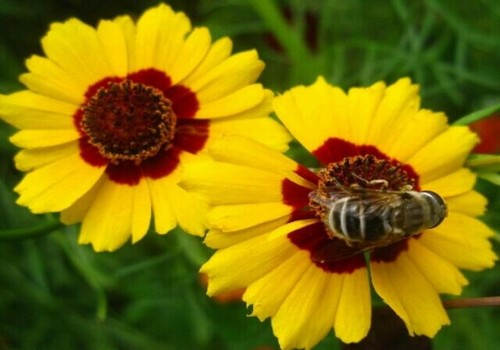
As a perennial herbaceous plant of the genus Coreopsis in the Asteraceae family, coreopsis is also known as small cosmos, money chrysanthemum and peacock chrysanthemum. Coreopsis is cold-resistant and drought-tolerant, not demanding about soil, loves light but also tolerates partial shade, has strong adaptability and strong resistance to sulfur dioxide. It is native to the southern United States.
Coreopsis is very easy to cultivate and often self-propagates. It is an excellent ground cover for open woodland, and also works extremely well as a covering material in roof greening, and can also be used in flower border design. As one of the early invasive alien species, coreopsis once broke out on a small scale in some areas such as Henan.
The perennial that dazzles the eyes most in summer and autumn is probably coreopsis, and there are now more new varieties than ever. Looking at the brilliant coreopsis below, I don't believe you won't like it! The yellow flowers of coreopsis attract the eye and are very suitable for planting in flower beds, along roadsides and other landscaping sites. Coreopsis is a flowering plant that is attractive both for its foliage and its flowers. So, how do you keep coreopsis blooming continuously?
Coreopsis is very easy to grow and needs almost no attention once planted. Coreopsis flowers are mainly yellow, golden yellow and orange-red; new varieties include red and bicolour flowers, and their flower stems are very long, making them very suitable as cut flowers.
The advantage of coreopsis, besides its bright colours, is its very long flowering period. As long as you keep cutting off the faded flowers, it will keep blooming, almost continuously.
There are more than 100 species of coreopsis, including perennials and annuals, with very different heights, colours and forms, so they are really hard to tell apart, though the classic varieties can be recognized at a glance.
[Daily care]
When planting coreopsis, choose a sunny spot with good ventilation (do not plant it too densely with other plants); once established it needs almost no care.
Once mature, it hardly needs watering; water only when it is especially dry. Coreopsis also does not need fertilizing; soil that is too rich will actually stop it from blooming (key point).
[The secret to keeping coreopsis blooming continuously]
Once the flowers fade, pick (or cut) them off, and new flowers will keep coming. By late summer, you can even cut the whole plant back evenly, removing about one third of its length (a second pinching); before long it will send out new branches and bloom abundantly once more.
For sowing, when the weather is warm you can scatter the seeds directly on the ground and keep the soil moist; they will sprout in about three weeks. In fact, coreopsis can reproduce on its own, and can also be propagated by stem cuttings.
Coreopsis is very vigorous, but if it is too damp, watered too frequently, or if water is poured on the leaves, it will get powdery mildew, so it is best not to pour water on the leaves and to reduce the frequency of watering (do not water at night).