How to Grow Pentas? Master These Cultivation Methods
Pentas, also known as the five-star flower. A flowering plant in the family Rubiaceae, genus Pentas. It prefers a warm, hot environment with ample light; when grown at home, it is suitable for placement on a windowsill that receives long hours of sunlight. Pentas generally produces umbel-like panicles at the tip of each branch, and acidic P and K fertilizers need to be supplemented in time; after the flowers fade, remove the spent blooms to concentrate nutrients and encourage new branches to form a new round of flowers. When temperatures drop in late autumn, growth tends to stagnate; in winter it needs to be kept warm to overwinter, and with reinforced care the following year it will bloom again.
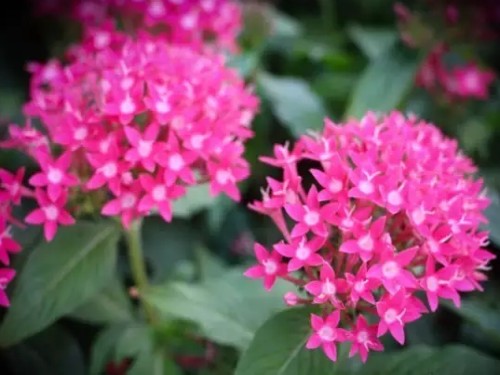
Pentas is a perennial herbaceous flowering plant of the family Rubiaceae. It generally grows 30 cm to 40 cm tall, with upright stems and strong branching; the leaves are opposite, lanceolate, with acuminate tips, 6 cm to 8 cm long; the inflorescence is a terminal cyme, the small flowers are tubular, and the corolla splits into five lobes forming a five-pointed star shape, hence the name five-star flower. Dozens of five-star flowers cluster together into a mass, very brilliant and pleasing to the eye. It is native to tropical Africa or cultivated there, is a perennial herbaceous flowering plant, drought-tolerant, high-temperature-tolerant, with a long flowering period, and comes in flower colors such as pink, crimson, peach red and white; the flowering period is mainly concentrated between March and October, and it is suitable for pot cultivation and for arranging flower stands, flower beds and landscape displays.
Soil:
Use sterile peat soil with slight fertilizer content and good drainage. A pH of 6.5-6.8 is preferable, to avoid iron toxicity and magnesium deficiency. If the pH is below 6.0, severe leaf-edge scorching will occur due to iron toxicity, causing the plant to stop growing.
Light:
Pentas prefers an environment with ample sunlight; the stronger the light, the more compact and stocky the plant. Therefore, in winter with weak light and short daylight, attention should be paid to supplementing light.
Temperature:
Warmth and ample sunlight help the growth of pentas; during the growing period, it is best to keep the night temperature above 17-18°C and the day temperature above 22-24°C. Temperatures below 10°C will make flowering uneven and delay or hinder the opening of the flowers.
Water:
Pentas is relatively drought-tolerant but not tolerant of waterlogging. During the growing period, do not overwater, and at the same time avoid water accumulating in the growing medium, so as to prevent root rot. When watering, the water temperature should not be too low (that is, the water temperature should be consistent with the medium temperature); overwatering often makes the plant turn yellow and slows flower growth.
Fertilizing:
One week after planting, begin applying an 800-1000 times dilution of "Leaf Green Essence", watering once every 7-10 days. When the plant enters the mid-growth stage (that is, 8-10 cm tall), you can switch to applying an 800-1 000 times dilution of "Bloom Essence", once a week, to promote flower bud differentiation and good growth.
Pests and diseases:
The main pests and diseases of pentas are gray leaf spot, red spider mites, whiteflies and aphids. Preventive methods include keeping the cultivation site clean and using sterile soil, growing medium and pots.