How to grow a Taxus chinensis (Chinese yew) bonsai so it thrives with lush branches and leaves
Taxus chinensis is an ancient tree species with a history of a hundred years, and has a long history of cultivation in our country, deeply loved by people. Taxus chinensis has extremely strong medicinal value and can be refined into paclitaxel, an internationally recognized anti-cancer and cancer-preventing agent, and is a national first-class protected tree species. It gets its name because its red aril bears fruit just like the red bean.
The roots of Taxus chinensis are relatively fine, and its roots are rather shallow, so many households and companies grow Taxus chinensis in pots. Because of its habits and strong adaptability, it is loved by many people. Taxus chinensis not only has ornamental value, but its medicinal value is also very high. Records of using Taxus chinensis as medicine date back to ancient China, and it also has the effect of purifying household air. Since Taxus chinensis is so good, how should it be grown at home?
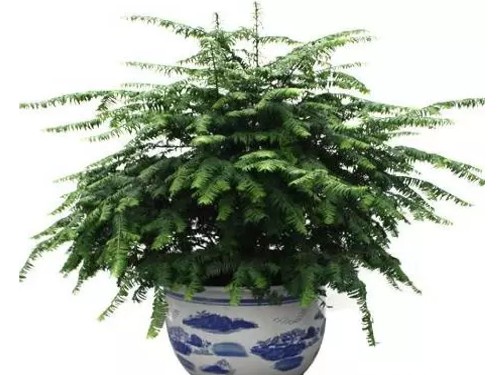
1. Soil
Taxus chinensis is best planted in mid-to-late February in early spring. Seedlings should be dug up with a soil ball and can be planted in a shaded spot in the garden, often paired with tall trees. For potting soil, use loose, fertile acidic soil with high organic matter content. It can be made by mixing garden soil, peat and sand at a ratio of 2:1:1, plus 1% decomposed organic fertilizer.
2. Environment
Taxus chinensis originally grows in a fairly shade-tolerant environment, whether growing singly or in groups. In China it is generally distributed more in mountain areas, where the temperature is generally relatively low, so its cold tolerance and drought tolerance are both quite good. However, it likes a humid environment.
3. Sunlight
Taxus chinensis actually needs sunlight, but during the seedling stage it is best to shade it while growing it. However, after about 3 years of growth, as a mature plant, it needs full sun to keep it alive. If it lacks light, it will also die, just like the money tree (Pachira aquatica) and the yuanbao tree.
4. Watering
Taxus chinensis likes a humid environment, but it is not suited to frequent watering, otherwise it will cause waterlogging. The standard for watering is to water only when the soil is dry. For potted plants, in spring water once every 2 to 3 days; in summer water once in the morning, and if the potting soil is still too dry, spray again in the evening with a fine-nozzle watering can. This not only rinses the leaves and increases the ambient air humidity, but also lets the leftover water moisten the potting soil again, which helps the plant absorb it. In autumn water once every 3 to 4 days; if there is continuous autumn rain, you can also water once a week, as long as the potting soil is moist. In winter water less. For potted plants placed in the open in the garden, you can rinse the leaves with clean water every 15 to 20 days and just let the leftover water moisten the potting soil.
5. Fertilizing
Taxus chinensis does not need particularly rich fertilizer; it is enough to ensure the soil is fertile. Generally no fertilizing is needed, but proper fertilizing can increase its growth. Generally fertilizing around March is good, applying thin fertilizer. For potted plants, apply decomposed cake fertilizer water. During the growing season, apply alum fertilizer water at a concentration of 1:10 to 15 once a month. Repot every other year, and add solid decomposed organic fertilizer at the bottom of the pot. In autumn, September to October, you can apply base fertilizer: 50 to 100 kg of decomposed livestock manure per plant. In early spring you can apply a compound fertilizer containing nitrogen, phosphorus and potassium, 100 to 200 grams per plant, or 500 grams of superphosphate.
6. Pruning
Generally after a few years, Taxus chinensis will grow tall, but some varieties, if pruned for fruit, will not grow tall. However, the tallest varieties of Taxus chinensis can grow to 30 m. So varieties that can grow tall need to be transplanted into soil.
Taxus chinensis likes a warm, humid environment with plenty of sunlight, and is slightly tolerant of partial shade. Spring, summer and autumn are its growing seasons. It can be placed outdoors in a well-ventilated, sunny spot for care. Water according to the rule of "do not water until dry, and when you water, water thoroughly", and spray the plant when the air is dry to keep the leaf color fresh. Apply a decomposed, thin liquid fertilizer about once every 20 days. To make the leaf color deep green, you can spray foliar fertilizers such as Yemianbao.
In winter, place it in a wind-sheltered, sunny spot to overwinter. If a cold wave comes, it can be moved indoors, or it can overwinter in a cold room. Control watering and just keep the potting soil above 0°C and not frozen. Taxus chinensis has strong apical dominance. After the plant grows to a certain height, the top can be cut off to control plant height. Side branches should also be thinned and pruned so that they are staggered in height and well spaced, meeting the shaping requirements. However, for whorled branches, keep them selectively to highlight the variety's characteristics and maintain its unique appearance. Repot once every 1 to 2 years in spring. The potting soil should be loose, fertile, neutral to slightly acidic soil rich in humus.
Precautions:
(1) Taxus chinensis is best planted before bud break in late winter and early spring, and large seedlings need a soil ball. In daily care and management, often loosen the soil, weed, fertilize and irrigate, and spread fallen leaves and dead branches around the roots to help maintain the soil's acidity. It tolerates pruning. In late autumn and early winter, shaping and pruning can be carried out to maintain a good tree form; at the same time, cut off dead branches, diseased branches, broken branches and crossing branches.
(2) When watering potted Taxus chinensis, be sure to pay attention to water quality. For watering flowers, natural rainwater is best, followed by clean flowing river water and lake water. If well water must be used, be sure to pay attention to water quality, especially well water in northern regions, which often has too much alkali and is not good for the growth of Taxus chinensis. Next is water temperature: the water temperature for watering potted flowers should be basically close to the air temperature. Too low or too high is bad for its growth. Especially when using tap water for irrigation in summer, be sure to store the water in a vat, pool or other container for 24 to 48 hours before use, otherwise it will cause physiological wilting of the plant; at the same time, this kind of physiological disorder is often difficult to remedy.