Detailed Guide to Pot Cultivation Methods and Precautions for Cineraria
The flowering period of cineraria is not fixed; it varies depending on the sowing time. Generally speaking, cineraria takes 4-5 months from sowing to flowering, while potted cineraria sold in flower markets has a more artificially manipulated flowering period due to factors such as forcing, and is mostly marketed around the Spring Festival and Qingming Festival. Actually, potted cineraria is not expensive; in some places you can buy a pot for around five yuan, so we will mainly talk about cineraria care. If you want to extend the flowering period of cineraria, the best maintenance temperature is 10-15°C; if the temperature is too high, the flowering period will be shortened.
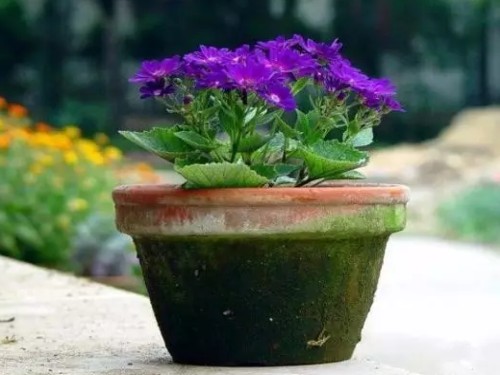
Regarding the care environment, since the cineraria bought by gardeners is already blooming, it can be placed indoors for viewing, preferably in a spot with diffused light; just a little sunlight is enough. For regular watering, if the potting soil has good drainage, water once a day; if the indoor air is relatively dry, spray some water appropriately.
Cineraria is an annual or biennial herb. Some gardeners wonder whether the cineraria they bought can be kept to bloom again the following year. In fact, it is possible, just like other Asteraceae plants, but for ordinary gardeners it is not worth doing so, because potted cineraria is not expensive and is generally discarded after the flowering period.
1. Potting soil
Cineraria grows well in loose, fertile, well-drained sandy loam soil, and soil with a pH of 6.5-7.5 is more suitable for cineraria growth.
2. Light management
Cineraria likes light. Sufficient light can make the plant grow compactly and neatly, with abundant flowers and lush leaves, and enhanced resistance. With insufficient light, cineraria's flower stems become slender and the flower colors pale.
However, cineraria is averse to high temperatures and direct strong light, and can be properly shaded during high summer temperatures. From late autumn to winter and spring, it should be placed in a sunny spot. After the cineraria flower stems emerge, light should be increased to promote bud development.
When moved indoors for viewing during the flowering period, it should still receive at least 4 hours of light each day to maintain vivid flower colors and robust plants.
3. Temperature control
Cineraria likes warmth but cannot tolerate high temperatures. It grows best at 15°C-20°C. When the temperature is higher than 21°C, it will become leggy, which is unfavorable for flower bud formation. When the temperature is lower than 5°C, the plant stops growing, and below 0°C frost damage occurs; seedlings can tolerate temperatures below 0°C. The suitable temperature for flowering is 10°C-15°C. Below 6°C, flower buds cannot open; above 18°C, the flower stems grow slender.
In spring, summer and autumn, cineraria should be kept in a cool, ventilated place for care, and in summer water should also be sprayed to lower the temperature. In winter, when the temperature drops below 5°C, it should be brought indoors for warmth, with the temperature controlled between 10°C-15°C. The nighttime temperature should not be lower than 8°C; a plastic bag can be placed over the plant for insulation and removed after the sun comes out the next day to prevent frost damage.
During overwintering, a higher room temperature can make it bloom earlier. But if the room temperature stays above 25°C for a long time, the leaves are prone to curling. If not dealt with in time, it will affect flower opening, and in severe cases the flowering period will be noticeably shortened and the flowers will wither and drop early. If curled leaves are found, spray water once each in the morning, noon and evening, and lower the temperature, preferably to 10°C-15°C. After cineraria blooms, maintaining a room temperature of 8°C-10°C can extend the flowering period.
4. Water and fertilizer management
Cineraria has large leaves and consumes a relatively large amount of water. It requires the potting soil to remain moist, and water should be sprayed on the leaf surfaces several times a day to maintain humidity. Before flower bud differentiation, watering should be controlled and the potting soil kept slightly dry to promote flower bud formation. In winter, water less, and water only when the surface of the potting soil turns white.
Cineraria likes fertilizer but is averse to concentrated fertilizer; apply thin fertilizer frequently. In the early growth stage, apply a nitrogen fertilizer once every 5 days, or apply decomposed soybean cake fertilizer once every 7-10 days at a concentration of 10%-15% to promote rapid leaf expansion.
After cineraria buds appear, apply phosphorus and potassium fertilizer 1-2 times, and apply little or no nitrogen fertilizer to promote flower bud growth. During the flowering period, control the amount of watering, and the temperature should not be too high either, so as to avoid leaves growing excessively large and affecting ornamental value. When there are four layers of leaves, control water and fertilizer to harden the seedlings. During the flowering period of cineraria, the frequency of fertilizing can be reduced, applying a dilute phosphorus and potassium fertilizer about once every 15 days.
5. Pruning methods
Cineraria can generally send out 20 to 40 main branches from the main stem, and each main branch forms a flower bud at its tip. Each node of the main branch also sends out 3 to 4 side branches, and each side branch also has a flower bud. Therefore, pruning and disbudding are needed. Generally, keep 15 to 30 main branches with strong growth vigor, and try to make the flowering periods of all flowers consistent; remove all other main branches and side branches to concentrate nutrient supply.
6. Flowering period control
Cineraria has early-flowering varieties and late-flowering varieties, and the flowering period can be controlled by sowing time. Early-flowering varieties bloom 5-6 months after sowing; general varieties bloom 7-8 months after sowing; late-flowering varieties bloom 10 months after sowing. By artificially regulating the flowering period, it can bloom from December to May of the following year, and it is a main variety for holiday flower arrangements such as New Year's Day, Spring Festival and May Day.
In the Beijing area, flowers for New Year's Day are sown in March and bloom in mid-to-late December; flowers for the Spring Festival are sown in May; flowers for May Day are sown in August-September. Sowing in August-September is most suitable, because at this time the temperature gradually turns cooler, the rainy season has passed, seedlings are not affected by high temperatures and waterlogging, they grow quickly, and cultivation and management are simple. If sown after September, when the seedlings are still small the following year, the sunshine duration has gradually increased, causing flower buds to develop early and bloom, so the plants are slender and weak, the flowers are small and sparse, and the commercial value is reduced.
Different regions can determine sowing time according to flowering period needs:
In the Shanghai area, sow from late August to early October, and bloom from December to April of the following year.
In Kunming, sowing can be done from May to October. Sow from May to July and bloom in December; sow from August to October and bloom in February-March of the following year.
In western Sichuan, sow in mid-August and bloom in early spring of the following year.
7. Pest and disease control
Under long-term humid conditions with poor ventilation and light, cineraria is prone to powdery mildew, black rust and gray mold. If disease is found, spray with 50% amobam or 50% carbendazim at 2000 times dilution, once every 1 day, for 2-3 consecutive sprays.
For cineraria black rust, spray 70% zineb at 500 times dilution, once about every 10 days, for 2-3 consecutive times. For cineraria gray mold, spray 75% chlorothalonil or 50% carbendazim at 500 times dilution for control.
The main insect pests of cineraria are aphids and red spider mites. Leafminer moths are prone to occur at the seedling stage. Dimethoate at 1500-2000 times dilution or fenvalerate at 1000 times dilution can be used for control, spraying once every 10-15 days, for 2-3 consecutive sprays.
Precautions:
1. It likes cold and is not tolerant of high temperatures or frost. It likes fertilizer and prefers loose, well-drained soil. It can be cultivated in a low-temperature greenhouse or cold frame, with a nighttime temperature not lower than 5°C and a daytime temperature not higher than 20°C being most suitable. The optimum growth temperature is 10°C-15°C; when the temperature is too high, it tends to become leggy. During the growth period, it should have sufficient sunlight and remain appropriately dry.
2. It likes climate conditions with warm winters and summers without extreme heat, and is averse to dry air and scorching sun exposure; it also needs good light. It requires loose, fertile, well-drained soil. It likes a sunny and well-ventilated environment, but is averse to direct scorching sunlight.
3. Cool temperatures and sufficient sunlight are the main conditions for its good growth. It likes sandy loam rich in humus and well drained, is averse to drought, fears waterlogging, and is suitable for neutral and slightly acidic soil.
The flower buds of cineraria form in the severe winter season, so controlling the appropriate temperature is very important. When the temperature drops to 5°C, cineraria should be brought indoors for warmth and care. The temperature should be controlled between 10-15°C. Attention should be paid to preventing cold and frost damage, and the nighttime room temperature should not be lower than 8°C. Attention should be paid to sudden temperature changes. If the temperature difference between day and night near doors and windows is too large, the pot should be moved away from doors and windows in the evening.
To avoid freezing, a plastic bag can be placed over the plant and removed after the sun comes out the next day. During overwintering, a higher room temperature can make it bloom earlier. But if the room temperature stays above 25°C for a long time, the leaves are prone to curling. If not dealt with in time, it will affect flower opening, and in severe cases the flowering period will be noticeably shortened and the flowers will wither and drop early. If curled leaves are found, spray water once each in the morning, noon and evening, and lower the temperature, preferably to 10-15°C. After cineraria blooms, maintaining a room temperature of 8-10°C can extend the flowering period.
Cineraria likes warmth but cannot tolerate high temperatures, and grows best under conditions of 15-20°C. When the temperature is higher than 21°C, leggy growth can occur, which is unfavorable for flower bud formation. When the temperature is lower than 5°C, the plant stops growing and developing, and below 0°C frost damage occurs; the suitable temperature for flowering is 10-15°C. Below 6°C, buds cannot open; above 18°C, the flower stems grow slender and the ornamental value is affected. Therefore, in spring, summer and autumn, cineraria should be placed in a cool, ventilated place for care, and in summer measures such as spraying water to lower the temperature should also be taken, controlling temperature conditions to make them suitable for the growth and development of cineraria.