How to grow a red maple bonsai? Detailed care methods
Making a red maple bonsai requires careful tending, because only with careful tending can the red maple grow luxuriantly, and only then will its leaves turn a beautiful red and its ornamental value be higher. With bonsai, only with careful care can you enjoy the pleasure it brings; compared with other plants, bonsai gives a greater feeling of cultivating one's character. Below, let's learn about red maple bonsai care methods:
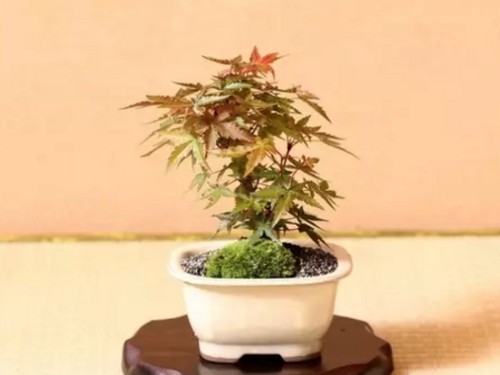
1. For planting, ordinary potting soil can be used; after watering, place it in a semi-shaded spot. Frequently spray water on the branches and trunk. When the leaves begin to unfurl, light can be increased. After all the leaves have unfurled, apply one light (nitrogen) fertilizer solution. Place it in a semi-shaded spot with even sunlight for normal management.
2. In summer and autumn, pay attention to ventilation. Potted plants should be moved to a semi-shaded spot around midday, and attention should be paid to ventilation. Under scorching sun, the leaves are prone to scorched edges, curling, and falling. At the same time, pay attention to watering to prevent the soil from becoming too dry.
3. If you want to manually control foliage viewing, you can do it once each during the two periods between spring and summer and between summer and autumn. Doing it too often will harm the tree. In June and September, you can completely remove all leaves once each; after 10 days, fresh red new leaves will grow. Note two points: first, after leaf removal, pruning is needed; second, fertilize one week before leaf removal. To manually control new leaves, fertilizer and water must be strengthened; this is the key to success.
4. If the leaves wither and scorch under scorching sun, in August you can remove all the scorched leaves, place it in a cool semi-shaded spot, and apply a nitrogen-phosphorus-potassium compound solution, applied lightly, about 2 times a week. In this way, by autumn, fresh red new leaves can grow.
5. After leaf fall in winter, it enters the dormant period. You can apply one light nitrogen-phosphorus-potassium base fertilizer and carry out shaping and pruning, so that the branches and leaves in early spring the following year will be even redder and more vivid. If there is unusually cold special weather, the bonsai should be placed in a warm, wind-sheltered, sunny spot or in a sunny spot indoors to avoid frost damage.
6. The main pests of red maple are: red wax scale insects, cottony cushion scale insects, and heartwood borers. Control method for scale insects: when few, scrub them off with a toothbrush; when severe, spray with a 1000-fold dilution of 25% imine phosphorus sulfur emulsion. Control method for heartwood borers: use a syringe to inject a 2000-fold dilution of 40% omethoate into the pest-infested part of the trunk.
The care of a beautiful and elegant maple bonsai requires attention to the following five aspects:
1. Site
Maple trees prefer shady and cool environments and avoid direct intense sunlight, so the bonsai should be placed under a shade shed or under other trees for care. If placed under strong light or on a balcony, scorched leaves often occur;
Because indoor ventilation is poor, a maple bonsai should not be placed indoors for more than a week, otherwise it is unfavorable for growth;
In winter in the north, the maple bonsai should be moved into a low-temperature indoor room; in the south, as long as the pot is buried in wind-sheltered, sunny soil, it can safely overwinter.
2. Watering
Maple leaves are large and water evaporates quickly. During the growing season, water frequently. In hot weather, frequently sprinkle water on the ground to maintain the humidity of the microclimate. In winter, maple enters the dormant period, so water less; as long as the potting soil is moist, it can be left unwatered.
3. Fertilizing
In spring, before the maple buds and when the leaves unfurl, apply one diluted decomposed organic liquid fertilizer each time, but do not fertilize on rainy days. In August-September, apply one diluted decomposed liquid fertilizer each month. Do not fertilize during the winter dormant period.
4. Shaping
Maple trees have strong sprouting ability and often grow new buds on the trunk. All buds not needed for the design and overly dense branches should be pruned promptly. This not only saves nutrients but also helps ventilation and light penetration. The best viewing period for maple is when the new leaves have just unfurled. If all leaves are removed in late summer and one diluted decomposed liquid fertilizer is applied, new leaves will grow in about 20 days, thus adding another best viewing period.
5. Pest and disease prevention
Maple trees mainly suffer from powdery mildew, stinging moths, aphids, and other pests and diseases. When problems occur, they should be controlled promptly.