How to grow petunias? Growing methods and precautions
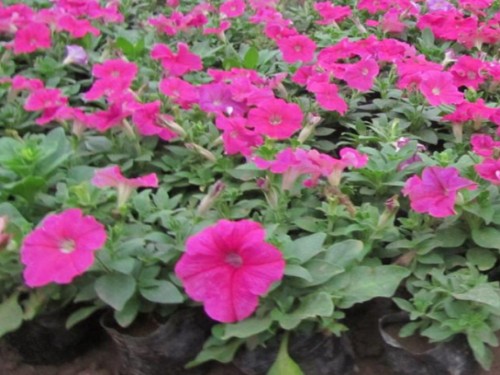
Petunia (Petunia × hybrida) is a long-day plant and requires plenty of sunlight during its growing period. Under normal light conditions, it takes about 100 days from sowing to flowering. Double flowers are spherical, and the flower colors are extremely rich, such as white, red, purple, blue, yellow, as well as mottled patterns and picotees, and they are very beautiful. The flowering period lasts from April until frost, and in warm winter regions it can continue to bloom. Petunias are easy to grow, have a long flowering period, and bear brilliant, colorful flowers. They are often used for potted plants, hanging baskets, flower platforms and flower bed landscaping, and when planted over a large area they create a groundcover effect, with a magnificent and pleasing landscape. When petunias are grown in a greenhouse in winter, under low-temperature and short-day conditions, the stems and leaves grow very vigorously, but flowering is very difficult; when spring brings long days, flower buds quickly differentiate from the tips of the stems and leaves. After that, normal growing management can be carried out.
Growing methods:
1. Soil: It requires slightly acidic, loose, fertile, well-drained soil. For potting soil, generally half sandy loam and half leaf mold can be mixed evenly. Petunias are suitable for fertile, well-aerated, slightly acidic sandy soil.
2. Temperature: Petunias like warmth. Their optimum growing temperature is 13-18°C, and the winter temperature is 4-10°C. In summer they can tolerate high temperatures above 35°C, and in winter they stop growing when the temperature is below 4°C. For petunias, 20°C is the most suitable for seed germination. Their optimum growing temperature is 13-18°C, and the winter temperature is 4-10°C; if it is below 4°C, plant growth stops. In summer they can tolerate high temperatures above 35°C.
3. Light: Petunias are long-day plants and require relatively strong light conditions for photosynthesis to proceed smoothly. Therefore, whether potted or planted in the ground, they need to be given sufficient light. With ample sunlight they grow robustly, with lush leaves and abundant flowers; if light is insufficient, the branches and leaves tend to grow leggy, and they bloom little or the flower quality is poor. Petunias are long-day plants and like an environment with abundant sunlight. Under low-temperature and short-day conditions, the stems and leaves grow very vigorously, but flowering is very difficult. When spring brings long days, flower buds quickly differentiate from the tips of the stems and leaves.
4. Watering: Petunias like moisture and are afraid of both drought and waterlogging. In spring, summer and autumn, water often; water as soon as the potting soil is dry, and it is best to keep it slightly on the moist side. Too wet easily causes root rot, while too dry easily turns the leaves yellow. In winter, as long as the potting soil is not dry, keeping it slightly moist is enough. Usually water in moderation to prevent both excessive dryness and excessive moisture. In summer, replenish water promptly to keep the potting soil moist but not waterlogged, and in the rainy season drain promptly to prevent waterlogging.
5. Fertilizing: During the growing period, petunias are generally given a dilute liquid fertilizer once about every 10 days. During the bud stage, it is advisable to apply more phosphorus fertilizer to promote more and brighter flowers; of course, biological organic fertilizer is preferable. Petunias like fertilizer and also tolerate poor soil. If too much fertilizer is applied too often, they easily grow leggy and bear few flowers. Apply a nitrogen-phosphorus-potassium compound fertilizer once about every 15 days, and spray a 0.2% potassium dihydrogen phosphate solution on the leaves once a month to encourage more buds and more, brighter flowers. In winter, after they are brought indoors, do not fertilize.
6. Pruning: When the seedlings grow to about 10 cm tall, pinch them to encourage side branches to sprout, so they will bloom more. After each flowering, if seeds are not needed, promptly cut off the spent flowers and shorten the branches, and they will continue to sprout side branches and keep blooming.
Precautions for growing petunias:
1. After winter begins, the metabolism of petunias slows down, and they need very little water and fertilizer. Therefore, you can continue to water and fertilize according to actual needs.
2. Follow the principle of not watering if not dry, and watering thoroughly when you do water. If the potting soil is not too dry, do not water. Avoid excessive watering, which can cause root rot and leaf drop or cause young branches to grow leggy, affecting later flower bud differentiation and weakening cold resistance.
3. In winter, indoor air is dry. For petunias, you should often spray and wash the leaves with water close to room temperature to remove dust and keep them clean, so as to benefit photosynthesis. However, spraying water must not add water to the pot, to prevent root rot.