How to Grow Black-Eyed Susan
Black-eyed Susan, full name: black-eyed Susan (Rudbeckia hirta L.), Asteraceae, genus Rudbeckia, annual or biennial herbaceous plant. The flower center is raised and purple-brown, while the ray florets around it are golden yellow. The flowering period runs from early summer to frost. Cultivated varieties have ray flowers in tung-brown and chestnut-brown, with double-flowered and semi-double-flowered types. The flower center may be olive-green, the "Irish Eyes" type, and there are tetraploids with flower heads reaching 15 cm in diameter; besides yellow, flower colors include red in every season and bicolors. Native to the eastern United States. Cold hardiness is not strong; in central China it can still be sown in autumn and overwinter in the open field, and it can also be used as a cut flower.
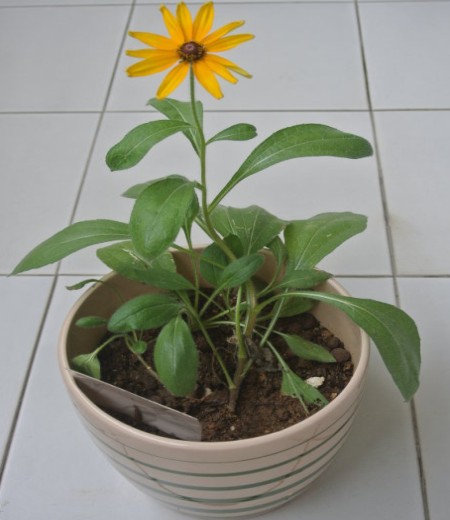
Below is an introduction to how to grow black-eyed Susan:
Soil: 5 The best soil is a loose, well-aerated sandy loam; do not use soil with poor aggregate structure, which leads to sticky, compacted soil with poor drainage, making cultivated flowers prone to root rot, yellowing leaves, and even drying up and dying. Apply sufficient base fertilizer. Black-eyed Susan is highly adaptable and has no special requirements for soil, but it is suitable for cultivation in well-drained, breathable, loose, and fertile sandy loam. Black-eyed Susan is often grown in the ground.
Light: It prefers a sunny, well-lit environment. In winter, light should be increased because of insufficient sunlight; in summer, light should be appropriately shaded because it is too strong, and cooling should be achieved through shading to prevent dormancy caused by high temperatures. Black-eyed Susan likes a sunny growing environment, and during its growth period it should have sufficient light; in summer, when light is intense, black-eyed Susan should be shaded and cooled to prevent dormancy caused by high temperatures. In winter, because temperatures are low and sunlight is scarce, to prevent insufficient light and low temperatures from affecting growth, it should be placed indoors in a sunny spot for care, with attention to keeping it warm.
Temperature: Black-eyed Susan likes a warm growing environment with good air circulation and is not cold-tolerant. The suitable germination temperature for black-eyed Susan is 21°C-30°C, and it can be sown in spring, summer, and autumn at this temperature. The suitable growing temperature for black-eyed Susan is 10°C-30°C; during the day it should not exceed 26°C, and at night it should remain at 10-15°C. Only at suitable temperatures can black-eyed Susan continue to grow and bloom without going dormant. The most suitable temperature during the plant's growth period is 20-25°C, not exceeding 26°C during the day and above 10°C at night. During the flowering period, appropriate shading should be provided in hot summer to help keep the flowers vivid.
Watering: Newly planted seedlings should be watered with appropriate restraint to encourage root development; after the seedling stage, supply sufficient water to promote growth. When watering during the flowering period, never let water get into the center of the leaf rosette, as this causes flower buds to rot. Be careful to prevent poor drainage, which can cause root rot.
Fertilizing: When the true leaves have grown to 6-8, transplant; apply a small amount of nitrogen, phosphorus, and potassium fertilizer once a month, and apply more phosphorus and potassium fertilizer before flowering, taking care not to use nitrogen fertilizer. Black-eyed Susan is not strict about fertilizer and water requirements; when growth is generally good, it only needs appropriate topdressing with nitrogen, phosphorus, and potassium fertilizer. When watering black-eyed Susan, follow the principle of watering when dry and withholding when wet, so the flowers will be even more beautiful.
Pruning: When black-eyed Susan leaves grow too dense, promptly remove old leaves, diseased leaves, and so on from the outer part of the plant to improve its light and ventilation conditions, thereby reducing the occurrence of pests and diseases and the consumption of nutrients, and also better facilitating the development and growth of new leaves and flower buds and increasing its yield. After the flowering period of black-eyed Susan, promptly cut away some residual branches and rotten leaves to encourage it to bloom again. For black-eyed Susan grown as a cut flower, pinching can be done appropriately to extend its flowering period. For some perennial plants, forced division is needed to avoid affecting growth vigor and flowering.
Pests and diseases: During cultivation of black-eyed Susan, pay attention to drainage and ventilation to avoid root rot caused by poor drainage.