Blue-eyed daisy (osteospermum) growing methods and precautions
The blue-eyed daisy is a beautiful ornamental plant, also known as the African daisy and the large-flowered blue-eyed daisy. It is native to South Africa and is not cold-tolerant. It dislikes heat, prefers sunny environments, and does best in well-drained soil. The blue-eyed daisy comes in a rich range of colors, including white, light purple, deep purple and many others, and can be used in flower borders or as cut flowers.
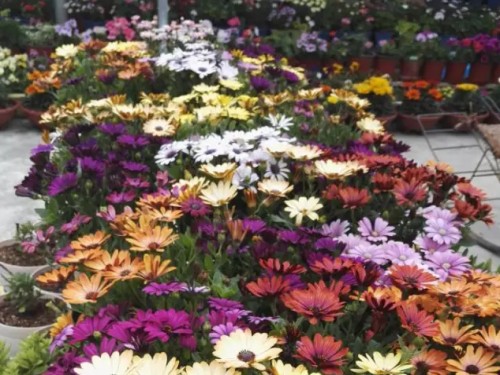
The flowers of the blue-eyed daisy are borne singly at the tips of the stems, with white ray florets, a light purple reverse, and a blue-purple disk center, giving it high ornamental value. The blue-eyed daisy's flowers are beautiful and brightly colored, and are deeply loved by everyone, so do you know how to grow the blue-eyed daisy? Growing the blue-eyed daisy requires some skill, so let's take a look together below.
Temperature: give the appropriate temperature according to the requirements of the specific blue-eyed daisy variety; the germination temperature for most blue-eyed daisy seeds is between 20-25°C. Temperatures that are too high or too low will directly affect the germination rate of blue-eyed daisy seeds.
Humidity: when sowing blue-eyed daisy seeds, water management is crucial. Before sowing, water thoroughly with a fine nozzle, with a droplet size that does not disturb the soil surface and keeps it level. After watering, drench once more with a fungicide; the commonly used fungicide is chlorothalonil. After sowing or covering, spray once more with a fine mist nozzle, watering thoroughly so the seeds make full contact with the substrate and the covering material.
Light: blue-eyed daisy seeds germinate better under light conditions. After the seeds germinate, they must receive light, otherwise the blue-eyed daisy seedlings will become leggy. If sowing in summer, shade must be provided, otherwise the light will be too strong and water will evaporate rapidly, affecting seed germination.
Covering: after sowing blue-eyed daisy seeds, cover the sowing pot with glass, plastic film or plastic sheeting, which can maintain air humidity and also keep in and raise warmth in winter. In summer the film may be omitted, and if film is used it must not be sealed; both sides must be ventilated. Once the blue-eyed daisy seeds have germinated, remove the covering promptly.
Transplanting: when the blue-eyed daisy seedlings have grown to the point suitable for transplanting, prick them out or plant them out promptly, otherwise the seedlings are prone to becoming leggy and production will be delayed.