How to grow Agapanthus? A detailed guide to growing it as a potted plant at home
Agapanthus is a flower of love full of mystery and romance. Nourished by sunshine and rain, the plants have all swollen with buds and burst into bloom, as if passing on a message of love. Agapanthus is native to the Cape of Good Hope region of South Africa. Also known as purple clivia, blue-flowered clivia and African lily, it is a plant of the genus Agapanthus in the Amaryllidaceae family. Its umbel-shaped flower heads are arranged in a charming, irregular funnel form. Agapanthus holds up an umbrella, enjoying the shade and the rain in carefree delight. Agapanthus is a perennial herbaceous plant of the Amaryllidaceae family. The flowers are white or light purple and very beautiful, and even when not in bloom the foliage is pleasing, so many flower growers like to grow it in pots for display.
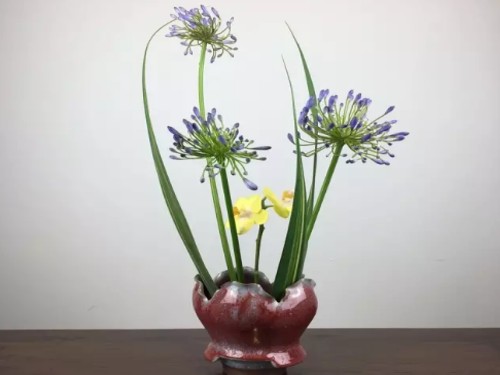
How to grow Agapanthus as a potted plant at home:
Light: For care, place it in a semi-shaded, moist spot. From June to September, be careful not to let harsh sunlight hit it directly, so as to avoid scorching the leaves.
Temperature: It likes warmth and has a certain cold resistance. In southern regions, it can overwinter in the open ground with a little covering; in northern regions, it must be moved into a greenhouse with a temperature no lower than 5°C for the winter.
Soil: For growing Agapanthus, it is best to use a mix of 3 parts garden soil, 1 part rice-husk ash and 1 part compost.
Propagation: Agapanthus can be propagated by sowing seeds or by division. But seedlings grown from seed take a very, very long time to bloom. Just how long? About 5 years…… So flower lovers should think it over carefully when propagating Agapanthus.
Watering: Water just enough to keep the soil moist, letting it dry out and then watering again. In summer, be especially sure to provide plenty of water, and frequently spray water on the plant and its surroundings to raise humidity and lower the temperature. In winter, be careful to control watering; keeping the potting soil slightly moist is enough, and do not water too much.
Fertilizing: One day before fertilizing, pause watering once so the potting soil draws in moisture; after fertilizing, spray the leaves with clean water. It is best to alternate manure, cake fertilizer and chemical compound fertilizer, applying once every 10-15 days. For divided seedlings, even more ample fertilizer and water should be given so they bloom as early as possible. After flowering, remove the spent flowers and apply fertilizer promptly.
Pruning: Wild Agapanthus grows perfectly well on its own, but for home-grown Agapanthus you should still pay attention to its shape. Prune away weak leaves in good time, remove yellowed dead leaves, and keep the well-grown leaves. This not only makes the plant look neat but also lets it produce more flowers.
Diseases: Agapanthus has two common diseases: leaf spot and red leaf blotch. For leaf spot, spray a 1000-fold dilution of 70% thiophanate-methyl wettable powder for control. For red leaf blotch, spraying a 600-fold dilution of Baijunqing solution once at the onset of the disease works very well.
A few key points for growing Agapanthus:
1. Soil: It can only grow well in fertile, loose soil with good drainage.
2. Temperature: It likes a warm, humid climate, and its optimum growing temperature is 15-28°C. When the summer temperature exceeds 30°C, cooling measures should be taken. Potted indoors, it can overwinter safely, with an overwintering temperature of 5°C.
3. Water: It likes water, but the pot must not become waterlogged, otherwise the roots rot easily. After flowering, growth slows and the plant enters a semi-dormant state, so watering should be strictly controlled, and it is better to keep it dry than wet.
4. Fertilizing: Fertilize once every 2 weeks, and apply extra phosphorus fertilizer before flowering, which can make the flowers bloom abundantly and the colors vivid.