What to Do When Tropaeolum majus Leaves Turn Yellow? Causes and Solutions
Tropaeolum majus, also known as garden nasturtium, can be grown as a perennial in southern China; in North China, it is mostly sown in autumn, grown indoors in pots, and used as a spring-welcoming flower, made to bloom during New Year's Day and the Spring Festival. The leaves are lush and the flowers beautiful, with colors including purplish red, orange-red, and creamy yellow. The trailing stems of garden nasturtium twine and climb, the leaves are shaped like bowl lotus, and when the creamy yellow flowers are in full bloom, they look like a swarm of butterflies dancing, making it an important ornamental flower.
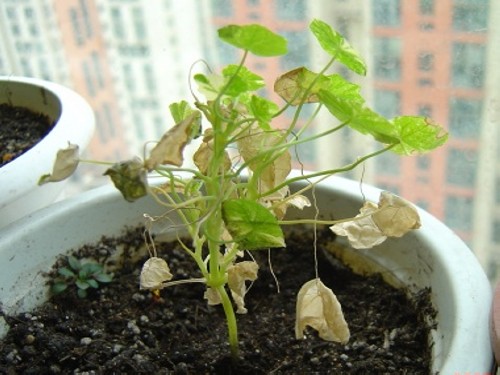
Tropaeolum majus is a beautiful flower that blooms in summer and autumn. In the process of growing plants, problems are always encountered, and the most common one is yellowing leaves. So what should you do when Tropaeolum majus leaves turn yellow? Below, the editor analyzes the causes and solutions for yellowing leaves in Tropaeolum majus.
1. Overwatering: If Tropaeolum majus is watered too much and drainage is poor, the roots are prone to rot from wetness. In mild cases, the leaves turn yellow and fall off; in severe cases, the whole plant wilts and dies.
Solution: After flowering, reduce watering to prevent excessive branch growth.
2. Long-term water shortage: Leaf tips or edges wither and dry out, and old leaves turn yellow and fall from the bottom upward, but new leaves grow relatively normally.
Solution: When watering, water thoroughly and sufficiently.
3. Excessive sun exposure: Flower leaf tips and leaf margins wither and dry out, and yellow spots appear on the sun-facing parts of the leaves.
Solution: Move it to a shaded place.
4. Insufficient sunlight: If Tropaeolum majus is placed in semi-shade or a shaded place, leaf yellowing is likely to occur.
Solution: It needs to be placed in conditions with sufficient sunlight to grow well.
5. Too low temperature: Cold wind and the dry hot air from heating or air conditioning can easily cause leaf yellowing.
Solution: It is best to keep the temperature above 10°C, and the lower the temperature, the more the watering frequency should be controlled.
6. Overfertilization: Excessive fertilizer can cause fertilizer burn. Especially when applying liquid fertilizer, prevent the fertilizer solution from splashing onto the leaves.
Solution: Place it in a cool, ventilated spot, stop fertilizing, and water less.
7. Long-term fertilizer deficiency: The color of young leaves becomes pale, yellow, or light green, while old leaves are relatively normal or gradually turn from green to yellow.
Solution: Check the potting soil; if it is dry and withered, replace the soil. Usually apply light fertilizer frequently and water with some alum solution at the appropriate time.
8. Pests and diseases: If there are spider webs on your Tropaeolum majus leaves, or insects are hiding on the inner leaves of the plant, then the yellowing leaves are definitely caused by pests and diseases. In severe cases, they can cause all the leaves to wither and die.
Solution: Increase humidity, and you can also spray acaricides specifically for mites. At the same time, prune off the branches threatened by pests and diseases and dispose of them cleanly. You can also apply insecticide 3—4 times a day until the leaves turn green again.
9. Caused by the season: Tropaeolum majus fears heat, especially in summer, when it is prone to yellow leaves.
Solution: Garden nasturtium goes dormant in summer. It can be placed in a cool, ventilated spot, with fertilizer stopped and less watering. During the plum rain season, do not let water accumulate in the potting soil.