Detailed Guide to Caring for Juniperus procumbens Bonsai, Easy to Grow It Well
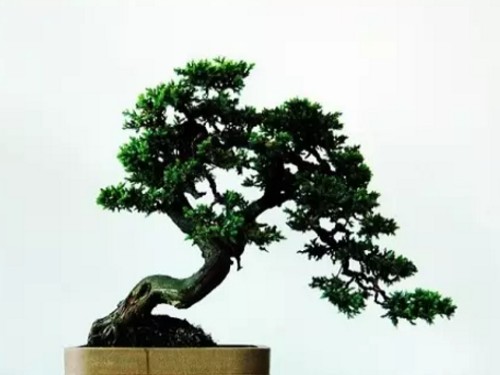
Juniperus procumbens, also known as creeping juniper and prostrate juniper, belongs to the Cupressaceae family, Juniperus genus. It is an evergreen creeping shrub. Because its trunk is often twisted, its branches are fine and dense, it adapts strongly, and it is easy to shape, it is deeply loved by bonsai enthusiasts. The creeping juniper's branches and leaves are emerald green, winding and creeping, and it is suitable for viewing in all four seasons. The viewing effect is best in spring when tender green new branches and leaves sprout. During the growing period, it should not be placed indoors for a long time. Creeping juniper is easy to shape and can be made into a horizontally spreading symmetrical bonsai, placed in a courtyard or reception room for appreciation.
[Site]
After juniper is potted in a fine pot, the pot holds relatively little soil, and some roots cling tightly to the pot wall. Under direct sunlight, the roots are easily damaged, which is unfavorable to plant growth. Therefore, for juniper bonsai in fine pots, in the hot summer, they should be placed under a shade shed where some light can be seen, maintaining a certain humidity. When the climate is dry, water should be sprinkled on the ground to increase the humidity of the microclimate, and there must be good ventilation conditions. In spring and autumn, they can be placed outdoors for care. For potted plants in the north, they should be moved indoors in late autumn or early winter in time to overwinter.
[Watering]
Juniper likes a moist environment but fears waterlogging. In summer, water frequently to keep the pot soil moist. When the weather is hot, spray water on the leaves once each in the morning and evening. In winter, water less. Creeping juniper likes moisture, and potted plants should be watered frequently, but should not become waterlogged. When the weather is dry, it is advisable to spray water on the leaves often.
[Fertilizing]
Juniper bonsai in fine pots should be given decomposed, dilute liquid fertilizer. During its growing season, applying liquid fertilizer once about every 20 days is sufficient. Fertilizer should not be applied too much or too frequently, otherwise the branches will grow excessively and affect the tree shape. It is advisable to use dilute, decomposed organic fertilizer. Each year from March to May in spring and from September to October in autumn, apply dilute fertilizer water 2-3 times each.
[Pruning]
For pruning creeping juniper, before new branches sprout in spring, promptly shorten side branches that are not needed for development to promote the extension of the main branches. Branches that affect the tree shape can also be cut off during the dormant period.
[Shaping]
During the care process, juniper sometimes grows overly long branches. If they ruin the tree shape, they should be cut off in time. To make the branches and leaves short and dense, pinch the tips appropriately to promote the growth of side branches.
[Repotting]
Creeping juniper should be repotted once every 3-4 years, preferably before new growth begins in early spring. When repotting, some old roots and old soil can be appropriately removed, and fertile, loose cultivation soil can be used to replace them, so as to promote the growth and development of new roots, make the branches strong and the leaves emerald green, and increase the ornamental effect of the bonsai.
[Pests and Diseases]
Juniper bonsai has relatively few diseases and insect pests. The main things to prevent and control are rust disease and red spider mites.
Juniper likes moisture, but there must be no water accumulation in the pot. In addition to watering into the pot, water should also be appropriately sprinkled on the care site. In winter, water less. Juniper bonsai that have already been shaped should not be fertilized too much; during the growing season, applying decomposed dilute organic liquid fertilizer once a month is sufficient. In spring and autumn, when the sunlight is not yet too strong, place the juniper bonsai in the sun for care. In summer, when the weather is hot and scorching, place the juniper bonsai in a semi-shaded place or in a shade shed. In winter, it can overwinter safely at a room temperature of about 5°C.