How to grow a Chinese juniper bonsai? All the care methods are right here
Chinese juniper is a variety of cypress and a relatively common landscape tree species. It is loved by many garden artists and is suitable for garden landscaping in various styles. In addition, Chinese juniper can also be grown in pots and made into bonsai art, with a very good ornamental effect. Chinese juniper bonsai made from Chinese juniper has a beautiful tree shape and verdant leaves, staying evergreen in winter and summer, and is a good helper for improving the feng shui of a room.
Chinese juniper has many uses. It can be used for ornamentation, for greening garden design, and as medicinal material. In addition, it can also be used to make bonsai.
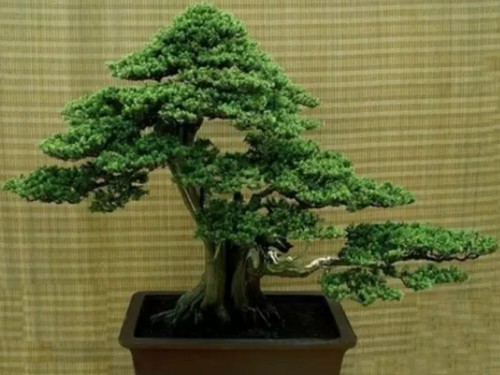
Chinese juniper prefers a warm, humid, and sunny environment, is slightly shade-tolerant, and tolerates cold and drought. A finished bonsai can be placed outdoors in a sunny, well-ventilated place for care. Do not use too much fertilizer or water, so as to avoid excessive vegetative growth that affects the beauty of the tree shape. During the growing season, keep the potting soil moist, and water according to the rule of "do not water when dry, water thoroughly when watering." Do not give "half water." When the air is dry, spray water on the leaves to increase air humidity and keep the leaf color fresh, but pay attention to drainage during continuous rainy days. Apply a fully decomposed dilute liquid fertilizer once each at the end of April and in early September every year. In winter, place it in a cold room or bury the whole pot outdoors in a wind-sheltered, sunny place to overwinter, and do not water too much.
Pruning and shaping of Chinese juniper bonsai are best done in winter. Cut off excess branches, branches with poor angles, and other branches that affect the tree shape. For overly long branches, pinch the tips during the growing season to encourage new buds and make the branches and leaves dense. Small bonsai should be repotted every 2 years, and large bonsai every 4 to 5 years, generally before bud break in spring. When repotting, cut off diseased roots, rotten roots, and some old roots, thin out dense roots, remove 1/2 to 1/3 of the old soil, and replant with new fertile cultivation soil.
Precautions:
1. Clean old needles and dead needles on time, and maintain an appropriate amount of needles to facilitate ventilation and light and reduce pests and diseases. Pruning and grafting wounds must be sealed in time. When Chinese juniper branches have no branches or leaves, they are prone to shrinking and dying. Only after the lower branches sprout can they be shortened in stages and gradually. Skillfully using old branches can shorten the care time.
2. Chinese juniper is a shallow-rooted tree species and should not be planted deeply. In the early stage, pay attention to wind shelter and shock prevention, so as to avoid shaking the tree and pulling the roots, causing death.
3. Preventing borers is a major matter and must not be neglected. Focus on scale insects and jewel beetles. Combine manual capture with chemical prevention.
4. Prevent pollution from soot, dust, soil, environment, and chemical substances in the air. Use less tap water.