How to Grow Anthurium in Water? A Detailed Guide to the Cultivation Method
When growing anthurium hydroponically, half of the root system should be exposed to the air so that the roots can breathe in the air; otherwise, root rot is very likely to occur. The roots of hydroponic plants grow exposed, and after contact with light, the plant cells carry out photosynthesis, and the same goes for the roots. It is normal for them to appear green. As long as there is no direct sunlight, healthy root growth can usually be ensured. Not all hydroponic plant roots will eventually turn green and be healthy.
Water cultivation steps:
1. Choose a pot of anthurium with a graceful plant shape and flowers, gently pat around the pot, and remove it from the pot for repotting.
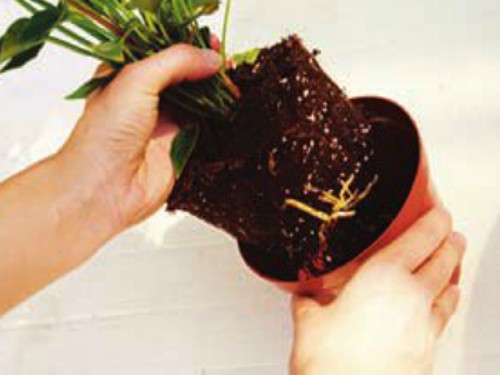
2. Then remove the peat soil.
3. Soak and wash with water.
4. Rinse the root system with a faucet fitted with a spray nozzle.
5. Prune yellow leaves and damaged roots, soak in a 0.1 percent potassium permanganate solution for 15 minutes for disinfection, then rinse clean with clear water.
6. Prepare a round glass bottle and place pebbles at the bottom as decoration.
7. Add clear water until it covers two-thirds of the root system.
8. Place the anthurium plant into the container, and it is done.
Key points for hydroponic anthurium care:
1. It is not cold-tolerant, so in winter it needs to be kept warm.
2. It likes relatively high air humidity and a semi-shady environment.
When growing anthurium hydroponically, inducing new roots takes a relatively long time compared with plants such as Aglaonema commutatum, but its root system is quite vigorous, and once hydroponic roots have formed, it is very easy to care for. Therefore, choose robust, virus-free anthurium plants, disinfect them with agricultural streptomycin, and then acclimatize them with a flower nutrient solution.
Daily care:
1. It is difficult to completely clean the substrate residue on the anthurium root hairs in one go; it can be gradually washed clean along with daily care, and it must not be forcibly scrubbed, because that will damage the root system.
2. Generally, no pruning is done to the root system; according to the condition after water cultivation, only slight shortening is done to the growing roots.
3. Throughout the year, water should be sprayed on the leaf surface many times. After the flowers fade, cut off the spent flowers and spray foliar fertilizer so that the anthurium can grow normally.
4. Anthurium requires stable water temperature, and when changing the nutrient solution, the temperature difference must not be too large.
Precautions:
1. Anthurium that has just been grown hydroponically with expanded clay is not suited to direct sunlight; just place it in a shady room.
2. At the beginning of hydroponic cultivation, do not add nutrient liquid; adding rooting powder is best. If you cannot buy rooting powder, leave me a message, and I will teach you how to make rooting powder yourself; the effect of using B12 is not very obvious.
3. The container for growing anthurium should be slightly larger, preferably wide at the top and narrow at the bottom, in a V shape, and it should also have a certain height.
4. How long can hydroponic anthurium live? Those grown hydroponically with expanded clay can live for a very long time. I have grown mine for 2 years, and now it produces leaves and flowers every year, and I estimate it can live even longer.
5. If you want to grow anthurium hydroponically, it is recommended to use expanded clay to induce it first, then switch to pure hydroponics. Directly putting it into water is not recommended.