What should you do about ants in your bonsai? A few effective ways to get rid of them
When growing plants, gardening enthusiasts may often run into ant infestations on their flowers, especially potted flowers. So how do you control ants in potted flowers? Below are several methods for controlling ant infestations for gardening enthusiasts.
How do you control ants in potted flowers? When growing plants, gardening enthusiasts may often run into ant infestations on their flowers, especially potted flowers. So how do you control ants in potted flowers?
1. Eliminate the source of ants
Keep potted flowers away from ant nests. If you find ants already in the potting soil, first follow the ants' crawling route to find the nest, then destroy it by flooding with water, burning with fire, spraying pesticide or similar methods. Then scatter some lime on the nest and along the ants' crawling route to prevent the ants from causing damage again.
2. Physical control
1. When applying rotted manure, base fertilizer or organic fertilizer, you must use fully fermented, rotted organic fertilizer. Never use raw or partially rotted fertilizer, so as not to attract ants looking for food.
2. Cleaning off the excrement of flies, moths, aphids, mites and other insects left on the leaf surface is likely to attract ants looking for food, so spray and wash the leaf surface with clean water regularly to keep it clean. At the same time, sweep the ground often to keep the area where the potted flowers are kept clean and hygienic, so that odorous materials do not attract ants.
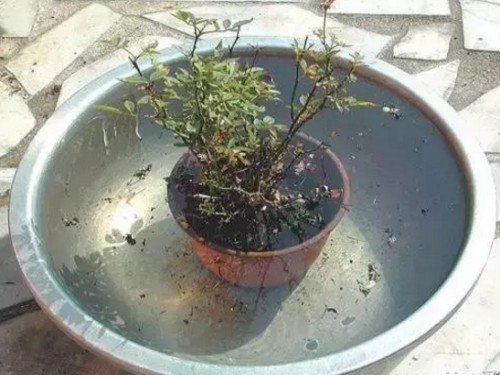
3. Soaking in water to remove the pests: slowly place potted flowers already harmed by ants into a bucket filled with water and soak them for 30 to 60 minutes. The ants cannot withstand the flooding and will all crawl out of the potting soil; at this point you can get rid of the ants floating on the water surface and crawling on the stems and leaves of the potted flowers.
4. Garlic to repel the pests: peel garlic, mash it, and bury these fragments in the potting soil. The ants cannot withstand the fumigating garlic smell and will leave on their own.
5. Repotting to remove them: for plants that have already built nests at the roots, the most effective method is to repot them in a water basin and destroy all the ants. Then wash the plant roots and grow the potted flowers in disinfected new potting soil and a new pot.
3. Chemical control
1. Potting soil disinfection: before potting or repotting, disinfect the potting soil with 40% formalin, 65% zineb powder, 50% carbendazim powder or similar chemicals to kill termites, ants and their eggs in the potting soil.
2. Burying medicated soil: mix 1 part 50% trichlorfon wettable powder with 50 parts sieved fine soil to make medicated soil, then bury the medicated soil at equal distances in the potting soil to kill the ants.
3. Pouring medicated liquid: for plants that are severely affected and cannot be repotted in hot weather, where burying medicated soil has no obvious effect, or where ants have already built nests in the potting soil, mix 10 g of 50% phoxim emulsifiable concentrate with 500 to 1000 g of water, or mix 1000 g of clean water with 5 to 10 g of 40% dimethoate emulsion to make a medicated liquid, pour the liquid into the potting soil and the places where there are ants, then seal the whole flower pot tightly with a plastic bag for 12 hours, which can kill all the ants.
Termites and ants do great harm to potted flowers: they both bore into the stems and destroy the plant's root system, weakening the plant's ability to absorb and transport nutrients and water, and ultimately causing the plant to grow poorly, wilt and even die. So gardening enthusiasts must be sure to pay attention to controlling them.
Beginner gardeners do not know the harm ants do to flower growing, and just think they should not hurt them, but in fact they are a major enemy of flower growing! Ants will tend aphids, scale insects and others, and will carry pests from one plant to another (otherwise, did you think they could fly?)
Ants like the excrement of aphids and scale insects (which is honeydew to them), so they help the pests damage plants. Therefore, friends who grow flowers should get rid of ants as soon as they see them. You can scatter some soaked citrus water (lemon is the most effective) beside the flower pot to prevent ants from invading.
Below are the 4 simplest methods:
1. Soaking in clean water
First fill a large water basin with clean water, then soak the potted plant completely in the water; the water must submerge the flower pot. Soak for 20 minutes, then lift out the flower pot, and all the ants will have drowned.
2. Poisoning with chemicals
Pesticide shops and agricultural product stores sell some ant poisons (just like rat poison). The ants will die after eating them. Buy some and place them in places where ants appear or along the paths they travel.
3. Watering with soapy water
This method requires your plant to be strong and able to withstand the stress. Mix soapy water with water, dilute it 500 times, then pour it into the soil. Leave the flower pot for 30 minutes, then water with clean water. Repeat several times and you can clean the ants out of the flower pot; it is also very effective against other small crawling insects in the soil.
Be careful to control the amount; if the plant is growing weakly, do not do this.
4. Spraying with pesticide
Go to a pesticide shop and directly buy household pyrethroid insecticides for killing insects, such as the common Mieha Ling, and spray directly on the places where ants appear and in the flower pot. The advantage is that it is simple and quick; the disadvantage is that it cannot completely eliminate them, and it cannot kill the ones in the soil either.
Growing flowers at home often causes ant infestations. Ants not only affect the growth of flowers and trees, and even cause them to die, but also damage furniture and contaminate food, bringing many troubles to flower growers. Below are several simple control methods:
1. Soil replacement method
If you do not grow many flowers and discover the ant infestation early, you can immediately carry out a thorough soil replacement to completely get rid of the ants. The method is to completely replace the original soil containing ants and their eggs with fresh soil. The replacement soil must be thoroughly disinfected, and can only be used after checking that there are indeed no ant eggs. Before putting new soil into the flower pot, wash it carefully, and promptly treat the removed soil with insecticide. After replacing the soil, spray the place where the flower pots are placed with Mieha Ling or another insecticide.
2. Pesticide spraying method
If there are relatively many ants and their range of activity is fairly wide, during the peak activity period of ants in summer and autumn, you can use Mieha Ling to spray and kill them on the surface of the potting soil and around the flower pot. Be careful not to let the liquid fall on the flowers and leaves. Generally once every 5 days, spraying continuously 5 times can bring the ant damage under control.
3. Burying pesticide method
If you find ants in the flower pot soil, you can bury an appropriate amount of veterinary trichlorfon tablets in the soil in and around the ant nest. According to the size of the flower pot, generally 5-8 tablets is suitable, then water thoroughly every day, and after 7 days the ants in the pot can be killed.
4. Bait trapping method
At a spot 20 cm from the flower pot where ants are found, use a small piece of pig skin or chicken bone as bait. Do not put any pesticide in the bait. Generally after the meat skin or chicken bone has been placed for 2-3 hours, it will be discovered by the ants. To carry the food away, the ants will turn out in full force; at this point use Mieha Ling to spray and kill them. Trap once every 10 days, and the ants can gradually be eliminated.