How to grow garlic vine? Detailed guide to cultivation methods and precautions
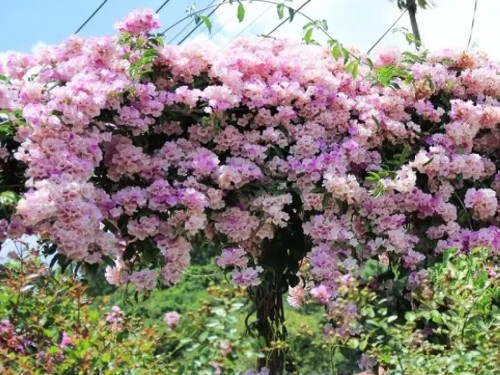
Garlic vine (Mansoa alliacea) gets its name because its flowers, leaves and branches give off a garlic aroma when damaged. It is often used for flower corridors, and when it blooms it is quite a sight, with garlic vine opening silver bell-like flowers; when the wind blows, no bells ring, yet waves of garlic fragrance drift by. Moreover, like apricot blossoms, garlic vine's flowers start out red, then the color gradually fades, and by the time they fall they are snow white.
Garlic vine is robust by nature and is generally used for beautifying fences and walls or decorating gazebos and trellises. Another characteristic of this flower is that it changes color over time. When it first opens the flower is pinkish purple, after a few days it slowly turns pink, and finally becomes white before falling. It likes a warm, humid climate and a sunny environment, with an optimum growing temperature of 18-28°C. It is not demanding about soil, and full sun is best. When the winter temperature drops below 5°C for a short time, it can overwinter safely in subtropical regions apart from some leaf drop; being below 5°C for a long time can cause frost damage to the above-ground parts, so full-sun cultivation is required.
1. Soil
It has no particular requirements for soil, and can be grown in pots or in the ground. It grows as a climbing vine, so of course we need to train it as it grows, and prune it each year after flowering in spring. Gardeners in the north can grow it in pots, using a soil mix of garden soil, wood shavings and peat soil at 1:1:1:1 as the growing medium.
2. Light
Garlic vine likes light, so we can simply place it in a spot with ample sunlight. Unfortunately, it is not cold-tolerant, and cold winds will affect its growth. It is best planted in a sunny, wind-sheltered spot in loose, fertile, slightly acidic sandy soil. It must be planted in a place with sufficient light, otherwise it will bloom sparsely or not at all; a full-sun environment is best.
3. Temperature
It likes a warm, hot climate, and during the growing season water and fertilizer must be plentiful. The optimum growing temperature is 18-35°C. When the winter temperature drops below 5°C for a short time it will lose some leaves, but it can still overwinter safely.
4. Watering
It likes humidity, fears waterlogging, and is slightly drought-tolerant. In spring, keep the soil moist; as the temperature rises, gradually increase the frequency and amount of watering, basically once every 3-5 days, keeping it slightly moist without water accumulation. In summer's high heat, water once a day; in autumn, basically keep the same watering amount as in spring, only reducing it as the temperature drops. In winter the plant goes dormant and watering must be controlled, about once every half month, keeping it slightly dry; on rainy days pay attention to controlling water and drainage.
5. Fertilizing
It likes fertilizer. Before transplanting, apply plenty of organic fertilizer at the bottom of the pot as a base fertilizer. In the spring growing season, appropriately apply additional compound fertilizer; after budding, apply more phosphorus and potassium fertilizer; do not fertilize after flowering. Apply fertilizer in small amounts and often, and do not apply too much nitrogen fertilizer, otherwise the branches and leaves will grow luxuriantly but it will not bloom.
6. Repotting
Flowering plants can be repotted each year in spring after the weather warms up. When repotting, try to keep the root-ball soil, prune the branches and aging roots, apply plenty of organic fertilizer at the bottom of the pot, and after planting water thoroughly to settle the roots. Shade it and keep the potting soil moist but not waterlogged; after the plant recovers, return to normal care.
7. Diseases
Leaf spot disease is common, and can be controlled with Pythium oligandrum, amino-oligosaccharins and Trichoderma harzianum. For spraying, it is best that the leaf surface is moist without dripping; for root drenching, it must be drenched thoroughly, and it is best to use different agents together for control.
Key care points:
1. Garlic vine likes a warm, humid climate and a sunny environment.
2. It likes loose, fertile, slightly acidic sandy loam.
3. In summer, water once a day; in winter, water once every 3-4 days.