How to grow cineraria in pots? A detailed guide to cultivation methods
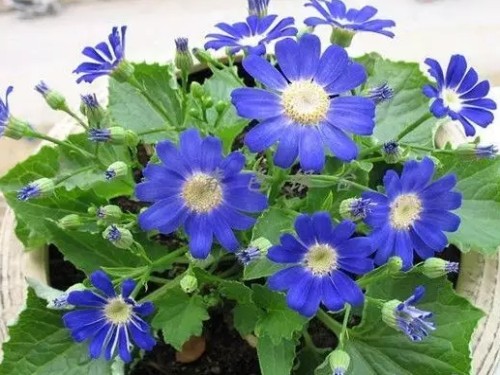
Cineraria (Pericallis hybrida) originates from the Atlantic Canary Islands, and is now widely cultivated in parks or courtyards across China. Its flowers are beautiful and bright, with diverse colors, making it a common potted flowering plant and an ornamental plant for decorating courtyards and rooms. Recently I have seen many flower lovers buying cineraria without knowing how to care for it, so today the editor will introduce the key points of cineraria care. If you have bought this flower, you should definitely read this carefully.
To grow cineraria well and make it highly ornamental, during the growing period you must pay attention to timely and appropriate water and fertilizer supply, provide a well-ventilated and well-lit environment, and carefully prevent and control pests and diseases. Therefore, to grow cineraria well, the following daily management tasks should be done well.
1. Soil
Cineraria prefers sandy loam rich in humus and well-drained; it dislikes drought and fears waterlogging, and is suitable for neutral and slightly acidic soil. According to the growth of cineraria, cineraria likes humus-rich and well-drained sandy soil, and this kind of soil should be chosen when buying soil, which is beneficial to the growth of cineraria. A soil pH of 6.5-7.5 is relatively suitable.
2. Light
During the growing period, cineraria likes sunlight and should not be shaded. The flower pot should be rotated regularly so that the branches and leaves receive light evenly and the plant shape stays upright and not lopsided. After the flowers fade, the plant still needs moderate light to adapt to seed development. In home care, it should be placed at a window or on a south-facing balcony, but because cineraria has obvious phototropism, the pot needs to be turned about every 7 days, that is, turning the shaded side toward the sunny side, so that the plant shape can be symmetrical, complete and beautiful.
Generally, plants that can bloom with gorgeous flowers like light, and cineraria must also grow in a place with sufficient light, but avoid too strong light. As you can see, the leaves of cineraria are very tender, and too strong light can easily cause leaf curling, and in severe cases burn the leaves, affecting the ornamental effect. When placing it indoors, pay attention to changing the orientation of the flower pot so that the plant can grow evenly and maintain good ornamental value.
3. Temperature
Cineraria likes warmth but cannot tolerate high temperatures, and grows best under conditions of 15-20°C. When the temperature is higher than 21°C, leggy growth can occur, which is not conducive to flower bud formation. When the temperature is lower than 5°C, the plant stops growing and developing, and below 0°C frost damage occurs; the suitable temperature for flowering is 10-15°C, below 6°C it cannot open its buds, and above 18°C the flower stems grow thin and long, affecting ornamental value.
Cineraria is a representative of Mediterranean-climate flowers; it tolerates neither high nor low temperatures, and the suitable growing temperature is around 15°C. Above 20°C the plant is prone to leggy growth, affecting flower bud differentiation. Therefore, although cineraria is a perennial herb, it is generally grown as a one- or two-year crop. Many flower lovers find it wilting after buying it home, and a large part of the reason is that the indoor temperature is too high and the environment is too stuffy and hot.
4. Watering
Cineraria leaves are large and thin, so sufficient water must be maintained, but the potting soil must not be too wet; keeping the leaves from wilting is appropriate. Normally, watering should depend on whether the potting soil is dry or wet; water again after it dries, about once every 2-3 days. Clean water can be sprayed on the leaf surface once a day, and in hot weather it can be sprayed twice, to lower the temperature and increase air humidity. After flower buds appear, watering should be controlled as much as possible, and during the flowering period the pot should be placed in a cool environment of 8-12°C, which can extend the flowering period to 30-40 days.
5. Fertilizing
In addition to applying base fertilizer when planting, cineraria should be top-dressed with thin cake fertilizer once every 7-10 days during growth, or diluted chemical fertilizer can be used. After flower buds appear, 1-2 applications of 1000x monopotassium phosphate solution can be added, and fertilizing should continue until flowering (stop applying during the rainy season). If fertilizer contaminates the leaves during application, rinse them promptly. In home care, people generally buy finished plants, and cineraria does not need fertilizing during the flowering period; you just need to control temperature, water, light and humidity well. During the growing period, some diluted fertilizer can be applied.
Herbaceous flower plants generally need to keep the potting soil moist. When caring for cineraria at home, sufficient water must be maintained, but it must not be too wet; a flower pot full of water is definitely not acceptable. When watering, be careful not to pour it on the flowers and leaves, as poor indoor ventilation can easily cause pathogen infection.
6. Pests
The common pests and diseases of cineraria are aphids and red spider mites. For severe damage by aphids and red spider mites, a 2000x dimethoate dilution can be sprayed to kill them. Because red spider mites generally occur on the back of leaves, while aphids generally occur on the tender tops of cineraria, when spraying pesticide, focus on the back of the leaves and the top of the plant, and also spray appropriately on the front of the leaves.