The correct method for repotting and changing the soil of a bonsai ficus
Many trees are repotted during their dormant period or slow-growth period. At this time, the tree's new roots have not yet grown, so repotting will not touch the new roots, avoiding bruising the new roots and causing root rot. After repotting, it is beneficial to the growth of new roots, and the new roots absorb nutrients from the freshly replaced nutrient soil, promoting healthy growth of the tree.
Repotting is an important measure in bonsai care. A small amount of potting soil can only provide the ficus with a limited space for growth, causing the roots to become dense and severely aged, with no vitality. If not repotted for a long time, the soil becomes hard and compacted, aeration and water permeability deteriorate, nutrients decrease, and the absorption of water and nutrients by new roots and root hairs is seriously affected. The water and nutrients supplied to the branches and leaves for growth also decrease accordingly, the leaves tend to turn yellow and become thinner, and the branches tend to wither without producing new shoots.
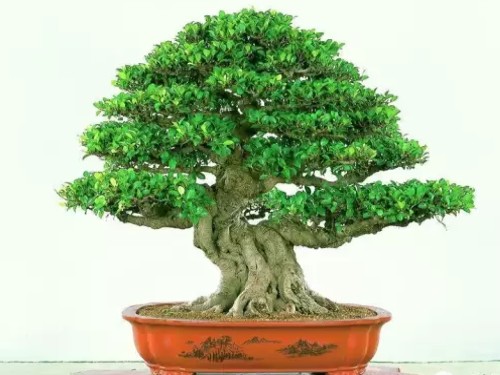
A bonsai ficus is best repotted once a year, and generally not exceeding 2 years. Repotting can improve the soil, and changing the soil can increase the fertility of the potting soil and provide sufficient nutrients needed for the growth of the ficus.
When repotting, thick, overly long roots and excess fibrous roots should be pruned away. Shorten and prune the root system. Reducing the roots and improving root quality can promote the growth of new roots. At the cut openings, fine roots can proliferate, and as the fine roots grow and thicken, the number of roots in the root base can be increased, making the tree appear more powerful. Only when the roots grow well can the branches, trunk, and leaves of the tree grow in a balanced way, so as to maintain a good tree shape.
After a bonsai ficus tree has grown in a pot for many years, fibrous roots densely fill the bottom of the pot, making it difficult for water to penetrate and drain, and fertilizer is also not easily absorbed, which affects the normal growth of the tree. At this point, it should be repotted and the soil changed. For repotting, the original pot may be used or a pot one size larger may be used, depending on the size of the tree. Changing the soil can improve the soil's aeration and water permeability, increase soil nutrients, facilitate robust growth of the bonsai tree, and enhance its ornamental effect.
For repotting a ficus tree stump, the soil is mainly leaf mold, paddy field soil, mountain soil, etc. When changing the soil, an appropriate amount of nutrients can first be added to the soil, allowing them to ferment and volatilize in the soil to become a slow-release type of nutrient, so that the tree stump can benefit slowly. Small-leaved ficus As for grasping the soil pH, it should be determined according to the specific conditions of the tree species. When repotting, generally first fix a screen or tile at the drainage hole at the bottom of the pot, first add larger-grained soil to facilitate drainage, then place the tree stump in, fill in finer-grained cultivation soil, insert and tamp it tight with bamboo or wooden sticks, and determine the amount of watering according to the conditions of the tree species.
Repotting a bonsai ficus can be decided based on the following aspects:
1. Generally, small bonsai are repotted once every 1 to 2 years, medium bonsai once every 2 to 3 years, and large bonsai once every 3 to 5 years. If it is an old tree stump bonsai, it may be repotted once every several years.
2. For tree species that grow vigorously and like fertilizer, repot more frequently with shorter intervals; for tree species that grow slowly and need less fertilizer, repot less frequently with longer intervals. Old stump bonsai of the pine and cypress type are not suitable for frequent repotting.
3. Tree species with lush branches and leaves and well-developed root systems should be repotted frequently. Repotting can be determined by the condition of root growth. When the potting soil is neither dry nor wet, turn the pot upside down, pat the bottom of the pot with your hand, and let the tree, soil, and roots all fall out together. Check the compaction of the soil block and the distribution of the root system. If the soil block is compacted and the root system densely covers the bottom surface of the soil block, then it indicates that repotting is necessary.
A bonsai ficus should be repotted and have its soil changed once every two years. When repotting, crush and fully decompose organic fertilizer, then mix it into the pot in a certain proportion to slowly provide nutrients. Repotting is best carried out in early spring or late autumn during the dormant period of the ficus (the time should be in April or May), and at the same time thin out overly dense roots.