Common Causes and Solutions for Leaf Drop in Elm Bonsai
I bought an elm bonsai a month ago. At first it was fine, but after two days of care it started growing aphids and the leaves withered. Then, following what I read online, I removed all the leaves and sprayed it with Sichuan pepper water. After that it improved and started sprouting new buds. But now for some reason it has started dropping leaves again, and this time there are no pests, it just won't grow leaves, and the leaves that did grow have all withered.
Some of the newly sprouted leaves just wither and dry up directly! What is the reason for this? Also, the seller said to water once every 2 days in winter, is that right? Would that be too much? (It's winter here right now…) Two days ago I gritted my teeth and pruned some of the dead branches, but there was still no improvement at all. Please, I'm begging for expert guidance! I don't want to throw it away!
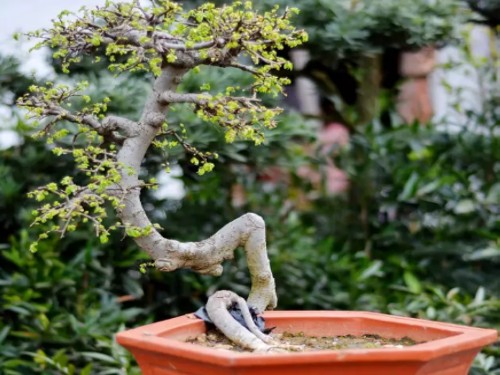
Let's first look at the reasons why elm bonsai drops its leaves:
1. The potting soil is too dry, and suddenly adding a large amount of water causes an abscission layer to form inside the plant. This causes sudden leaf drop.
2. When pest infestations occur, using pyrethroid pesticides can also cause massive leaf drop.
3. When fertilizer is too heavy and sunlight is intense, the leaves turn yellow and dry, and rain will also cause leaf drop.
4. Elm is especially intolerant of waterlogging, but it is cold-hardy, so never give it too much water; waterlogged soil easily causes root rot. Elm is a deciduous plant, so it doesn't matter if all the leaves drop off, as long as the elm's roots haven't rotted. You can water it less, or take the roots out to check, cut away the rotted parts, let them dry in the air a bit, then put them back in the pot, and that will do.
During the recovery period, reduce light and watering. Especially now that there are hardly any leaves, photosynthesis is minimal, so do not water so much.
Judging from the current situation, the problem may lie in the roots. Don't mind the trouble, dig it out and see if the roots have rotted. If they have rotted, immediately prune the rotted roots, and dry out the soil or replace it. If conditions allow, mix some sand and gravel into the soil to improve aeration. If the root rot was not caused by waterlogging but by over-fertilizing, then besides cutting off the rotted roots you must also rinse the roots and be sure to replace the soil.
Elm is very tough. In northern regions, it is naturally a plant with a deciduous winter-dormancy habit. In winter it will become bare, and after the weather warms up in spring, it will sprout a large number of new buds; as long as the plant is healthy, there is no need to worry too much, just let nature take its course. Besides, the lifespan of plant leaves is limited; they do not stay on forever, unless it is an artificial flower with no life, and this is the same for any plant.
I bought one last winter, and it also kept dropping leaves, eventually becoming completely bare. But this spring it grew new leaves again, and now it is growing very lushly, with basically all the leaves on the tree being new growth from this year. So there is no need to worry too much.