What to Do When a Fukien Tea Bonsai Drops Its Leaves? Causes and Remedies
Fukien tea, also known as Carmona retusa and cat tree, is an evergreen shrub in the Boraginaceae family. Its leaves are small, oblong, dark green and glossy. In spring and summer it bears small white flowers, and its drupe is spherical, green at first and then red. Its trunk is rugged and gnarled in varied forms, and its tree form is elegant and graceful. It is one of the 4 major bonsai tree species of Lingnan, and also one of the 5 species exported to the United States after China's accession to the WTO. Fukien tea is a southern tree species and fears the cold. When grown in pots in the Yangtze River basin and areas to its north, it must be placed in a spot with ventilation and light and moist air. In winter it must be moved into a greenhouse, preferably at a temperature no lower than 10°C, and a certain humidity must be maintained. In summer, place it in a shaded, cool spot.
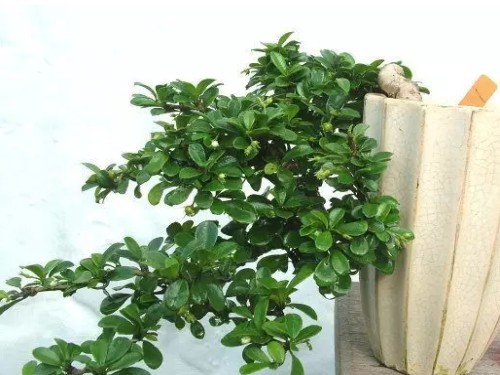
For ornamental purposes, Fukien tea has a short tree form, dense branches, green leaves and white flowers, jade-green leaves and red fruit, and a peculiar and striking appearance. A bonsai grown from an old stump is even more antique and elegant. It is suitable for viewing in all four seasons, and is at its best in summer when the tender new leaves emerge. But in our daily care, we often encounter the phenomenon of a Fukien tea bonsai dropping its leaves. So, regarding the phenomenon of leaf drop in Fukien tea bonsai, what should we pay attention to in daily care? Simply put, care should especially focus on the 6 key points: light, temperature, water, fertilizer, flowers and insects.
Light: Too much sunlight has two side effects: first, it easily causes leaf dehydration and shedding; second, excessive pigment deposition makes the leaves "dark green" rather than "fresh green", affecting the ornamental effect.
Temperature: Fukien tea bonsai is very sensitive to low temperatures. It stops growing when the temperature is below 15°C, and dies below 5°C. Therefore, before winter arrives, be sure to move the Fukien tea indoors in time to overwinter. If there is no heating equipment indoors, you must find a way to raise the room temperature above 5°C.
Water: Fukien tea bonsai is a southern tree species and especially loves water. Especially in summer, as soon as the surface soil looks dry to the naked eye, water it in time; better too wet than too dry. The leaves of Fukien tea bonsai dehydrate very easily, and it only sprouts new leaves once a year at the turn of spring and summer. Therefore, ensuring sufficient water is the most basic and most critical factor in caring well for Fukien tea.
Fertilizer: That Fukien tea bonsai loves fertilizer is another of its characteristics. Especially in the peak growing seasons of spring and summer, apply thin fertilizer frequently. A lack of fertilizer will lead to thin, weak leaves and pale color, directly affecting the ornamental effect. Because Fukien tea bonsai has a well-developed root system, regular topdressing cannot fully meet its needs, so the pot should be changed in time according to the specific situation, and sufficient base fertilizer should be applied when changing the pot. Fukien tea bonsai does not have high light requirements; scattered light is enough to meet its growth needs, and direct exposure to strong sun must be avoided.
Flowers: Fukien tea is a foliage plant. Its numerous small white flowers not only have no ornamental value, but also consume a large amount of nutrients and affect leaf growth. Constantly declining flower stems mixed among the leaves also greatly affect the ornamental effect. Therefore, the only way to solve this contradiction is to remove the flower buds in time.
Insects: Fukien tea generally rarely suffers from pests and diseases, but in the season when new leaves sprout in spring and summer each year, it is prone to aphids. Aphids are basically harmless to old leaves, but since Fukien tea only sprouts new leaves once a year, once damage occurs it affects the whole year. Therefore, before and after new leaves sprout each year, special attention should be paid to preventing and controlling aphids.
In addition, if a Fukien tea bonsai frequently drops leaves, it is probably due to too much water during care. Another possible cause is insufficient light and other factors causing leaf drop. It is suggested that while keeping the temperature between 20-25 degrees, bonsai enthusiasts should give their bonsai tea tree more natural sunlight time, and add a little base fertilizer to the bonsai tea tree so that it has nutrient supply in spring. In this way, your bonsai tree will again be full of lush branches and leaves!