Methods and Tips for the Care and Management of Bonsai Orange Trees
Bonsai orange trees should be placed outdoors, with attention to improving ventilation and receiving ample direct sunlight. Keep the potting soil moist; do not let it dry out or cut off watering. Also, do not let the potting soil become waterlogged due to compaction or poor drainage. Potted orange trees should be deliberately cultivated to bear more autumn fruit for enjoyment during the Spring Festival. From July to August, before the autumn flowers, apply sufficient fertilizer to increase the fruit-setting rate. During full bloom, water and fertilizer should be slightly reduced; once the fruit grows to the size of a bead, apply frequently again. If the plant is not growing vigorously, foliar feeding is necessary, and liquid fertilizer should be applied until it stops in winter.
1. Light
When caring for an orange tree, place it in a spot with ample sunlight. If light is insufficient and the environment is shady, it often causes excessive growth of branches and leaves, with fewer flowers and fruits. Since orange trees prefer a cool climate in summer, or when summer sunlight is intense, it is best to place them in slight shade at this time. Give them appropriate light. During the ornamental period, they should not be kept out of sunlight for long periods, nor should the light be excessively ample; both can cause the fruit to drop prematurely. You can place it in a low-light spot indoors or move it to a balcony every 3 to 4 days to receive afternoon sunlight.
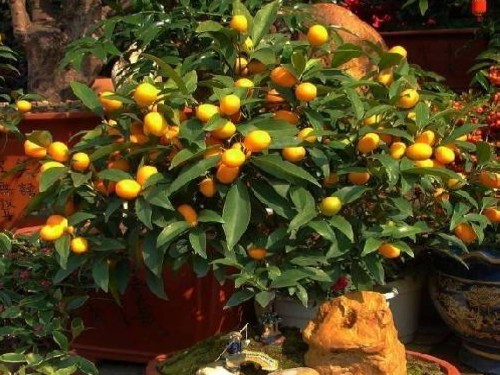
2. Temperature
Room temperature must not be too high. If the plant cannot get sufficient dormancy, it will affect flowering and fruiting the following year. Use a small spray bottle frequently to clean dust from the leaf and fruit surfaces, keeping the leaves and fruit clean.
3. Watering
Orange trees like moisture but dislike waterlogging; overly wet potting soil easily causes root rot. Therefore, during the growing period, it is best to keep the potting soil moderately moist. Spring is dry and windy. Spray water on the leaf surfaces once a day to increase air humidity. In summer, spray water 2 to 3 times a day and also spray the ground. However, avoid spraying during the flowering period to prevent flower rot, which would affect fruiting. During the rainy season, promptly pour out accumulated water in the pot to avoid root rot. When placed outdoors in summer, it is best to prop up the flowerpot with bricks to aid drainage. It is best to keep the potting soil slightly moist. If the potting soil is too wet, roots easily rot, causing leaf and fruit drop; if the potting soil is too dry, leaves easily curl and fruit shrivels. If planting in ceramic or plastic pots, pay even more attention to watering less.
4. Fertilizing
Orange trees like fertilizer. For potting, it is best to use a growing medium mixed from 4 parts leaf mold, 5 parts sandy soil, and 1 part cake fertilizer. When repotting, place hoof pieces or decomposed cake fertilizer at the bottom of the pot as a base fertilizer. From the beginning of new bud sprouting until before flowering, apply decomposed dilute sauce-residue water once every 7 to 10 days, alternating with several applications of alum fertilizer water. After summer begins, it is best to apply more phosphorus fertilizer to aid bud formation and fruiting. An orange tree that has just borne oranges consumes a great deal of nutrients; at the turn of spring and summer, exactly when the orange tree is sprouting new buds and new leaves, it needs even more sufficient nutrients. After loosening the soil, add some granular compound fertilizer. It is best to bury some chicken and duck feathers in the soil, burying them fairly deep and covering them firmly, otherwise insects are easily bred. During the ornamental period, stop applying fertilizer to the pot; foliar feeding can be done by spraying a 0.3% potassium dihydrogen phosphate solution on the leaf surfaces (a small spray bottle can be used), so that nutrients are absorbed through the leaf stomata to meet the needs of fruit development. Spraying once about every 15 days is sufficient.
5. Pruning
Pruning is an important technical measure for making an orange tree bloom abundantly and bear abundant fruit. To make the tree shape graceful and bear more fruit, each year before the sap begins to flow and before the spring buds have sprouted, carry out one heavy pruning: cut off dead branches, diseased and pest-infested branches, overly dense branches, and leggy branches, keeping 3 to 4 robust, evenly distributed branches from the previous year, leaving only 2 to 3 buds at the base of each branch and cutting off the rest.
6. Pests
Based on many years of practice, no diseases have been found on orange trees; only the yellow swallowtail butterfly (also known as the citrus swallowtail) causes harm. The adult has a body length of 30 mm and a wingspan of 100 mm, is yellow-green, and has broad black longitudinal stripes on the back. The forewings have 1 [spot], the hindwings 6. The egg is spherical, 1 mm in diameter, and yellowish-white. The larvae feed on new leaves and tender buds, hiding by day and feeding at night, easily causing notches in or completely stripping the leaves of orange trees. Treatment for this pest: during the larval stage, spray 50% fenitrothion 1000x solution or 80% dichlorvos 1000x solution, and capture and kill the pupae on the branches and trunk.
Management of Potted Orange Trees:
Summer, with its high temperature and high humidity, is the season of the year when citrus suffers the most diseases and pests. During this period, if disease and pest control is inadequate, it will seriously affect the cultivation of twigs and shoots of young citrus trees, affect the development of young fruit on fruiting trees, and even trigger a large amount of fruit drop. Therefore, summer disease and pest control work must be strengthened. The fertilizing techniques are as follows:
(1) Fully meet the blood orange's needs for various nutrient elements, advocate applying more organic fertilizer, and rationally apply inorganic fertilizer and formula fertilizer. Also guide fertilization based on leaf analysis results, orchard soil analysis results, and the blood orange's phenological stages.
(2) Fertilizing methods: mainly soil application, combined with foliar application. Use methods such as ring trench application, strip trench application, hole application, and broadcasting fertilizer on the soil surface.
(3) Fertilizing young trees: apply frequently and thinly, mainly with nitrogen fertilizer, combined with phosphorus and potassium fertilizer.