How to Grow Maple Bonsai Well? A Detailed Guide to Practical Care Methods
Maple is also known as sweetgum and spirit maple. There are more than a hundred maple varieties: by leaf size, they are divided into large-leaf, medium-leaf and small-leaf types; by leaf shape, into two-lobed, five-lobed, chicken-claw and thread-like leaves; by leaf color, they are further divided into those that stay red all year, those that turn red in both spring and autumn, and those with creamy-yellow blotches on green leaves. Some maples are red when they bud, yet turn green as the leaves age, so the color changes of maple leaves over the course of a year are also highly varied. In autumn, placing maple bonsai together with evergreen bonsai creates a delightful contrast of red and green, appearing full of vitality.
Zhao Chengde of the Song Dynasty wrote a poem in praise of maple, which says: “Yellow, red, purple and green upon the rocky peaks, far and near, high and low among pines and bamboos; the mountain scenery should not age after autumn, only the spirit maple keeps a youthful face.” This beautiful poem describes the year-round changes of maple leaves so vividly and graphically that it makes one feel as if one were there in person.
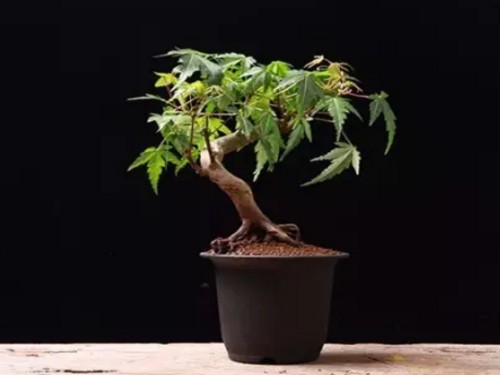
Only with careful care can one enjoy the pleasure that bonsai brings. Compared with other plants, bonsai gives a greater sense of cultivating one's character. The care of a beautiful and elegant maple bonsai requires attention to the following five aspects:
1. Location
Maple prefers a shady and cool environment and dislikes direct strong sunlight, so the bonsai should be kept under a shade shed or beneath other trees. If placed in strong light or on a balcony, leaf scorch often occurs; because indoor ventilation is poor, a maple bonsai should not be kept indoors for more than a week, otherwise it is unfavorable for growth. In winter in the north, the maple bonsai should be moved into a low-temperature room; in the south, as long as the pot is buried in wind-sheltered, sun-facing soil, it can safely overwinter.
2. Watering
Maple leaves are large and water evaporates quickly, so during the growing season it should be watered frequently. In hot weather, water should often be sprinkled on the ground to keep the microclimate humid. In winter, maple enters dormancy and should be watered less; as long as the potting soil is moist, it can go without watering.
3. Fertilizing
In spring, before the maple buds and when the leaves unfold, apply one application each of well-rotted, dilute organic liquid fertilizer, but do not fertilize on rainy days. In August and September, apply one application each of well-rotted, dilute liquid fertilizer. Do not fertilize during the winter dormant period.
4. Shaping
Maple has strong sprouting ability and often produces new buds on the trunk. Any buds not needed for the design and overly dense branches should be pruned away promptly; this not only saves nutrients but also helps ventilation and light penetration. The best viewing period for maple is when the new leaves have just unfolded. If all the leaves are removed in late summer and one application of well-rotted, dilute liquid fertilizer is given, new leaves will grow in about 20 days, thus adding another best viewing period.
5. Pest and Disease Prevention
Maple mainly suffers from powdery mildew, stinging moths, aphids and other pests and diseases, which should be prevented and controlled promptly.