Reasons Why Potted Gardenias Don't Bloom and How to Fix It
The gardenia (Gardenia jasminoides) keeps its leaves green all year round, and its flowers are fragrant and elegantly simple, with green leaves and white blossoms that look especially pure and lovely. It suits planting in front of steps, beside ponds and along roadsides, and can also be used as a flowering hedge or grown in pots for ornament. The flowers can also be used in cut arrangements and worn as decoration. The gardenia has a graceful tree form, bright green foliage, and stays evergreen through all four seasons; in summer its flowers are pure white and richly fragrant, making it an excellent tree for both flower and foliage display. The small-leaved 'Que She' variety is even better suited to making miniature bonsai and cascade-style bonsai.
When growing gardenias, you may run into not only yellowing leaves but also the problem of green leaves that simply refuse to bloom. Gardeners often don't know what to do when a gardenia won't flower. What can be said is that it's very hard to pin down exactly why it isn't blooming, so you can only analyse it from various angles and check the possibilities yourself. Below are some common causes of gardenias failing to bloom.
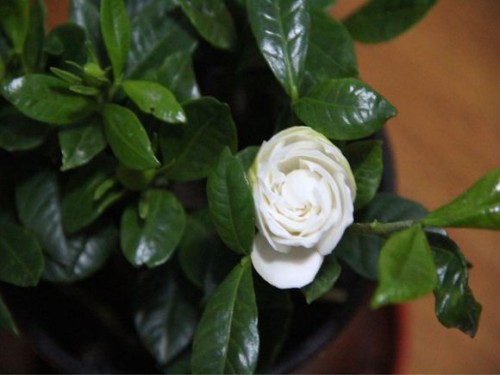
Gardenia blooming season:
The gardenia's blooming season is in spring and summer; it can bloom continuously from May-June through to August, though there are a few cases of it being earlier or relatively later. Different regions have different blooming times because of differing climates.
How long is the gardenia's blooming season?
In fact, the gardenia's blooming season is fairly long, and a single flower can stay open for 3-5 days. Sometimes a larger plant can have a blooming season lasting as long as 1 month.
Gardenia care during the blooming season:
To make a gardenia bloom abundantly, you can do the following: before the gardenia blooms, apply a liquid fertiliser about once every half month. At the bud stage, water once to twice with a 0.1% potassium dihydrogen phosphate solution, which can make the flowers larger and the fragrance richer. Doing the fertilising well can extend the blooming season. After the gardenia flowers fade, promptly cut back the branches to encourage new shoots to sprout.
In addition, except for the strong midday sun from July to August, when shading is needed, and the winter dormancy period, the gardenia should generally be kept in the sun for care so it can produce abundant flowers and lush foliage.
What to do when a gardenia won't bloom? Causes of a gardenia not blooming:
1. Soil with high alkali content
The gardenia likes slightly acidic soil; if the potting soil has a high salt and alkali content, the plant's leaves will turn yellow, affecting blooming.
2. Improper lighting
The gardenia is a shade-loving plant that only occasionally needs light; shade it in summer and give it appropriate light in winter. Too much or too little light will both affect the gardenia's blooming.
3. Unsuitable water and fertiliser
Too much water and fertiliser makes the plant grow leggy (tall but not sturdy), and such weak branches naturally can't produce flower buds, leading to no blooming or very few flowers; some that do open may even drop off right away. During the flower bud differentiation stage, pay special attention to the balance of phosphorus and potassium fertiliser, such as a 0.2% potassium dihydrogen phosphate solution, which helps flower bud formation and budding; applying fertiliser too concentrated during the bud stage, or watering now too much and now too little, can also cause flowers and seedlings to drop.
4. Too dense and unpruned
When gardenia branches are tangled, a large number of stray branches consume a great deal of nutrients, and branches that are too dense affect photosynthesis; both are important causes of failure to bloom.
How to make a gardenia bloom?
When a gardenia won't bloom, measures need to be taken to change the situation. You can analyse the causes of the gardenia not blooming and treat the problem accordingly.
1. In terms of lighting, generally pay attention to shading in summer, and in winter keep the gardenia in a warm indoor spot with relatively good light, to avoid the gardenia failing to bloom due to lighting problems. In addition, before planting a gardenia, you can acidify the soil and change its acidity and alkalinity, which benefits the gardenia's growth.
2. In terms of water and fertiliser management, pay attention to reasonable watering and fertilising in daily care, and during the flower bud differentiation stage be sure to apply more flower fertiliser rich in phosphorus and potassium to promote blooming.
3. In the course of daily care, prune the plant in good time according to the gardenia's growth so that it grows and blooms normally. During the growing process, you should also pay attention to pest control.