What to do if potted water lilies do not bloom? How to make water lilies bloom
Water lilies have beautiful flower shapes and rich colors. They are one of the precious aquatic flowers and are also beloved perennial aquatic ornamental plants. Water lilies resemble lotus in appearance, but the leaves and flowers of water lilies do not rise far above the water surface; instead, they float on the water, giving a lazy yet lovely impression. However, quite a few gardening enthusiasts say that the water lilies they grow only produce leaves and do not bloom. Why is that?
1. The reason of variety
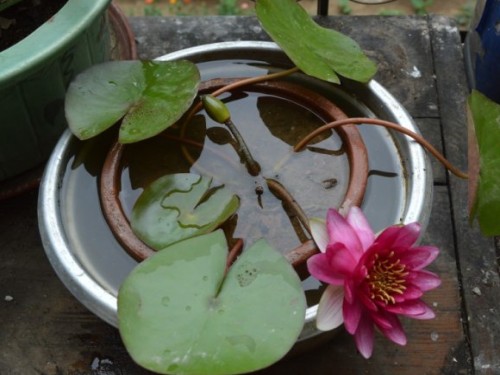
For home growing, it is best to choose free-flowering varieties, such as the miniature Helvola, the small Nymphaea tetragona, the small Xiaofei, and the medium-sized Colorado. Then use a container suitable for growth and blooming. If, with mud, fertilizer, water, light and other conditions, it has not bloomed for a year, it is best to cut out overly dense small shoots and remove leaves and add fertilizer. Water lilies are floating-leaved, and when they emerge above the water they can sometimes be easily sunburned and dried out by wind. It is normal for old leaves to turn yellow, rot and be replaced. Duckweed is hard to remove completely, but it has little effect on the growth of water lilies; when there is too much, just scoop it out by hand.
2. Insufficient light
Water lilies are heliophilous plants and like sufficient sunlight. If light is insufficient for a long time, the stems and leaves will grow luxuriantly while flowering will be very sparse, or even only leaves will grow and no flowers will appear. If they are kept for a long time in a shaded and unventilated place, moss is likely to grow on the water surface, causing the plants to weaken, which will also result in leaf growth without flowering. Therefore, when cultivating water lilies, be careful to give them full sun. The flower bud differentiation stage especially requires long-day sunlight.
3. No division for a long time
Potted water lilies should preferably be divided once every 1 to 2 years in early spring. If they are not divided and the pot is not changed for a long time, the root system in the pot becomes congested, causing poor root development. The plants will weaken, which will affect flowering.
4. Too many plants planted
If the space in the pot is unlimited and more than ten plants are planted per pot, the leaves will overlap and crowd together, and ventilation and light transmission will be poor. The central plants will then be affected by insufficient light and fail to bloom normally; even if they bloom, the flowers are mostly small and pale. In addition, too deep a water layer, damage from diseases and pests, and other reasons can also affect the flowering of water lilies.
5. Too much base fertilizer
Especially too much nitrogen fertilizer, which makes the plants' vegetative growth too vigorous and inhibits reproductive growth, affecting flower bud differentiation. Poor-quality cultivation soil, such as long-term planting in sandy soil, will cause weak growth due to lack of nutrients, resulting in no flowering or poor flowering.
Water lilies have a dreamlike charm. Most cut flowers come from land, while water lilies come from water. Their Latin order name Nymphaeales means "water goddesses." Even when they enter the cut flower market and we can easily take them home, we often encounter an awkward problem: why do the water lilies I grow not bloom? In fact, we only need three steps to make your water lilies bloom!
In fact, the care of water lilies is rather unique. As aquatic plants, they need far more water than ordinary fresh flowers; their outermost layer of petals is especially hard and thick, and it is difficult for them to bloom relying only on their own strength. Teacher Xiao P today brings the water lily care guide: just 3 simple steps to make your water lilies bloom.
Step one:
Preparation before care: a bunch of fresh water lilies, a vase filled with water, flower scissors, and preservative solution. Water lily stems are long and straight, suitable for a slender vase. Add water to the vase, with the water level required to reach 80%-90% of the vase body. This water level is higher than for ordinary fresh flowers, of course also because water lilies love water too much.
After preparing the vase and water, what must not be missed is the preservative solution. Drop two drops of preservative solution into the water to make the water lilies open longer.
Step two:
Because the outermost green petals of water lilies are especially hard, if this layer of petals is kept, the flowers will be difficult to open. Even if they open, they may not open completely. So the most important step in water lily care is to peel off the outermost layer of petals!
In the previous issue on rose care, we mentioned that the outermost "protective petals" of roses need to be kept so that the roses can bloom for a long time. However, with water lilies, because the outermost layer of petals is far firmer than the protective petals of roses, it must be peeled off to let the water lilies open.
This is what The Art of War says: "Military tactics are like water; water has no constant shape." The care of special fresh flowers also requires different methods targeted to the characteristics of different flowers.
Step three:
When placing water lilies in a vase, be careful to let the upper part stand about 10 cm above the water surface. If you have no concept of 10 cm, then spread your thumb and index finger, and the measured length is the length by which the water lilies should be exposed above the water.
Slender water lilies need a slender vase. When choosing a vase, try to choose a slender style. Water lilies have a gentle form, so a glass vase can be chosen, and a round mouth is even better. Water lilies also have a calm, uncompetitive temperament; choosing a vase with a tinplate artistic style like the one in the picture below will produce an unexpected effect.
Water lilies, as water-loving plants, need far more water than other fresh flowers. Before finally placing them in the vase, we can hold the water lily stems upside down and fill the stems with water under a tap, then place them in the vase. The water flow should not be too strong; instead, inject it slowly so the flowers absorb enough water.
Water lilies like sunlight, so place them in a bright position. However, bright does not mean exposure to the scorching sun; direct sunlight will harm them. It is best to place them behind a curtain with good light transmission, or in a position beside direct sunlight.
With the beautiful water lilies sitting quietly in the vase, you can now smell their unique delicate fragrance. In previous articles, we mentioned that cut flowers, in order to stay fresh, sacrificed a large part of their original fragrance over generations of cultivation, but water lilies are the exception. As cut flowers, water lilies still retain their original fragrance, clear and lingering, reminding you of the air after a rain in Southeast Asia, or in the town of Giverny on the outskirts of Paris, those beautiful figures that sleep and wake again, immortalized under Monet's brush.
Warm tips:
Potted water lilies are generally cultivated by hydroponics and can be placed in an office, bedroom, living room, balcony or yard. Because they relatively like sunlight, as long as their light, ventilation and fertilizer are ensured, basically not much effort is needed for management.