How to grow potted plum blossoms? A detailed guide to home cultivation methods
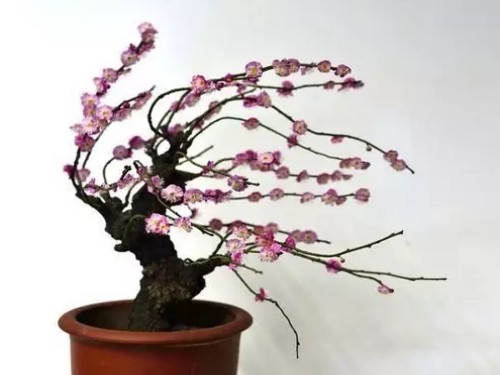
The plum blossom is a deciduous tree of the genus Prunus in the rose family (Rosaceae), with upright and elegant branches, graceful and colorful flowers, and a refreshing fragrance. In winter, when all other flowers have withered, it braves the frost and snow, blooming proudly against the cold. It represents the noble quality of perseverance of the Chinese nation, and its charm, beauty, and fragrance are all of the highest order, ranking first among China's ten traditional famous flowers. Besides being planted in the ground as large trees, plum blossoms are usually grown in pots and cultivated as bonsai, and can even be trained into gnarled old plum specimens. The care methods for potted plum blossoms differ from other potted plants and should be carried out according to their characteristics.
The plum blossom is a traditional famous flower of China, with an elegant plant shape and bright flower colors. In the harsh winter environment, it braves the frost and snow, blooming before all other flowers, bringing spring to the world alone, and was once designated as the national flower during the Republican period. The noble, strong, and modest character of the plum blossom inspires people to strive with determination, and many flower enthusiasts choose to grow potted plum blossoms. Potted plum blossoms are actually not difficult to grow; the hard part is making them bloom abundantly and colorfully year after year. What should be noted during the cultivation of home potted plum blossoms?
1. Pot and soil
For potted plum blossoms, clay pots or earthenware pots with good permeability are best, purple clay pots are also acceptable, and a layer of crushed charcoal pieces or crushed hard plastic foam pieces should be placed at the bottom of the pot. The growing medium is best as fertile light clay soil; you can mix old mountain soil, pond mud, and vegetable garden topsoil as the potting soil. When planting, mix a little bone meal and nitrogen-phosphorus-potassium compound fertilizer into the soil as a base fertilizer. Plant shallowly without exposing the roots; deep planting makes blooming difficult. After planting, place in semi-shade and water once thoroughly, then switch to normal care after 10 days. Repot and change the soil once every 2~3 years after flowering.
2. Watering
Plum blossoms like moisture but fear waterlogging, so watering should be timely and moderate. In winter and early spring during the flowering period, keep the potting soil slightly moist; after all flowers have faded, water once thoroughly, and otherwise do not water until dry. Frequently spray water on the branches, leaves, and nearby ground in the evening. During the plum rain season, strictly control water, and only water when the edges of old leaves curl slightly and young shoots wilt slightly. Repeat this several times to force new shoots to stop growing, which helps flower bud differentiation. In the dog days of summer, drain water to prevent waterlogging on rainy days; water once in the morning on sunny days, and water again in the evening if the soil is dry, to prevent excessive dryness and dehydration causing leaf drop. After September, gradually reduce the amount of watering, watering once every 1~2 days in the afternoon. In October, flower buds begin to develop into flower buds, the leaves have fallen, and water demand is not great; water when the soil looks dry, and slightly dry but moist potting soil is sufficient.
3. Fertilizing
Plum blossoms like fertilizer and are also tolerant of poor soil. Do not fertilize during the flowering period. After the flowers fade, apply nitrogen-phosphorus-potassium compound fertilizer once to help it recover. When new shoots grow to 3~5 cm, do not fertilize if growth is good; if growth is poor, apply nitrogen-phosphorus-potassium compound fertilizer once. When new shoots reach about 18 cm, stop fertilizing. In late June and early July, spray a 0.2% potassium dihydrogen phosphate solution once each time to promote flower bud differentiation. In late autumn after leaf drop and when buds appear, apply nitrogen-phosphorus-potassium compound fertilizer once or a 0.2% potassium dihydrogen phosphate solution to promote flower bud development and opening.
4. Light and temperature
The plum blossom is a sun-loving plant and should be placed in a sunny, well-ventilated location, avoiding drafty spots. It likes warmth and is cold-tolerant. In winter, it needs low-temperature stimulation to bloom abundantly and grow lushly. In places where the lowest winter temperature is above -12°C, it does not need to be brought indoors for winter; placing it in a wind-sheltered, sunny spot is sufficient. If you want it to bloom during the Spring Festival, move it 20 days before the festival to a low-temperature room at 5~10°C, and place it inside a south- or west-facing windowsill to receive more sunlight. After flowering, move it to a place at 0~5°C, where it can stay in bloom for 1 month; too high a temperature causes early fading.
5. Pruning
Plum blossoms have strong sprouting and branching ability and tolerate pruning; old trees are easy to rejuvenate. After flowering, shorten the branches that have bloomed, leaving only 2~3 buds at the base. Cut off all weak, diseased, and dead branches. For crossing branches and overlapping branches, cut off one of each; thin out overly dense areas. When new shoots grow to 20 cm, pinch off the tips to control growth and concentrate nutrients for flower bud differentiation; overly long new shoots instead result in sparse flowers. Through pruning, the plant shape is not only beautiful but also well-ventilated and light-permeable, making it less susceptible to pests and diseases.
Plum blossom pruning can be done promptly after the flowers fade each year, shortening old flowering branches and leaving 2 to 3 buds, while making sure the buds grow outward. Remove crossing branches, parallel branches, overlapping branches, opposite branches, water sprouts, and overly dense or weak branches that affect the tree's appearance.
6. Repotting
Potted plum blossoms generally need repotting once every 1 to 2 years, preferably after flowering. When repotting, remove about one-third of the old soil, cut off dead roots, shorten overly long old roots, and replace with humus-rich leaf mold soil mixed with rice hull ash and sandy soil, so that the potting soil is both fertile and loose and drains well. The soil should not be too wet, and waterlogging must be strictly avoided.
6. Pests and diseases
During high temperature and drought in mid-to-late June, plum blossoms may develop anthracnose. In July, with high temperature, high humidity, and poor ventilation, they may develop powdery mildew. Attention to ventilation and light transmission can prevent both diseases. If diseased branches and leaves are found, cut them off and burn them, and spray with thiophanate or carbendazim for treatment. The main pest of plum blossoms is aphids, which can be killed by spraying a 1500-times solution of 80% dichlorvos emulsifiable concentrate, or by burying carbofuran in the soil so the plant becomes toxic and kills them. It is worth noting that plum blossoms are allergic to phosphorus-containing pesticides, and such pesticides should be avoided. They also have poor resistance to toxic gases such as sulfur dioxide; in places with severe air pollution, they grow poorly and may even die.
How to handle potted plum blossoms that do not bloom:
1. The environment where the potted plum blossom is placed is too shady, with insufficient light and poor ventilation. The plum blossom should be placed in a sunny, well-ventilated, relatively dry location for care.
2. Timely pruning was not carried out, with many water sprouts and long branches and few short branches, making flower bud formation difficult, so there are fewer flowers. Plum blossom pruning should start from the seedling stage. When seedlings grow to 25~30 cm tall (potted seedlings 10~15 cm), cut off the top to promote side branches. After sprouting, keep 3~5 branches as main branches. When the branches grow to 20~25 cm tall (potted seedlings about 10 cm), remove the tips again. Adult plum blossoms are generally pruned after flowering.
The main principle of plum blossom pruning is light pruning for strong branches and heavy pruning for weak branches. Diseased and pest-infested branches, water sprouts, slender weak branches, and overly dense branches should be cut off from the base at any time. Properly thin out the main and side branches that have flowered. Side branches on the main branch should be shortened leaving 10 cm, and long branches should be shortened leaving 5~6 buds, so that the plant's branches vary in length, height, and density. When pruning, pay attention to the direction of the bud at the cut. Generally, for varieties with drooping branches, keep the inner bud; for varieties with upright or slanting branches, keep the outer bud. The cut should be flat.
3. Insufficient nutrition, failure to repot and fertilize in time, affecting the growth and flower bud differentiation of the plum blossom. After the flowers fade in spring, repot in time. The potting soil should be loose, and some dry organic fertilizer should be added to the bottom of the pot as base fertilizer. Apply topdressing once in April. About 10 days after new shoots stop growing, apply quick-acting phosphorus-potassium fertilizer together with watering to promote flower bud differentiation. In autumn, keep the potting soil appropriately moist and apply topdressing 2~3 times, mainly with dilute liquid fertilizer. In early January of the following year, when the plum blossom is about to bloom, apply a thin, dilute quick-acting fertilizer once to promote blooming.
4. Overwatering or waterlogging during the rainy season affected flower bud differentiation. The principle of watering is not to water until dry, and when watering, water thoroughly, but treatment should differ in different growing seasons. After repotting during the Spring Festival, water once thoroughly, then keep the potting soil moist. During the rainy season, it is best to lay the pot on its side to avoid water accumulation. In summer, water thoroughly once every afternoon, and replenish water the next morning for individual pots whose soil has dried. After leaf drop in autumn, reduce the amount of watering.