How do you care for bonsai? Master these methods and you can grow them well
Though bonsai are beautiful, without careful management and care later on it is very hard to maintain their form or even their life. I have summed up several causes of problems, mainly the following:
1. Poor control of watering and dryness/moisture levels. The most important point in care is watering. Generally, plants all stress the principle of "dry-wet" (do not water when dry; when you water, water thoroughly).
2. Insufficient sunlight. Most bonsai types are sun-loving; only sufficient light can keep plants full of vigor.
3. Fertilizer damage. Many bonsai enthusiasts have a misconception: they want to get fat in one bite, and the result is the opposite of what they want. When using fertilizer, remember to apply thin fertilizer frequently, and use chemical fertilizer sparingly.
Modern people pursue nature, fashion, and simplicity in life, and growing a plant is also very important. But how should you grow bonsai at home, and how do you grow bonsai well? Do you know? Next, follow the editor and take a look. I hope it helps you.
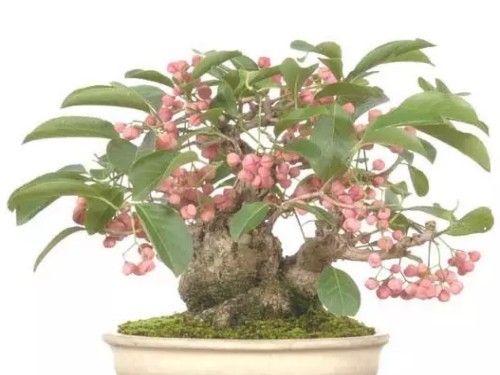
1. Suitable light
Plants all need photosynthesis, so sunlight is very necessary. In spring, summer, and autumn, bonsai must be placed in a place with sufficient sunlight. Bonsai placed indoors must be sunned once every three days. Southern indoor plants sold on the market that are not defined as bonsai do not need this. In winter, indoor placement must have sufficient diffused light to maintain normal photosynthesis in the plant.
2. Pay attention to temperature
Generally, the suitable environmental temperature for bonsai is 20°C to 35°C. The timing for moving bonsai into a greenhouse must be grasped well. In autumn, they can be moved indoors about ten days after Frost's Descent. After the plant has experienced one or two light frosts, moving it indoors is beneficial for sprouting and flowering the following year. In spring, move them outdoors around Grain Rain. Moving them out too early will cause spring frost damage due to the obvious alternation of cold and warm.
3. Maintain dryness and humidity
The most important thing in growing bonsai is to master dryness and humidity well, generally following the principle of "do not water when dry; when you water, water thoroughly." In spring and autumn, about once every three to four days; in summer, once a day; in winter, once a week or even longer, depending on the amount of water evaporation. Usually, the best time to water is around eight or nine in the morning. For bonsai placed in the open air, pay attention to promptly clearing accumulated water during the rainy season to prevent root hypoxia that can cause suffocation and death.
4. Form control
Bonsai bought and brought home have already been styled. After a period of growth, the plant's branches and leaves spreading will cause the original shape to change. At this time, it is necessary to prune branches and leaves to maintain the bonsai's shape. The extent of pruning generally will not affect the plant's survival, and you can freely exercise your understanding and creativity regarding bonsai styling. When pruning, to avoid cutting into broken leaves and bare branches, the cut should be made at the axil of the stem.
5. Cold protection measures
For some cold-intolerant plant stump specimens and small bonsai, cold protection work should be done in winter, and they can generally be placed indoors to overwinter. In spring, move them outdoors for care according to the situation. If a spring cold wave occurs, they must also be moved back indoors promptly.
6. Repotting and changing soil
Do not water before repotting. If there has been prolonged rain without clearing, the pot can be moved indoors, and after the potting soil is slightly dry, remove the tree stump from the pot. First use bamboo strips to remove 1/3-1/2 of the old soil, then appropriately prune away old roots. For tree species with well-developed root systems and easy root formation, such as pomegranate and azalea, more soil can be removed and more roots can be pruned. For those with underdeveloped root systems or where new roots are not easy to produce, less can be pruned or none at all. For boxwood, Buddhist pine, and others whose main roots grow little while lateral roots are numerous and coiled around the pot, these lateral roots should be shaken loose and then shortened. For black pine, golden larch, and others whose main roots grow faster than lateral roots, the main roots should be shortened.
When changing soil, first take broken tile pieces to cover the drainage hole. For deep pots, coarse soil particles can be added, then decomposed base fertilizer, then cultivation soil. If it is a shallow pot or miniature bonsai, generally use plastic window screen or palm fiber to block the drainage hole to prevent the potting soil from leaking out. After the tree stump is planted, cover it and shake the flower pot, then press the soil firm. The potting soil should be kept at a certain distance from the pot rim to prevent overflow when watering.
Of course, in addition to the above measures, there are also the following points to note:
1. Avoid sudden shading
Usually, to avoid high-temperature damage, when the environmental temperature exceeds the maximum temperature the stump can tolerate, the bonsai should be moved to a relatively low-temperature area with weaker light (about 2 degrees lower) to benefit the stump's growth. But if it is suddenly moved indoors or to a low-temperature area without light, within a few days the leaves will naturally fall off, and the stump will also quickly wither and die.
2. Avoid midday bathing
In the hot summer at noon, do not spray water on the stump in the light or water the pot. This kind of "pampering" method will cause the bonsai temperature to suddenly drop below the environmental temperature and damage the stump.
3. Avoid drought
Watering when you remember and not watering when you do not, sometimes ignoring it for several days in a row, and only quickly replenishing water once the leaves are found to be wilting, after which the leaf surface returns to normal. This is a reaction of the stump adapting to the environment, but if this continues for a long time, the overly strong transpiration will eventually make the stump seriously "ill" and difficult to cure, leading to death by dehydration.
4. Avoid waterlogging
When the environmental temperature exceeds 28 degrees, shade protection should be given to the bonsai. Otherwise, the amount of water the stump obtains from the soil is far less than the amount of water lost through transpiration. In mild cases, the leaf edges are scorched and withered; in severe cases, the stump is severely damaged by sunscald and dies.
5. Avoid fertilizing
In the high temperatures of midsummer, the leaf surface loses water relatively quickly. Fertilizing at this time can make the stump cell concentration lower than the external environmental concentration, causing plant cell water to flow back into the soil, and the stump dies from dehydration due to fertilizer damage.