How to grow a potted Ping'an Tree? Potted Ping'an Tree cultivation methods
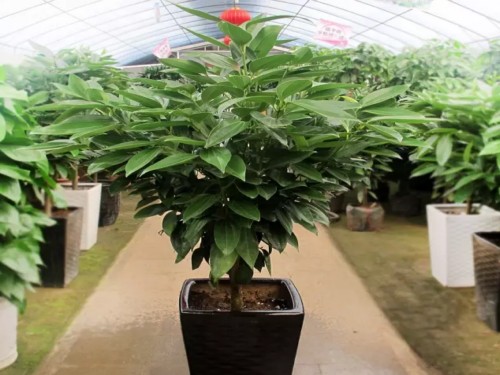
The Peace Tree sounds auspicious and fortunate just from its name, and it is an elegant name for Cinnamomum kotoense. It originates from Lanyu Island in Taiwan, China. The Peace Tree has upright branches, is yellow-green in color, smooth and without fuzz. People in the flower planting and business industries gave it the auspicious name “Peace Tree”. The Peace Tree symbolizes good fortune, peace and happiness, and a blissful life. The Peace Tree has many cultivation purposes: it can be used as a potted ornamental plant, and it can also be a very beautiful garden landscape plant. It can emit a fragrance that corrects odors and purifies the air.
Placing a Ping'an Tree in the home helps relax people's nerves after tense work, lets people experience a relaxed mood, and increases the comfort of the home. At home, it can be placed in relatively spacious areas such as the living room or balcony, because the Ping'an Tree is an evergreen plant that can change the indoor airflow, increase indoor vitality, and let people feel a warm breath of life. At the same time, the Ping'an Tree can eliminate indoor odors, bringing health and peace to people.
1. Soil
It is advisable to use loose, breathable, well-drained, fertile acidic culture soil or leaf mold rich in organic matter. If the potting soil is compacted or the pH value is above 7.5, it will also cause yellowing of the plant's leaves, seriously poor growth and reduced sprouting ability, and affect sprout renewal, and even shorten its cultivation lifespan. For this reason, small plants should be repotted once a year, large plants can have their soil changed once every 2 years, and the soil should be loosened once a month during the growing season. Especially after heavy rain, check the flower pot in time; if water accumulates in the pot, pour it out as soon as possible and replace it with loose potting soil. For potted plants, the annual repotting and soil-changing time is best arranged after they are moved outdoors in spring and before buds sprout.
2. Light
The light requirements of the Ping'an Tree change with age. When young, it tolerates shade, and 3-5 year old plants grow faster under shaded conditions; 6-10 year old plants require fairly sufficient sunlight. After potted plants enter summer, they should not be given full sunlight. They can be placed under the dense shade of large trees or under a shade shed, given about 50% scattered light, and allowed to receive full light in the morning and evening, which makes growth more ideal. If the light is too strong, it easily causes leaf yellowing and affects the ornamental effect.
3. Temperature
Its optimum growth temperature is 20°C to 30°C. Young trees are not tolerant of low temperatures. If they encounter frost for more than 5 days, plants maintained or cultivated in the open field are prone to bark frost cracking, withered branches and leaves, and even the whole plant freezing to death. Whether it is a small number of household potted plants or large-scale production and business cultivation, in winter the greenhouse temperature should be maintained at no less than 5°C so that the leaves can always maintain their beautiful green appearance. Larger plants can endure short periods of low temperatures around 0°C in a greenhouse without cold wind blowing.
4. Watering
The Ping'an Tree likes moisture. Normally, water when half of the potting soil surface has dried. When the weather is dry, frequently spray or mist the leaves. In winter, water after about half of the potting soil has dried. The Ping'an Tree likes an environment with relatively high air humidity; generally, only when the relative humidity is greater than 80% can it grow vigorously. In summer or dry autumn, and even when placed indoors in winter, the leaves should be sprayed with water frequently to create a relatively moist spatial environment. If water accumulates in the pot, it easily causes root rot.
5. Fertilizer
The Ping'an Tree has a full plant shape, large leaves, and relatively vigorous growth, so it also has a relatively large fertilizer requirement. In addition to requiring fertile culture soil, potted Ping'an Trees can be given a thin application of cake fertilizer water or alum fertilizer water once a month from mid-spring to early autumn. After autumn begins, phosphorus and potassium fertilizer should be applied 2 consecutive times, such as a 0.3% potassium dihydrogen phosphate solution, to increase the plant's cold resistance, promote early lignification of young shoots, and help it pass the winter safely. In winter, all forms of topdressing should be stopped to prevent fertilizer damage to the roots, which can cause leaf yellowing or scorching and falling off, otherwise it is very difficult to restore the plant's original appearance.
6. Repotting
Small Ping'an Trees should be repotted once a year, and large plants can be repotted once every 2 years. The suitable repotting period is after they are moved outdoors in spring and before buds sprout. Each repotting requires discarding about 1/3 of the old soil and replacing it with loose, fertile new soil and base fertilizer. Normally, the surface soil should be loosened once a month. Especially after heavy rain, check the flower pot in time; if water accumulates in the pot, pour it out as soon as possible and replace it with loose potting soil.
7. Diseases
The Ping'an Tree is prone to brown root disease in autumn. In the early stage of the disease, spray 50% thiophanate-methyl · sulfur suspension concentrate at 800 times dilution or 50% root rot wettable powder at 800 times dilution for control. Severely diseased plants and plants that died from the disease should be pulled out with roots and burned, and disinfected with carbendazim at 600 times dilution.
Notes:
1. If a small number of diseased leaves appear, remove and burn them in time; avoid yellowing and wilting of all leaves, which causes the plant to drop a large number of leaves.
2. If water accumulates in the potting soil, it easily causes the plant to yellow, with lower leaves turning yellow and then falling off; in severe cases, it can cause root rot and death of the plant. If the soil is heavily sticky or has low acidity, it will cause the plant's leaves to turn yellow and sprout renewal to decline, thereby affecting the plant's growth lifespan.
3. Whether in the adaptation period or the overwintering dormancy period, watering should be controlled and no topdressing should be applied. The first topdressing should wait until buds are growing rapidly. After autumn begins, phosphorus and potassium fertilizer should be applied 2 consecutive times. In winter, all forms of topdressing should be stopped to prevent fertilizer damage to the roots.