Solutions for drooping, yellowing and falling leaves of potted Ping'an trees
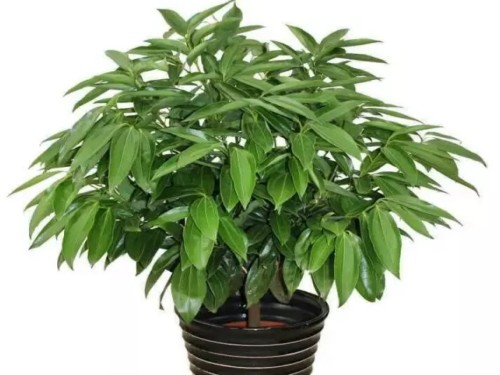
The Ping'an tree, also called Lanyu cinnamon (Cinnamomum kotoense), prefers a warm, humid and sunny environment; it likes light but also tolerates shade, and enjoys warm, hot places with no frost or snow, plenty of fog and high temperatures. It does not tolerate drought, waterlogging, severe cold or dry air. For cultivation, use a loose, fertile, well-drained, organic-rich acidic sandy loam. In its native environment, Phalaenopsis orchids grow abundantly, so under artificial cultivation conditions it is best to create a warm, hot and humid environment for it. The fruiting period is from August to September. Its optimum growth temperature is 20°C~30°C.
Many households have the habit of growing potted flowers, and the Ping'an tree, as a foliage plant symbolizing good fortune, is especially popular. Many people bring one or several pots home from the flower market, but beginners always encounter some problems when growing Ping'an trees. When the Ping'an trees grown by flower lovers droop, turn yellow and drop leaves, they are neither healthy nor attractive. So what should be done if a healthy Ping'an tree develops drooping, yellowing, withering and falling leaves?
1. Alkaline soil: Most of the soil and water in northern China are alkaline, while the Ping'an tree we grow prefers acidic humus soil.
Solution: When watering the Ping'an tree, appropriately add a little vinegar and ferrous sulfate to increase the soil's acidity somewhat, keeping the pH value between 5 and 6.5, which is most suitable.
2. New pot transplanting: Newly bought Ping'an trees, when transplanted improperly, are also prone to drooping, yellowing and falling leaves.
Solution: Transplanting into a new pot just after bringing it home can also cause the Ping'an tree's leaves to droop. When transplanting, keep some of the original pot soil with the roots, and take careful care of it after transplanting so it gradually regains its vigor.
3. Insufficient light: The Ping'an tree likes light, so keeping it for a long time in a cold, dim room will lead to insufficient light and drooping leaves.
Solution: In a dim room, turn on the lights often, or move it to a place that gets sunlight.
4. Sunburn: Sunburn from light, with harsh sunlight causing the Ping'an tree's leaves to develop.
Solution: Place the Ping'an tree in an environment with about 50% shading for care, especially in the hot, high-temperature summer.
5. Too frequent watering: Watering too frequently or too much causes water to accumulate at the Ping'an tree's roots; the water in the pot soil cannot be fully absorbed and evaporated, and since the severe waterlogging in the soil cannot drain out, the root system is damaged and rots. Its characteristic feature is that the plant's old leaves show no obvious change, while the young leaves turn yellow and the leaves droop.
Solution: Do not water too much; moist is best but there must be no waterlogging. Control the amount of watering well to prevent root rot.
6. Drought: Because of lack of water, too little watering, or excessively hot and dry weather, the Ping'an tree's leaves turn yellow severely. Its characteristic feature is that the leaves are damaged and turn yellow from the bottom upward, with the old leaves affected first.
Solution: When leaves turn yellow due to drought, water promptly; otherwise, because the plant has gone too long without water, the whole plant will turn yellow, drop its leaves, and even die.
7. Too much or too concentrated fertilizer: Applying too much fertilizer or fertilizer that is too concentrated can cause the Ping'an tree's leaves to turn yellow. The characteristic feature is that the young leaves are enlarged, glossy, and uneven on the surface.
Solution: Control the fertilizer appropriately. As long as the pot soil will not become waterlogged, you can water a little more to let the fertilizer drain away in time and reduce the fertilizer concentration.
8. Too little or too diluted fertilizer: Because of insufficient fertilization or fertilizer that is too diluted to have any effect, and intervals that are too long, the Ping'an tree's leaves turn yellow. The characteristic feature is that the young leaves and tender stems turn yellow first.
Solution: Fertilize promptly. If the amount of fertilizer is too low, increase the number of fertilizer applications; otherwise the whole plant's leaves will turn yellow or the plant will die. Never apply large amounts of farmyard manure.
9. Yellowing from iron deficiency: If the Ping'an tree lacks iron, its leaves will also turn yellow. Due to changes in fertilization conditions, the plant's yellowing becomes severe. The characteristic feature is that it is more obvious on young leaves and milder on old leaves; the leaf tissue turns yellow while the veins remain green, forming a typical network pattern.
Solution: An aqueous ferrous sulfate solution can be used to solve this kind of problem. Mix cake fertilizer, ferrous sulfate and water in reasonable proportions and pour it on.
10. Roots not getting air: The roots of the Ping'an tree need to stay aerated. Loosen the soil at intervals, and when planting the roots do not bury them too deep, which would affect root aeration; otherwise the plant will suffer root rot.
Solution: Water an appropriate amount when planting, and pay attention to the depth at which the roots are buried; do not bury them too deep.
Methods for dealing with drooping and yellowing leaves of the Ping'an tree:
1. Sprinkle a little water on the leaves, then cover with wrapping film from the bottom upward and seal the top; it will recover in a day or two. The main cause is temperature that is too low, and then not watering. My family also keeps one, and that is how we dealt with it.
2. Leaf drop is due to a lack of trace elements. Go to the flower market and buy some flower trace elements. Dark yellow new leaves with drooping or hanging tips on old leaves mean excessive water and waterlogging; it is recommended to dig the soil deeper so the water can evaporate and the roots can take in oxygen and avoid suffocation.
3. The Ping'an tree needs fairly good light to grow. Apart from shading it from the harsh summer sun, it must be given good light at other times. It likes water but should not be waterlogged; especially when light is poor and temperatures are low, reduce the frequency of watering even more.
4. Place the Ping'an tree in a spot with sufficient light, stop watering the pot soil, increase misting of the leaves, and keep the ambient temperature at around 25°C; it will recover in about 10 days.
In addition, indoor air that is too dry can also easily lead to the above situations. Excessive evaporation of water from the leaf surface of the Ping'an tree causes the leaf tips to dry up. You can spray water in the early morning to humidify it. If the outdoor temperature is above 5°C, consider moving it outdoors for ventilation. If conditions allow, consider supplementing with a little nitrogen fertilizer, also by spraying it on the leaves. This is not a big problem and it will be fine after a while.