What to Do When Potted White Champaca (Michelia alba) Leaves Turn Yellow? Causes and Solutions
With their gorgeous splendor, flowers adorn nature with extraordinary beauty and bring people enjoyment of beauty. Growing flowers can enrich and adjust people's cultural life, add pleasure, cultivate character, and improve health; it can also increase scientific knowledge and raise cultural and artistic literacy; growing flowers can green and beautify the land of our motherland, protect and improve the environment, purify the air, and enable people to work and study in a beautiful environment, making life more beautiful.
White champaca (Michelia alba), also known as bai lan and commonly called huangjue lan, belongs to the Magnoliaceae family and the Michelia genus (Michelia). It can be used for group planting or solitary planting in gardens, along roadsides, beside houses, in front of windows, and on lawns. In cold regions it is generally grown in pots, moved into a greenhouse in winter, and displayed in several pots at the foot of steps or in room corners, where its fragrance spreads all around and it is also quite lovely. White champaca is pure white and fragrant, blooming between summer and autumn, with a long flowering period and dark green leaves. It is a famous ornamental tree for courtyards and is often planted as a street tree. But what should you do when its leaves turn yellow during care?
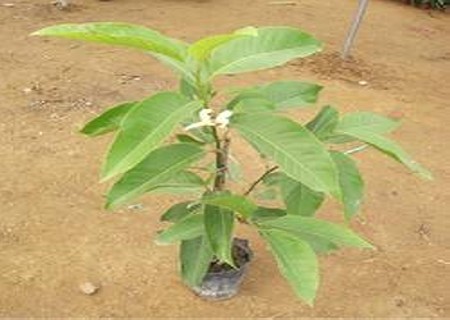
I. Causes of Yellowing Leaves in White Champaca
Insufficient light: White champaca needs ample sunlight; otherwise the plant's normal growth is inhibited and yellow leaves appear.
Excessively high temperature: When temperature control goes wrong, excessively high temperatures cause abnormal transpiration in the leaves, resulting in yellowing.
Excessive water: If watering of white champaca is not well controlled, causing the potting soil to become too dry or too wet, it will affect the normal growth of the fleshy root system, leading to yellow leaves.
Chlorosis: Chlorosis can very easily cause leaves to turn yellow and drop, and in severe cases can kill the entire plant.
Root rot: Root rot is also quite serious in its harm; it causes the root system to turn black and rot, affecting the leaves from the bottom up until they finally wither, turn yellow, and drop.
II. Solutions for Yellowing Leaves in White Champaca
Sufficient light: To ensure sufficient light, white champaca should be placed in a courtyard or on a home balcony, windowsill, or other spot with longer exposure to light, but in summer take care to avoid direct strong light, as sun scorching can also harm the plant.
Suitable temperature: Avoid excessive temperature differences; maintaining an average temperature of 5-10°C is more suitable. When the temperature rises, pay special attention to ventilation and air circulation in the growing environment, and at the same time humidify the dry air.
Proper watering: The amount of water should be continuously adjusted according to climate humidity and various other factors to ensure the soil maintains normal, suitable moisture.
Chlorosis control: Use slightly acidic soil, and apply alkaline inorganic fertilizers only in small amounts. When the disease appears, spray the leaves with ferrous sulfate (0.2%) once a week for 3-4 consecutive sprays, or spray with alum fertilizer water once a week for 3-4 consecutive sprays to relieve the condition.
Root rot control: This disease usually occurs because of excess water. Watering should follow the principle of "no watering when not dry," and keep the soil loose to enhance its drainage. During the plum rain season or other periods with more rainfall, take timely rain-shelter measures for the plant; when potting, add more broken tiles at the bottom of the pot to speed up water flow and promote drainage.
In today's households, growing flowers is becoming more and more common. When potted flowers have yellow leaves, it is actually quite easy to solve. Every cause is closely related to our daily care work. As long as you carefully do the work well in ordinary times, there is no need to worry at all that the greenery in the pot will leave us.