Reasons and Solutions for Yellowing Leaves on the Dragon Bone Plant
Dragon bone plant - in Guangdong, some people call the Euphorbia neriifolia "Huo Yang Liu" (fire disaster bird). Its flowers are relatively small and very inconspicuous, but its upright succulent stems and the dense, leather-like large leaves at the top stay evergreen all year round, possessing a certain vigorous and powerful majesty reminiscent of the steel whip used by the Hegemon King of old. Therefore, in the old days, flower shops would customarily place a pot of Euphorbia neriifolia on each side of the entrance, and many households also loved it. It is like two gatekeeping guards holding steel whips, carrying the meaning of warding off evil.
Many plant lovers find that potted plants kept at home often develop yellowing leaves, mostly caused by poor management and limited site conditions. Poor indoor air circulation, insufficient light, thick accumulation of dust on leaf surfaces, unbalanced management of water, fertilizer and soil, and air pollution are all main causes of leaf yellowing and leaf drop.
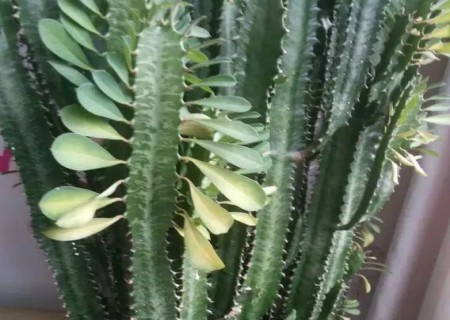
Many novice bonsai enthusiasts find that after a period of time, the leaves of the bonsai they bought turn yellow and fall off, and they do not know the reason, let alone how to deal with it. Today, taking the potted dragon bone plant as an example, the editor will introduce to you the analysis of the causes of yellowing leaves on the dragon bone plant and the methods for handling it.
1. Leaf drop period causing yellowing leaves on the dragon bone plant: If it is during the leaf drop period, then the leaves turning yellow is a natural thing.
Solution: Just clean up the yellow leaves.
2. Overwatering causing yellowing leaves on the dragon bone plant (water yellowing): Too much watering can cause root rot and leaves to turn yellow.
Solution: Stop watering. During the 1-2 months of winter dormancy, the dragon bone plant can survive even if watered only once. In spring, water once every 10 days or half a month, along with daily misting. In summer, water once a day in the morning or evening.
3. Long-term water shortage causing yellowing leaves on the dragon bone plant (drought yellowing): Leaves tend to turn yellow under strong light.
Solution: In summer, take shading measures; in winter, place it in a bright spot to receive a certain amount of sunlight. Indoor plants are best placed on a balcony, windowsill or other place where light can be seen.
4. Overfertilizing the dragon bone plant causing yellowing leaves (fertilizer yellowing): Fertilizer that is too concentrated easily causes fertilizer burn and leads to root rot problems.
Solution: During the growing period, the dragon bone plant can be given a light fertilizer once every 15-20 days, such as granular compound light fertilizer or homemade alum fertilizer water, which can promote plant growth.
5. Pests and diseases causing yellowing leaves on the dragon bone plant: It looks as if it is about to wither and die from illness.
Solution: Carbendazim can be used and poured at the plant's roots. The main dragon bone diseases include rust disease, powdery mildew and leaf spot disease. In the early stage of disease, after the seedlings have emerged, 15% "triadimefon" 800x solution or 70% "mancozeb" 500x solution can be used for control, once every 15 days, for effective prevention and control. The main pests include white wireworms, white grubs and mole crickets. Drenching the roots with 1000x trichlorfon solution can effectively control them. Maintain ventilation and light, and generally spraying two or three times can restore it to its original appearance.
In addition, if winter arrives, or after a long drought, heavy watering or large temperature changes can all cause leaf drop, which is normal metabolism. However, overwatering can cause yellow leaves and leaf drop. Be careful to stop watering immediately, loosen the soil, and follow this watering principle in the future: when dry, dry it out thoroughly; when watering, water it thoroughly. Ventilation and air permeability are also very important.