Causes and solutions for yellowing leaves on potted Alocasia (Dripping Guanyin)
Gardeners who have grown Alocasia (Dripping Guanyin) know it is easy to care for, but what should you do when its leaves occasionally turn yellow? First, you need to identify the cause of the yellowing leaves, then treat the problem accordingly. Based on feedback from gardeners in the past and the characteristics of Alocasia, the following causes have been identified for most cases of yellowing leaves:
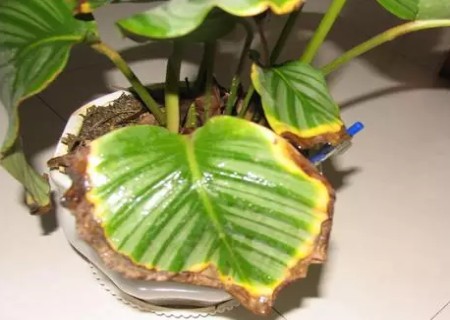
1. Dry soil and lack of water easily cause the leaves to wilt and turn yellow.
[Solution] During the vigorous growth period from May to September, water once every 2 days, and at the same time spray more water on the plant surface to increase humidity.
2. Keeping the plant in a low-light environment for a long time affects normal photosynthesis, causing the leaves to be small and yellow.
[Solution] Move the plant to an environment with indirect light for care.
3. As a moisture-loving plant, Alocasia needs air humidity kept at 70%-80%. If the air is dry, the leaves are also prone to wilting and yellowing.
[Solution] Mist the plant and its surroundings daily to increase humidity.
The yellowing or drooping leaves of Alocasia may also be caused by the following situations:
1. The potting soil of Alocasia has been too wet or too dry for a long time, without watering as soon as the soil surface dries.
2. Watering with "half water", that is, watering not thoroughly, without watering until water seeps out from the bottom of the Alocasia pot.
3. The leaves of Alocasia have not been sprayed and cleaned for a long time, so dust accumulates and hinders photosynthesis.
4. Cold exposure in winter has already frostbitten the roots of Alocasia.
5. After overwintering, Alocasia is moved outdoors too soon and placed in a warm spot in the sun, unable to adapt for a time to the sudden climate change.
6. Alocasia is kept in a poorly ventilated environment for a long time.
Preventive measures:
1. Alocasia originates from the humid tropical rainforests of Southeast Asia. It likes indirect light and does not like direct sunlight. In spring and autumn, place it in a semi-shaded spot; in summer, place it in the shade; in winter, move it indoors.
2. If the sunlight is too strong, the leaves will be sunburned and turn yellow. But "all things grow by sunlight"; if it is kept in the living room, bedroom, etc. for a long time, insufficient or no light will affect plant growth and morphogenesis. Under such conditions, the internodes become especially long, the leaves are underdeveloped and small, and lack chlorophyll, appearing yellow
3. Alocasia likes high temperatures and high humidity. Apply some fertilizer appropriately, pay attention to watering more, so as to increase its resistance to the environment and also keep the leaves greener. Cut yellowed leaves off at the base, being careful not to damage other leaf stems.