What to do when a potted Radermachera sinica keeps dropping leaves
The Radermachera sinica has a beautiful tree shape, an elegant posture, and emerald-green leaves. It is a common indoor potted plant and can be grown as a small to medium-sized potted specimen, placed indoors, on balconies, and in other spots. It is an excellent green plant for accenting furniture, and its vigorous vitality always carries an auspicious and happy meaning for people. But recently many friends have reported that the Radermachera sinica they grow at home keeps dropping leaves. What is the reason for this?
The Radermachera sinica is what we usually call radermachera, also known as bean tree. Because it can purify harmful and toxic gases in the air, it has been called a “health tree” by relevant authoritative experts. Radermachera sinica is afraid of cold and can only survive in a place with high temperatures, humidity, and plenty of sunlight. The soil must be loose, fertile, and well-draining. The best loam is loam rich in organic matter or sandy loam. The following are the causes of leaf drop in home-potted Radermachera sinica and the countermeasures:
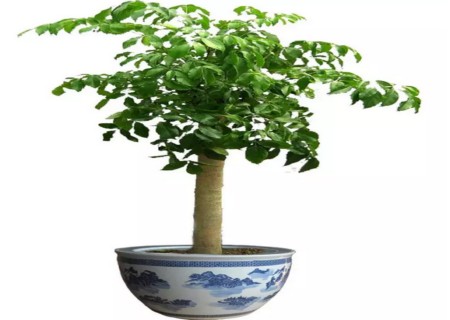
1. Caused by excessively high summer temperatures. The suitable growth temperature for Radermachera sinica is 20-30 degrees, while summer temperatures often exceed this range. When the temperature is too high, Radermachera sinica will show leaf drop.
Countermeasures: Radermachera sinica placed on the balcony should be properly shaded with a shed, or moved to a cool and ventilated place. In addition, water can often be sprayed on the leaves or around the plant to increase humidity, which can also help lower the temperature.
2. Caused by insufficient light. Radermachera sinica is a light-loving plant and can grow normally under full sun or semi-shade conditions. If potted plants placed indoors do not receive light for a long time, leaf drop will be caused.
Countermeasures: To avoid leaf drop caused by a sheltered environment, move Radermachera sinica to a place with sufficient light at intervals so that it can receive more light.
3. Caused by excessive water. Radermachera sinica likes a moist environment, but if watered too much, it is prone to leaf drop. Sometimes we find that the healthy green leaves of Radermachera sinica have fallen, and it is very likely that you have watered it too much.
Countermeasures: Do not water too frequently. In summer, watering once every 4-5 days is enough. Before each watering, test the soil with your finger. If it is moist, there is no need to water.
4. Caused by poor ventilation. Summer temperatures are high and the air is stuffy. If ventilation is not provided in time, it will also cause Radermachera sinica to drop leaves.
Countermeasures: Open windows often to strengthen air circulation
5. Caused by choosing the wrong soil or the soil itself not being fertile enough.
Countermeasures: For potted Radermachera sinica, use a culture soil that is loose, fertile, well-draining and breathable, and rich in organic matter. Usually mix garden soil: leaf mold: decomposed organic fertilizer: river sand = 5:3:1:1. During the growing season, loosen the soil once a month to ensure that the roots are always in a well-aerated state. Under normal circumstances, for small and medium-sized plants grown as home potted plants, repot once a year in early April when they are moved out, to meet the soil fertility requirements for their full year of growth.
6. Caused by insufficient fertilizer or too much fertilizer.
Countermeasures: Check whether too much fertilizer has been applied, whether the organic fertilizer used is decomposed, and so on. At this time, flush the potting soil with water to dilute the fertilizer strength, but be careful not to cause waterlogging. When fertility is insufficient, in addition to adding an appropriate amount of decomposed cake fertilizer and 3% multi-element compound fertilizer to the culture soil, topdressing should also be given continuously. During the growing season, apply a quick-acting liquid fertilizer once a month, usually decomposed cake fertilizer water. For a small number of home potted plants, or for large potted plants displayed in public places for a long time, a small amount of multi-element slow-release compound fertilizer granules can be buried regularly, or a mixed solution of 0.2% urea plus 0.1% potassium dihydrogen phosphate can be used for watering.
7. Caused by sudden environmental changes or metabolism and other reasons.
Countermeasures: Because of sudden environmental changes, there is no need to worry in such cases. Measures can be taken to reduce the degree of environmental change, and it will be fine once Radermachera sinica adapts. Radermachera sinica carries out metabolism all the time as it grows, so there will be yellowing of old leaves that die. If growth is normal, there is no problem. You can directly cut off the yellow leaves, and no special care is needed.
8. Caused by Radermachera sinica having no roots.
Countermeasures: If it was just purchased, you can return it or let the Radermachera sinica rest quietly until it sprouts new roots.
Tips:
1. The principle of watering: water thoroughly when watering, and do not keep the frequency fixed for a long time.
2. Turn the pot from time to time for all-around sunlight exposure and keep the air humidity moist, which can promote coordinated and good growth.
3. Spray clean water on the leaves 2 to 3 times a day, which can effectively prevent the leaf tips of newly emerging leaves from turning yellow and dry.
Growing experience:
1. Please do not place the bonsai at an air conditioner vent or too close to a heater.
2. Every half month, move the bonsai outdoors or to a balcony for two days of care (preferably on cloudy or rainy days), which is more conducive to its natural growth.
3. Never pour tea water into the pot or throw garbage into it.
4. In northern winters with underfloor heating, place the bonsai on a suitable pot stand.
5. When new buds emerge in spring, some metabolism (leaf replacement and leaf drop) will occur.
6. Apply 0.2 jin of organic fertilizer and 0.02 jin of compound fertilizer per plant. Farmyard manure and cake fertilizer (such as cottonseed cake, peanut cake, and hemp cake) can also be added. Fertilize along the pot wall as much as possible, and do not get close to the Taxus chinensis roots. Generally, newly purchased Radermachera sinica bonsai contain nutrient soil, so no fertilization is needed within 3 months, and after that, apply once every 2-3 months.