Why Does a Potted Pothos Get Root Rot? Causes and Solutions
We are all surely more than familiar with pothos. Pothos is an excellent foliage plant with emerald-green leaves, and growing it at home adds greenery to the household. Pothos is called the easiest plant to grow by plant enthusiasts, but some enthusiasts still run into root rot with their pothos, so what should be done about pothos root rot? The treatment method is basically the same, simply put, re-cuttings. The leaves are heart-shaped and grow larger as the plant ages. Today I will walk you through the causes of pothos root rot and the solutions.
Whether soil-grown or water-cultured, pothos can develop root rot, because pothos is a herbaceous plant, so once the roots rot, there is no way for it to recover on its own, but because pothos has the advantage of being easy to propagate, the method of re-cuttings is mostly adopted.
1. Soil-grown pothos
Cause one: Too much water
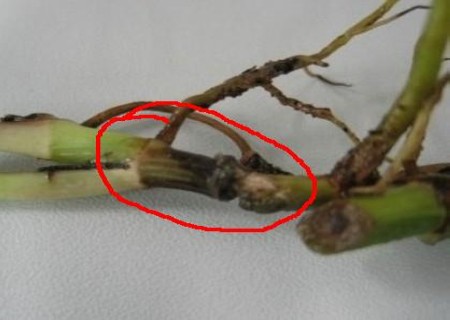
It is now autumn, and pothos should be entering its dormant period, so its demand for water is relatively lower; when it comes to watering, note that you should not water when the potting soil is not dry. Too much water causes the pothos roots to sit soaked in water for a long time, the air in the soil is displaced by water, causing soil oxygen deficiency, root respiration is impeded, and over time the roots rot.
Cause two: Poor ventilation
Pothos should be placed in a well-ventilated, shady spot, and the growing environment should have a certain level of humidity. If ventilation is poor, and on top of that the potting soil is excessively waterlogged, the pothos will get root rot, and the likelihood of root rot disease also increases.
Cause three: Pathogen infection
If more than half or all of the pothos roots have already rotted, measures should be taken immediately, and the following rescue treatment should be actively carried out. Treatment method:
First, hold the pseudobulb with one hand, and tap the rim of the pot with the palm of the other hand to take the plant out, remove all the rotted roots, rinse the roots with 10% potassium permanganate solution for disinfection, or apply some charcoal powder to the affected areas, and sun them in a greenhouse under sunlight for about 30 minutes; to prevent strong light from scorching the leaves, cover the leaf portion with newspaper so that only the roots are exposed, using sunlight to sterilise, and if conditions permit, ultraviolet light can also be used for sterilisation.
Then put it into a pot to promote rooting; at this time the sunlight should not be too strong, and shading should be provided; the rooting temperature should be higher than the usual cultivation temperature, generally best controlled at around 22-30°C. After about 1-2 months, new roots will grow; then transplant it into a pot of nutrient soil, and after a period of careful care, move on to normal fertilising and cultivation management.
Because the soil is moist, aerobic bacteria that decompose organic matter multiply and become active in large numbers, increasing soil acidity. Because butyric acid bacteria and others are highly active, a series of toxic substances such as hydrogen sulfide and ammonia are produced, directly poisoning the root system.
Compared with water-cultured pothos, soil-grown pothos is less prone to root rot, but because some pots have poor drainage, combined with enthusiasts watering without restraint, the potting soil becomes waterlogged for a long time, and ultimately the pothos roots rot; enthusiasts should prepare new medium (peat, nutrient soil will both do), pull out the original pothos, cut off the rotted roots, then wash them clean and re-plant the cuttings.
Root rot in soil-grown pothos is generally caused by waterlogging; what you need to do is give the pothos a new home, prepare new soil, add more peat and other coarse-grained soil, cut off the rotted roots of the pothos, wash them clean, and replant. If the original plant really is too rotten to save, you can only cut off the branches and leaves and re-propagate from cuttings.
2. Water-cultured pothos
Water-cultured pothos is a common foliage plant in the home. It lives as soon as it meets water, and because of its tenacious vitality it is called the "flower of life". The trailing green branches and leaves are very easy to please, and even drinking water makes it feel happy. Root rot in water-cultured pothos is 80% caused by not changing the water in time, but blackening of the roots is not root rot; root rot is when the roots turn to mush and give off a foul smell. Once the roots rot, cut off the rotted part, then change to fresh water, wash the bottle clean, and re-culture in water. The cause of root rot is generally oxygen deficiency in the root system, so pay attention to the following three points to avoid it.
First, change the water often. If the water is not changed for a long time, the oxygen in the water is used up, and the roots rot easily.
Second, pay attention to the water level. It is enough for the water surface to just cover the highest point of the roots; the upper part of the roots can even be slightly exposed above the water. If it is too deep, part of the stem is buried underwater, and oxygen deficiency makes it rot easily from there.
Third, choose a wide-mouthed open bottle to increase the area of contact with the air, making it easy for oxygen in the air to dissolve into the water; or place it in a ventilated spot, for the same purpose.
If you only have a narrow-mouthed bottle, that is fine too, as long as you follow the first rule and change the water often.
Dealing with pothos is just this simple; enthusiasts can practise propagating pothos from cuttings a bit more, to be prepared for any eventuality.