How to grow Cymbidium sinense at home? Detailed explanation of home cultivation methods
As an ornamental plant, Cymbidium sinense not only has many enthusiasts, but has also always been a subject of symbolism and expression in poetry, painting, and handicrafts. Since ancient times, those who grew orchids, sang of orchids, painted orchids, and wrote about orchids have come and gone, leaving behind a large number of precious varieties and calligraphic treasures. Looking across ancient and modern times, at home and abroad, there is no shortage of examples of orchids forging friendships, promoting exchange, refining the mind, and cultivating character.
For many orchid growers, the home cultivation methods for Cymbidium sinense are difficult, especially in northern regions. But some netizens have grown Cymbidium sinense very successfully, and from this have found regular, systematic experience for cultivating Cymbidium sinense in northern homes, simplifying the complex into something concise and to the point, which is very valuable for reference. It is shared here for Cymbidium sinense enthusiasts to refer to and study.
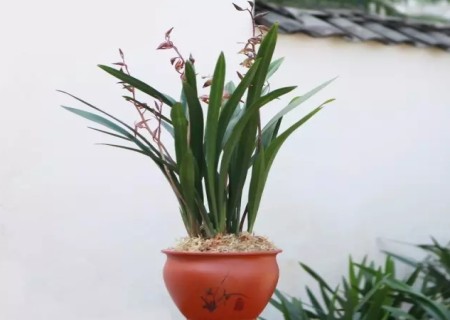
1. Cymbidium sinense prefers a warm environment, growing well within a temperature range of 15°C to 28°C; temperatures below 5°C easily cause dormancy.
2. Soil rich in humus, loose and non-sticky, often slightly acidic, is an excellent potting soil for cultivating Cymbidium sinense. When cultivating Cymbidium sinense in the north, generally 5 parts leaf mold and 1 part sandy soil are mixed together. Some also use a mixture of 4 parts humus soil, 2 parts peat soil, 2 parts cinder, and 2 parts river sand.
3. A Cymbidium sinense potted plant can be placed in many places such as the living room, study, bedroom, meeting room, office, and more. When placing it, first set out the base that matches the flower pot, then place the potted flower on the base.
4. Cymbidium sinense likes a ventilated growing environment. In order to maintain the beauty of Chinese orchids, indoor Chinese orchids should be given proper ventilation, or moved every 1 to 2 days to an outdoor spot without direct sunlight for 2 to 3 hours.
5. Cymbidium sinense likes shade and is afraid of direct strong light, but placing it indoors where it cannot see sunlight for a long time is extremely unfavorable to the growth of Chinese orchids. It can be placed each morning or before sunset in the evening outdoors or on a balcony without direct sunlight to receive light, then moved back indoors before noon or after sunset.
6. Reasonable watering is the key to success or failure in growing orchids indoors. Because indoor air circulation is poor and water evaporates slowly, Cymbidium sinense potted plants must not be overwatered; the substrate should be kept on the dry side, generally watering once every 7 to 10 days. When watering, the flowers can be moved outdoors or to an open balcony to be watered, then moved back indoors for display once no water flows out from the bottom of the pot. While watering, the orchid leaves can be gently wiped with a damp cloth to keep them glossy and clean. In addition, for Cymbidium sinense, rainwater or snow water is best; if some people use tap water, that is also acceptable, but it must be exposed to the sun for a day before use.
7. Cymbidium sinense has little demand for fertilizer; even without base fertilizer, the plant can still grow well. Each year in spring and autumn, water the plant once with diluted liquid fertilizer. Fertilizer application should be stopped during the dormancy period. However, in the early stage of flower spike emergence, there is a certain demand for fertilizer, so a small amount of fertilizer should be applied; otherwise it easily causes failure of the flower spike to emerge, short spikes, or half of the spike withering.
Cymbidium sinense is a variety with a relatively large plant type among Chinese orchids. Placing its potted plant at home can beautify the living space; placing it in the office can add color to work. But if you want it to remain ornamental for the long term, you must pay attention to daily care work such as the above.