Reasons and Solutions for Yellowing Leaves of Buddha Belly Bamboo Bonsai
Bamboo is a common plant, but in our country it has been endowed with the symbolism of uprightness and humility, ranked among the “Four Gentlemen of Flowers.” Bamboo symbolizes the resilience of life. The moment it breaks through the soil, it is like a baby struggling desperately to leave the mother's body for a chance at survival, gaining new life. The bright moon is like frost, the gentle breeze is like water. In the cool, quiet courtyard, green bamboo murmurs softly along the steps, upright and vigorous in its joints, verdant as if about to drip, gracefully swaying and lovely. It possesses both the iron backbone of plum blossom braving the cold and snow, and the noble purity of orchid's ever-lasting verdant color. With its character of “vigorous joints,” “emptiness,” and “sparse elegance,” it allows poets to fully savor their own gentlemanly spirit within it.
Buddha Belly Bamboo (Bambusa ventricosa), also known as Buddha Bamboo, has branches and leaves that stay green throughout all four seasons. Its internodes are swollen, shaped like a Buddha's belly, with a peculiar form, hence the name Buddha Belly Bamboo. Buddha Belly Bamboo is a specialty of Guangdong in our country and is an excellent material for potting and making bonsai. So, when yellowing leaves appear on your Buddha Belly Bamboo potted plant at home, what should you do? Below, the editor will give a brief explanation of leaf yellowing occurring in summer and winter.
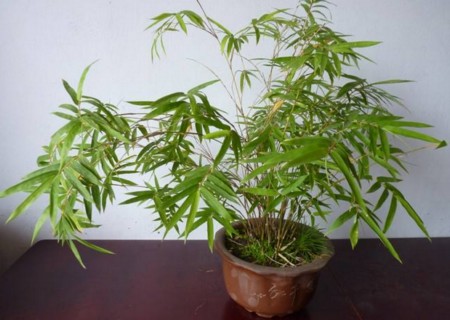
Main causes of yellowing leaves in Buddha Belly Bamboo in summer:
1. Dry air and prolonged direct exposure to scorching sun cause chlorophyll to be destroyed, the bamboo leaves fade, and over time, the entire plant's leaves turn scorched yellow.
2. Insufficient nutrients. Once nutrient supply cannot keep up, new shoots become weak and thin, and old leaves quickly turn stiff and yellow.
3. Pests and diseases. From May to September, during the peak growth period, pay attention to observing for pests. Once discovered, kill them promptly. If leaves have already turned yellow, it is very difficult to make them turn green again with medication. You can cut off the yellow leaves, keeping the leaf base or retaining the petiole. Afterwards, strengthen fertilizer and water management, apply organic liquid fertilizer several times, and after 5-6 weeks new leaves will sprout, old leaves will turn green again, greatly enhancing ornamental value.
4. When the plant enters its dormant period, leaves will also naturally wither and yellow.
Corresponding measures can be taken for the above causes, such as using loose, fertile culture soil with good water and fertilizer retention for the pot. At home, you can mix mountain soil with organic fertilizer evenly, pile and compost it for later use, etc.
The pot soil should be loose, fertile culture soil with good water and fertilizer retention. At home, you can take mountain soil, mix it evenly with organic fertilizer, and pile it for composting for later use. Buddha Belly Bamboo has well-developed roots, so in early spring each year it should be repotted into a pot one size larger, adding fresh culture soil. When repotting, excessively dense roots should be pruned away, and pest-damaged root nodules should be cut off, which benefits the sprouting of robust shoots. In midsummer, seedling pots should be shaded to prevent prolonged direct exposure to scorching sun.
Main causes of yellowing leaves in Buddha Belly Bamboo in winter:
There are many factors that cause yellowing leaves in Buddha Belly Bamboo in winter, but the main factors are overwatering or too-low temperatures.
1. Do not overwater normally. Excessive moisture easily causes root rot, and rotted roots cause leaves to lose nutrients and turn yellow. Properly loosening the pot soil helps the soil become loose and breathable and aids drainage, which benefits root recovery and growth.
2. Too-low temperatures easily cause leaves to suffer frost damage and turn yellow. It is best to move it indoors to a sunny spot, which benefits normal leaf growth.