How to Grow White Michelia (Magnolia alba)? Detailed Guide to Home Potted Cultivation Methods
"The warm breeze breaks dawn over the green lotus moss, the flowers still bow with white jade faces; a single bloom never opens easily, so from where does its clear fragrance spread through the world." This is the Southern Song patriotic poet Yang Wanli's description of the white michelia. White magnolia is a traditional and famous ornamental plant, with pure white and beautiful flowers and a clear fragrance; when in bloom it is like snow waves and a sea of clouds, very spectacular. In the north it is also grown as potted stump bonsai, and it has now been introduced and cultivated all over the world.
White michelia belongs to the strong-fragrance type of flowers. Its leaves are emerald green, its flowers are white as jade, its fragrance is like that of an orchid, and its flowering period is long; when environmental conditions are suitable, it can bloom continuously all year round. But it fears drought, waterlogging, cold and alkalinity, and in northern regions it is regarded as a rather delicate and difficult flower to grow. So how do you grow white michelia in a home pot? The following introduces the cultivation methods for white michelia.
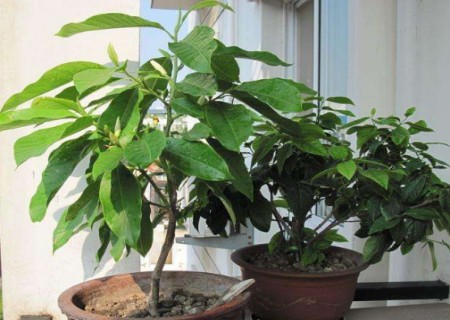
1. Soil
For home potted white michelia, you should choose loose soil with strong air permeability and relatively rich humus for cultivation. Usually choose well-aerated clay pots, purple clay pots (tubs) or plastic pots with more drainage holes in the bottom. The soil in the pot should preferably contain a certain amount of granular soil of varying sizes, to facilitate water drainage and air penetration.
2. Light
Every year from March to April, move the pots or tubs planted with white michelia outdoors and place them in a sunny spot. Summer temperatures are high, so choose shade netting as appropriate or build a simple shade shed, so that the white michelia can receive the morning sun while avoiding the strong afternoon sunlight of summer (to avoid scorching branches and leaves from exposure). Move it outdoors around the start of summer, and place it in a sunny and ventilated spot, with sunlight required for more than 6 hours. Only with sufficient light can it grow well; insufficient light will cause spindly growth of branches and leaves, with few or even no flowers. In the hot midsummer season, the intensity of sunlight should be slightly shaded to avoid the fierce sun scorching leaves and tender stems.
3. Temperature
It is not cold-tolerant. Except in South China, all other regions must move it indoors for winter care, and the minimum room temperature should be kept above 5°C; the suitable time to move it outdoors is from Qingming to Guyu. Do a good job of freeze prevention and warmth preservation; keep the indoor temperature above 12°C during the day and no lower than 6°C at night, otherwise it is prone to low-temperature chilling injury. Air circulation and keeping the pot soil moist are necessary for it to overwinter safely.
4. Watering
Whether watering is done properly is the key to caring well for white michelia. White michelia should not be watered too frequently or too much. As long as you see the leaves of the white michelia drooping, it is time to water. In autumn, water thoroughly two or three times a month; in winter, water thoroughly once or twice a month.
5. Fertilizing
During the vigorous growth period of white michelia (usually May to June or July to August each year), apply a flower fertilizer about once every half month, or apply a small amount of nitrogen, phosphorus and potassium compound fertilizer at intervals of about 20 [days], 2 grams to 6 grams each time. From the time it is moved outdoors until the end of June, water with alum fertilizer water once every 7-10 days, to make the soil slightly acidic. During the flowering period, an additional application of quick-acting phosphorus fertilizer can also be added, so that it keeps giving off fragrance.
6. Repotting
According to the size of the white michelia's crown and the length of its tree age, replace it with a pot or tub of appropriate size, to help the plant grow vigorously. When doing this, wait until the pot soil is slightly dry, slowly tilt the pot (tub) (or turn it upside down), support the pot with one hand and hold the plant firmly with the other, then tip the white michelia out and move it into the new pot. A small amount of loose soil should first be placed in the new pot (tub) as a base, then water thoroughly immediately; once it is planted stably, it is fine.
7. Pruning
Before moving it indoors, cut off dead branches, diseased branches, spindly branches and overly dense branches, to reduce the plant's nutrient consumption to the greatest extent; when moving it outdoors, you may appropriately remove the old leaves on the lower part of the branches, which helps promote new branch growth. In addition, pay attention to pests such as aphids that harm tender shoots, and they must be controlled in time.
8. Pests and Diseases
The main pests and diseases of white michelia include yellowing disease, anthracnose, red spider mites, scale insects and so on. For anthracnose, you can use 50% carbendazim wettable powder at 500 times dilution, or 50% thiophanate wettable powder at 500 times dilution, spraying once every 5-10 days for control. If red spider mites or scale insects are found, they can be scraped off with a bamboo strip. For red spider mites, you can spray 20% tetradifon at 1000 times dilution, or 50% trithion at 1000 times dilution for control.
White michelia likes a sunny and humid environment. Although white michelia is fragrant, it is hard to grow; but if everyone understands its growth habits and cultivation methods, then growing white michelia will surely become very easy.
Soil must be suitable: it requires fertile, loose, air-permeable, well-drained potting soil.
Water must be suitable: white michelia is a flower that fears both waterlogging and drought. In spring and autumn, do not water too much; in summer, water daily and it must be done in the evening; in winter, water about once every 10 days.
Fears alkalinity: white michelia likes acidic soil; watering it regularly with fermented rice-washing water gives the best effect.
Fears strong fertilizer: farmyard fertilizer will cause reverse osmosis in it, leading to "physiological drought" in the plant, causing wilting in mild cases and death by burning in severe cases. Remember -- apply diluted, apply often, apply in the evening.