What to do when the leaves of a potted Bleeding Glorybower turn yellow? Causes and solutions
The Bleeding Glorybower (Clerodendrum thomsoniae) is native to tropical Africa and can be divided into white-calyx and red-calyx varieties. The flowers are very beautiful, with striking color contrasts and a peculiar flower shape like a dragon spitting a pearl, making it a top-grade potted flower. When the Bleeding Glorybower blooms, the long flower core protrudes from the open red flowers, like the nimble tongue of a giant dragon. The leaves are deep green, the calyx is like jade, and the corolla is crimson, full of poetic charm. Potted plants adorning a windowsill or balcony have a graceful posture and are strikingly novel. They can also be used in parks or tourist sites to build flower baskets, arches, pavilions and various patterned shapes, adding elegance for visitors.
The Bleeding Glorybower likes a warm, humid, semi-shaded environment with plenty of sunlight, and is not cold-tolerant. The optimum growing temperature from February to October is 18-30°C, and from October to February of the following year it is 13-16°C. In winter the temperature should not be lower than 8°C; below 5°C the stems and leaves are prone to frost damage, with mild cases causing leaf drop and severe cases withering the tender stems. During the vegetative growth period the temperature can be relatively high; at high temperatures above 30°C, as long as water is supplied adequately, normal growth can still occur. For reproductive growth, that is, the flowering period, the temperature should be lower, around 17°C. So, what should be done when the leaves of a potted Bleeding Glorybower turn yellow?
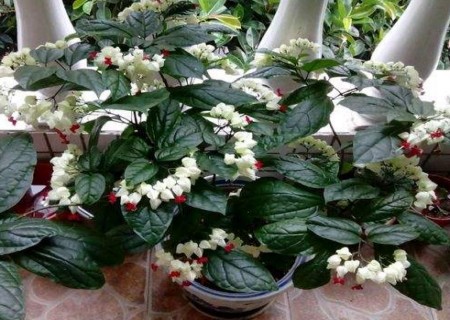
Causes of yellowing leaves in Bleeding Glorybower:
1. Light
Light is a key factor affecting the growth of Bleeding Glorybower. Generally, under insufficient light or excessively strong light, the Bleeding Glorybower will show yellowing leaves.
In summer the light is relatively strong, and exposure to the sun is one of the causes of yellow leaves in Bleeding Glorybower; in winter the sunlight is not so strong, but the sunshine duration is short, and lack of light also easily causes yellowing leaves.
2. Watering
Improper watering can also cause yellowing leaves in Bleeding Glorybower What to do when the leaves of Bleeding Glorybower turn yellow What to do when the leaves of Bleeding Glorybower turn yellow.
Bleeding Glorybower likes the growing environment to remain moist. If the plant is relatively short of water and the air is relatively dry, its leaves will turn yellow. Although Bleeding Glorybower needs a moist growing environment, if watering is too frequent and the soil has standing water, it will cause Bleeding Glorybower not to bloom, the leaves to turn yellow, and even root rot.
3. Fertilizing
Yellowing leaves in Bleeding Glorybower caused by fertilizing mainly manifest as nutrient deficiency. If there are not enough nutrients, it is not conducive to the growth of Bleeding Glorybower and will cause yellow leaves.
What to do when the leaves of Bleeding Glorybower turn yellow?
1. Light should be suitable
In summer, when the light is relatively strong, the Bleeding Glorybower can be kept in a semi-shaded place for care; it needs bright light and must not be shaded for a long time. In winter, sufficient light must be ensured, and it is best to receive full sun What to do when the leaves of Bleeding Glorybower turn yellow junior high school essay.
2. Water reasonably
For watering, mainly pay attention to the dryness and moisture of the Bleeding Glorybower and keep it within a relatively suitable range. In summer, water a little more appropriately; when the air is relatively dry, sprinkle some water on the leaves of the Bleeding Glorybower.
3. Fertilizing
When the leaves of Bleeding Glorybower turn yellow due to nutrient deficiency, some fertilizer can be applied, and at the same time some ferrous sulfate solution can be applied, and the leaves can turn green again.
During the care period, water and fertilizer should be properly controlled. After the sprouting branches have grown to a considerable length, the amount of nitrogen fertilizer should be controlled. During the flowering period, use equal amounts of the three elements nitrogen, phosphorus and potassium, at a concentration of o.2%, fertilizing once a week.
Watering must not be excessive, because too much water will cause only vines to grow without blooming, or leaves to turn yellow and fall, or even root rot and death. In winter, to make it dormant, stop fertilizing and control water, and place it in a sunny spot so it can overwinter safely. If yellowing of the leaves is found during the growth period, apply o.2% ferrous sulfate solution together with topdressing, which can change the leaf color from yellow to green. At the same time, the yellowed and blackened leaves need to be cut off to avoid spreading diseases and pests and also affecting the ornamental value.
When repotting in spring, the upper branches should be cut back to encourage the sprouting of new shoots. In the early growth stage, pinching can be done to make the plant shape round and neat, with more branches and more flowers. After each flowering, the flower stems should be cut off promptly to make the plant shape low and full.
The air in the cultivation environment must be fresh. Places with a medicinal smell or ethylene often cause flower drop and need to be guarded against. After flowering, it should not be placed in the dark for too long. If the temperature is above 210C, placing the potted flower in a dark place for more than 24 hours will cause flower drop.