Is potted perilla easy to grow? Here's how to care for it properly
In many people's balcony gardens, a clump of purple plants can often be seen. Pick a few tender leaves from the top and put them into cooked white rice porridge, and a pleasant fresh fragrance makes you feel refreshed all morning.
This purple plant grown in flower pots is called perilla, also known as ren or red perilla, a plant of the Lamiaceae family, with a distinctive aroma. Its stems, leaves and seeds all have good edible and medicinal value. People commonly use it to press oil, make spices and eat. Traditional Chinese medicine holds that perilla has the effects of relieving the exterior and dispersing cold, moving qi and resolving phlegm, and nourishing the stomach and harmonizing the middle. It can be used to treat wind-cold colds, cough with copious phlegm, chest tightness and nausea, and fish or crab poisoning, among others.
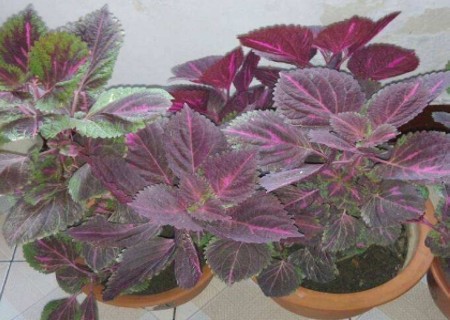
So, is perilla easy to grow? In fact, perilla is very easy to grow. It can grow well in front of and behind houses, and along ditches and field edges. Keep a pot of perilla on your balcony - you can both experience the plant on the tip of your tongue and treat various ailments. It is a good choice.
Perilla blooms with pale red flowers in summer and has a distinctive aroma. Its stems, leaves and seeds are used as medicine, with the effects of relieving cough, expelling phlegm and promoting urination. It is cultivated throughout China, and grows wild in the provinces south of the Yangtze River, seen by village edges or roadsides. Because perilla is highly adaptable and not demanding about soil, it grows well in well-drained sandy loam, loam and clay loam, and in fertile soil in front of and behind houses and along ditches and field edges. A preceding crop of vegetables is best, and it can also be planted under young fruit trees.
1. Light
Perilla is not strict about light requirements and can grow in shadier spots, but a long-day, sunny environment is more favorable for leaf growth.
2. Temperature
Perilla is a vegetable that tolerates both high and low temperatures, and can still grow well during the hot northern summer. Seeds can germinate once the soil temperature is above 5°C; the suitable germination temperature is 18-23°C; seedlings can tolerate low temperatures of 1-2°C; the optimum temperature during flowering is 22-28°C, but plants grow slowly at lower temperatures.
3. Soil
Perilla has strong adaptability to soil. You can choose sunny, well-drained soil, such as loose, fertile sandy loam, but it is best not to plant it in heavy clay, where growth will be poorer.
4. Watering
Perilla is fairly tolerant of waterlogging and likes a humid environment; it grows better when the relative air humidity is 75%-80%. If the air is too dry, the stems and leaves will become coarse and hard, with more fiber and poorer quality. Especially in summer, be sure to water frequently. In the rainy season, pay attention to drainage and keep the working paths clear to prevent waterlogging from damaging the roots and causing leaf drop.
5. Fertilizer
Perilla is not strict about soil requirements and can grow in sandy loam, loam or clay loam. Perilla needs sufficient base fertilizer, and throughout the growing period, depending on its growth, it also needs 3-5 topdressings of organic fertilizer, and foliar fertilizer can be sprayed. Perilla has a relatively short growing period; the whole plant can be harvested 2.5 months after planting, and since the whole plant is used as medicine, nitrogen fertilizer should be the main type.
6. Pests and diseases
Perilla rarely suffers from pests and diseases, but it occasionally gets rust. If rust appears, you can use thiophanate to control it, using it twice in a row, once a week. If grasshoppers and small green caterpillars appear, when there are only a few, you can catch them by hand
7. Harvesting
When perilla leaves reach a certain size, harvest them promptly for eating, otherwise the leaves' texture will worsen. At the same time, promptly remove the tops where flower buds have already differentiated, to inhibit perilla from flowering and thus promote the growth of stems and leaves.
As a widely used plant, perilla is broadly loved by everyone. Many people want to grow perilla themselves, so what should be noted during the process of growing perilla?
1. Maintain a suitable temperature
Perilla plants grow relatively slowly at lower temperatures and grow vigorously in summer, so keep the temperature at 18—23°C and the relative humidity at 75%-80%.
2. Pay attention to timely watering
If there is no rain for a long time, water promptly after sowing or transplanting perilla. In the rainy season, pay attention to drainage to prevent waterlogging from damaging the roots and causing leaf drop.
3. Mainly nitrogen fertilizer
Because perilla is used as medicine as a whole plant, fertilization should be mainly nitrogen fertilizer, and do not let the fertilizer touch the leaves when applying it.