How to grow bowl lotus in water? Growing methods and precautions
The pond described in Mr. Zhu Ziqing's "Moonlight over the Lotus Pond" seems to appear right before our eyes: “On the winding lotus pond, one sees nothing but fields of leaves. The leaves rise high above the water, like the skirts of graceful dancing girls.” Nowadays, what chance do we have to stroll to a lotus pond anytime and enjoy this tranquil summer evening? On a windowsill or tea table, you can also grow a bowl lotus. Isn't it lovely to have the delights of summer within a tiny space!
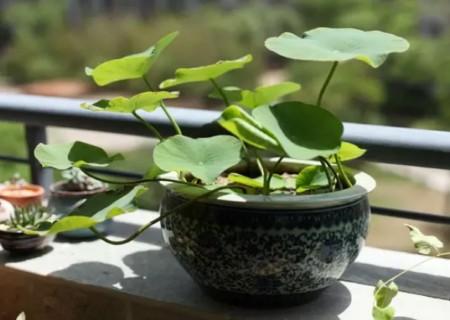
The important factors for growing bowl lotus well are:
1. When planting or dividing the lotus rhizome, take special care to protect the growing tip of the rhizome and do not let it get bruised.
2. The container should be suitably larger and deeper. Although it is called bowl lotus, if you grow it in a vegetable bowl, that is too small and too shallow. A bowl that is too shallow holds too little nutrient soil and cannot give the plant sufficient nutrients; if it is too small, it cannot accommodate the spreading fibrous roots, and the plant will not grow well.
3. Give it plenty of sunlight. Growers must not keep the bowl lotus indoors all the time just to decorate the environment and admire it; leaving it indoors for a long time keeps it from seeing sunlight, forgetting that it is a plant that loves full sun. Only when the soil in the pot is warmed by the sun can it grow rapidly.
4. Control the water supply according to the different stages of plant growth. When the bowl lotus is first planted, the water should not be too much; too much water lowers the temperature, hinders the rooting and development of young seedlings, and affects their breathing and aeration, and may even cause root rot. As the plant's leaves grow larger, clear water needs to be gradually added to the bowl to meet its need for leaves to float on the water surface and carry out photosynthesis. Otherwise, the leaf edges will become scorched, withered and yellow.
5. Pay attention to applying fertilizer in the right amount. Bowl lotus loves fertilizer; if it lacks fertilizer, rooting and leaf growth will be slow and it will lack vitality. Therefore, before planting, mix a small amount of decomposed cake fertilizer liquid or soybean meal or peanut meal into the pot soil as a base fertilizer. However, although bowl lotus is a fertilizer-loving plant, it must not be over-fertilized, especially because the bowl lotus container is small, the plant is small, and its fertilizer requirement is also small; if too much fertilizer is applied, it will produce only leaves and no flowers. In more serious cases, it can even cause the plant to wither and die. If you find that too much fertilizer has been applied, change the water frequently to rinse away part of the fertilizer liquid and dilute it.
6. If the leaves grow too many and too dense, some leaves can be removed appropriately to help the plant breathe and get aeration. This also helps it set flowers.
Precautions:
No matter what variety of bowl lotus it is, the growing method for bowl lotus must pay attention to what kind of container is used for planting, and the bowl lotus must be placed in a courtyard, on a terrace, on a roof, or in another place with ample sunlight; otherwise, due to insufficient light, the leaves will be luxuriant but the flowers will be sparse, or it may even fail to bloom. If indoor display is needed, you can move the pot indoors when it is about to bloom, and after the flowers fade, move it back to its original place to receive the sunlight, so that it grows robustly and blooms again.