How to grow an Australian pine (Norfolk Island pine) bonsai? Detailed guide to care methods and precautions
The Australian pine is an evergreen tree; potted specimens are generally young trees, under 2 m tall. The crown is spire-shaped and dark green, and the bark of the crown often splits horizontally or peels off in strips; the new bark has a bronze sheen. The stem is upright, and the side branches are whorled and extend horizontally. The twigs are two-ranked and alternate, extending horizontally or slightly drooping.
The Australian pine is a highly ornamental tree species, rated as one of the world's three great ornamental trees. It has extremely strong vitality and stays green all year round; it is a master at purifying the air and is suitable for care indoors where light is insufficient. So, do you know about the Australian pine? Do you know how to grow it? What do you need to pay attention to when growing an Australian pine? Let's find out together.
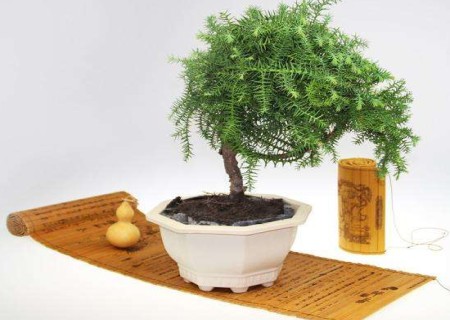
Care methods for Australian pine bonsai:
1. Soil: The Australian pine is suited to well-drained, humus-rich, slightly acidic sandy loam; for potting, a substrate mixed from garden soil, leaf mold and peat moss is best.
2. Light: The Australian pine likes diffused light and should be placed in a bright spot inside a shed. If kept in a dark place for a long time, move it into the sunlight for a suitable period every few weeks, which helps the deep green leaves keep their beautiful color.
3. Temperature: It can grow all year round except when the summer temperature exceeds 32°C. The optimum growing temperature is 10-25°C, and the overwintering temperature is above 5°C
3. Watering: From spring to autumn, the Australian pine should be watered more, but waterlogging in the pot must be avoided. In hot, dry conditions, spray water on the potted plant and the nearby ground to lower the temperature and raise humidity. Water promptly; do not wait until the soil is dry before watering. From late autumn onward, gradually reduce watering to strengthen its cold resistance.
4. Fertilizing: During the growing season, apply fertilizer once every 2 weeks, preferably a compound fertilizer containing nitrogen and potassium. Insufficient fertilizer tends to make the branches and leaves turn yellow.
6. Repotting: Young trees have a fragile trunk and are prone to bending and deforming, so it is best to set up a support to fix the main trunk from the young plant stage. To prevent the plant from growing too tall, repot once every 2-3 years after the weather warms in spring. Usually, take care to protect the side branches so they are not damaged and affect the plant's shape.
7. Pests and diseases: The Australian pine has very few pests and diseases. When cared for indoors, scale insects are commonly seen; spraying methidathion, chlorpyrifos emulsifiable concentrate, Guoguang Jiebisi and the like gives good control results.
Care precautions:
The Australian pine prefers a warm, humid environment and grows well in places with ample sunlight. It has a certain tolerance for shade, but strong sunlight and exposure in summer should be avoided. It is not tolerant of cold or drought and is suited to well-drained, humus-rich, slightly acidic sandy loam.
1. Summer and autumn are the growing season
Potted plants can be placed in a semi-shaded spot outdoors, or kept in a ventilated spot with light by a window. Avoid exposure to blazing sun above 35°C, and do not leave them for long in a lightless, shaded place. Either of these will cause the branches and leaves to wither and yellow or to grow leggy, reducing their ornamental value.
2. During the growth process
To avoid the main trunk leaning to one side, it is best to turn the pot once every half month so the plant receives light evenly. In addition, young trees have a fragile trunk and are prone to bending and deforming, so it is best to set up a support to fix the main trunk from the young plant stage. To prevent the plant from growing too tall, repot once every 2-3 years after the weather warms in spring. Usually, take care to protect the side branches so they are not damaged and affect the plant's shape.
3. Generally, there is no need to prune the branches
Let them grow naturally. The optimum growing temperature is 10-25°C, and the overwintering temperature is above 5°C. In the overwintering season, some light can be given, the potting soil must not be too dry, and on clear days water should also be sprayed to increase humidity.
The above are the care methods and precautions, and we hope they help fellow plant lovers. As long as we care for them attentively, they will surely bloom into a thousand beautiful flowers.