How to Grow Hydroponic Mint? Detailed Guide to Cultivation Methods and Precautions
In Greek mythology, the god of the underworld fell in love with a beautiful nymph, and the jealous queen of the underworld turned the nymph into a lowly grass trampled by passersby on the roadside. The grass gave off a cool, refreshing fragrance and was loved by more and more people. This grass is mint.
Mint grows very quickly, both in water and in soil, so it can be divided at the right time, that is, pinch off one stem and split it into two stems to continue growing in water or soil. Doesn't mint in a crystal-clear bottle look even more lush and lovely? Then hurry home and make a bottle of it, so the freshness of nature can accompany you at all times.
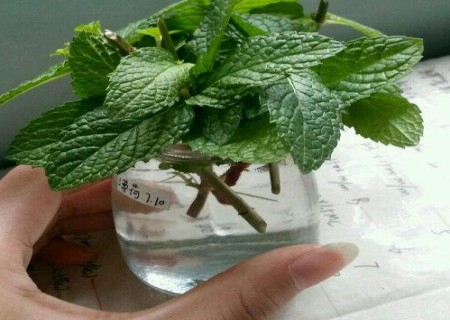
1. Cutting branches: Mint can be grown from a broken branch, but an uneven wound tends to rot, so it is recommended to use sharp scissors to cut the branches, with each section 5-10cm long.
2. Container: Prepare a beautiful bottle, add water, and insert the mint into it. It will take root in about a week. Be careful not to soak the leaves in water, as they rot easily.
3. Changing the water: Change the water once a week. Rainwater is best; if using tap water, let it sit for 3 days before use.
4. Light: Mint likes light. Long-term lack of light will make it grow leggy; long-term strong light will make mint wilt. One hour of light a day will make mint grow more beautiful!
5. Temperature: The most suitable temperature for mint growth is 20-30°C. Mint is fairly cold-tolerant, but in winter it is recommended to move it back indoors!
Mint has a very wide range of uses. It not only has a fresh fragrance and a certain purifying effect on the air, but can also be used as a raw material for making toothpaste and mint and other products. If we want to grow mint at home, while using the soil culture method, we can also grow mint hydroponically, which can also achieve good results. The following introduces the maintenance methods for hydroponic mint:
1. Plenty of sunlight
Mint likes light, so it should be placed in a place with plenty of light. It cannot stay in a shady place without sunlight for a long time, as this makes photosynthesis difficult, results in few roots, and makes it hard to grow leaves.
Mint has considerable demands for both sunlight and water. Being placed in a dim, shaded place for a long time is not conducive to normal photosynthesis of the plant, is not conducive to leaf growth, and also reduces the number of roots; placing the bottle of hydroponic mint in a place with plenty of light once every two days can meet the light needed for its growth.
2. Change the water frequently
There is no need to change the water too frequently; usually once a week is enough. If the base water in the bottle decreases, an appropriate amount of water can be added. There is no need to change the water every day. If the water in the bottle is low, add a little more, but do not fill it to the brim. At the same time, an appropriate amount of nutrient solution can be added to the water to ensure sufficient nutrients for mint growth.
3. Spray water to maintain moisture
Although mint is grown hydroponically, the leaves still need to be sprayed with water to maintain moisture, generally twice a day. Use a small spray bottle, and the amount of water sprayed should not be too much, but because it is mist-like, it is fully absorbed.
Tips for caring for mint:
1. Mint likes a warm and humid environment, and the frost-free period should preferably be more than 200 days. It is not strict about soil requirements. Except for heavily alkaline land, heavy clay land, and sandy land, it can be planted anywhere, but fertile loam and sandy loam are best. Sunlight plays an important role in increasing the content of menthol and mint oil, especially during the budding and flowering period, when there must be sufficient sunlight, so mint should not be planted in shady places.
2. Mint is a long-day plant. It likes sufficient sunlight, and the budding and flowering period requires sufficient sunshine and dry weather, which can increase the oil and menthol content. If there is too much rain later, it tends to grow leggy, the leaves become thin, the lower part of the plant easily drops leaves, and there are also more diseases. It likes neutral soil; sandy loam, loam, and humus soil with a pH value of 6.5-7.5 can all be used for planting. Mint likes fertilizer, especially nitrogen fertilizer, and continuous cropping should be avoided. Long sunshine can promote mint flowering and is also beneficial to the accumulation of mint oil and menthol.
Precautions:
1. If leaves turn black during hydroponic cultivation, remove the black leaves promptly. There is no need to worry about picking leaves from herbaceous plants; on the contrary, they usually grow more vigorously the more they are picked.
2. When changing the base water, wash the roots at the same time, remove the leaves in the water that have already rotted, and ensure the base water and the plant remain clean and healthy.
3. Whether hydroponic or soil culture is used, mint grows very quickly, so the mother plant can be divided, that is, after pinching off one stem, split it into two stems to continue hydroponic or soil cultivation.