Reasons Why Potted Cymbidium Orchids Fail to Bloom and How to Solve Them
A normal mature Cymbidium orchid, as long as it has reached a connected plant of two or three pseudobulbs or more, can generally bloom if cultivated properly (a few Cymbidium orchids can also bloom as a single pseudobulb). I often hear friends say that their potted Cymbidium orchids have not bloomed for several years. The reasons can be broadly analysed as the following phenomena and causes.
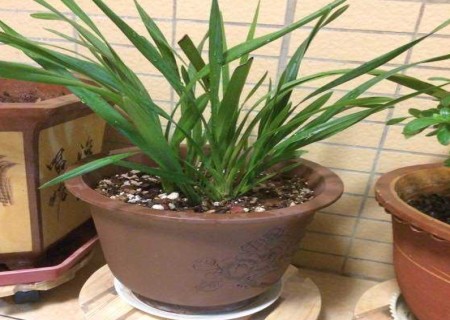
1. Seedling plants (seed-grown plants) and tissue-culture plants may not necessarily bloom even after many years of cultivation. Just like other plants, for example, fruit trees need to reach a certain age before they can bloom and bear fruit; Cymbidium orchids also need to reach a certain age before they can bloom.
2. Differences among Cymbidium orchid varieties and different climatic conditions in different regions often make it difficult for Cymbidium orchids to bloom. For example, in places where temperatures are relatively high and fairly even throughout the four seasons, even if Cymbidium orchids produce flower buds, they cannot bloom because they do not receive the normal spring-flowering conditions (low-temperature vernalisation). There are also varieties that fail to bloom or cannot bloom normally due to the large latitudinal differences between the north and south. Nowadays, air conditioning and solar greenhouses can be used artificially to regulate temperature and thereby promote the growth and flowering of Cymbidium orchids.
3. The physiological growth of Cymbidium orchids is disrupted for various reasons, and new leaf buds suddenly appear during the flower-bud formation period. In this case, the orchid plant no longer has enough nutrients to sustain the normal differentiation of flower buds, causing the flower buds to stop growing and fail to bloom.
4. Improper cultivation methods can also lead to Cymbidium orchids failing to bloom. Here there are mainly the following situations:
1) The growing medium for Cymbidium orchids contains too much nitrogen fertiliser and too little phosphorus and potassium fertiliser, which leads to excessive vegetative growth and inhibited reproductive growth. Just like fruit trees planted by farmers around their houses: because the soil is too fertile and rubbish and poultry and livestock manure are often dumped on it, the trees only grow branches and leaves without blooming or bearing fruit. Cymbidium orchids are the same. The solution is to replace the medium with one that has balanced nitrogen, phosphorus and potassium nutrition, or to apply additional phosphorus and potassium fertiliser.
2) Watering too much during the flower-bud differentiation period, with the medium staying too wet, will likewise lead to vigorous vegetative growth and inhibit reproductive growth. Because the medium is too wet, the nutrients contained in it are constantly released and absorbed by the roots together with water and conducted to the leaves to participate in the plant's metabolism. Once metabolism is strong, respiration becomes vigorous, thereby offsetting the products of leaf photosynthesis. The accumulation of organic matter in the orchid plant is affected, and flower-bud differentiation lacks the necessary driving force. The solution is to properly control water for Cymbidium orchids in July and August each year (the flower-bud differentiation period for most Cymbidium orchids), keeping the medium on the dry side, and at the same time spraying the leaves with monopotassium phosphate once every 10—15 days, for two to three consecutive sprays, which is beneficial for the differentiation and formation of Cymbidium orchid flower buds.
3) Insufficient light is also one of the reasons why Cymbidium orchids fail to bloom. Although Cymbidium orchids are shade-loving plants, they still need a certain amount of sunlight to maintain normal physiological activity. When Cymbidium orchids receive sufficient light, the accumulation of organic matter is relatively greater, and flower-bud formation has sufficient driving force. Some orchid growers, limited by their conditions, have to grow orchids indoors, so naturally they bloom less. The solution is to let Cymbidium orchid plants that cannot get sunlight enjoy as much sunlight as possible (of course, they must not be exposed to scorching sun), especially the warm, soft sunlight of the morning.
In addition to light, the accumulation of photosynthetic products (organic matter) also depends on the temperature difference between day and night. If the day-night temperature difference is small, the respiration of Cymbidium orchids at night is vigorous and will consume the photosynthetic products produced by the Cymbidium orchid during the day. Therefore, in regions where the day-night temperature difference during the flower-bud formation period is small and Cymbidium orchids often have difficulty blooming, artificial creation of a day-night temperature difference should be considered.
5. There is another situation in which Cymbidium orchids cannot bloom due to their own special reasons, or in other words, a very small number of Cymbidium orchids do not much like to bloom. This is probably the infertility phenomenon of the plant (Cymbidium orchid).
How can Cymbidium orchids be made to bloom again?
If you want Cymbidium orchids bought during the Spring Festival to bloom again, you must be very familiar with the ecological habits of this flower and the laws of its growth and development, and prepare the cultivation environment conditions according to local conditions.
After the Cymbidium orchid flowers fade, cut off the spent flowers. It is best to repot into a clay pot with a large bottom hole, lined with broken tile pieces as a drainage layer to ensure smooth drainage. A large plant of about 10 pseudobulbs can be divided into two pots. When repotting, keep 1/3 of the old growing medium and add new medium. Note that when planting, all pseudobulbs should be left completely exposed on the surface of the substrate.
After planting, water to flush the substrate so that mud and debris in the pot are quickly washed out through the bottom hole with the water. Then place the pot elevated in a location with sufficient scattered light. During the first week after planting, only mist the leaves. After new roots emerge, keep moisture sufficient regularly.
Suggestions for getting Cymbidium orchids to rebloom:
1. If bought as a Lunar New Year flower, it generally comes with a pot, so there is no need to repot. I have checked with many experts at getting them to rebloom, and they do not repot either; the orchid roots in the pot grow densely and do not need to be tidied. The experts say that Cymbidium orchids bloom only when grown in small pots.
2. If they are bare-root plants without a pot, they can be cultivated with medium-sized bark granules and humus soil, common growing media for Chinese orchids, and the pot should not be too large; the planting method is similar to that for Chinese orchids. If there are too many plants in one pot, they can be divided; generally 3~4 pseudobulbs per pot, as too many pseudobulbs also makes reblooming difficult.
3. For balcony cultivation, in spring they need to be grown in a sunny place without shading; in summer they need shading. The key is good ventilation, applying more compound fertiliser (the amount should be slightly more than that needed for Chinese orchids, that is, light fertiliser applied frequently; for example, for the same fertiliser, if Chinese orchids need to be diluted 1000 times before use, then Cymbidium orchids can be diluted 800 times), and frequent watering (they must not dry out completely; drying out completely is very harmful to orchids, and they can be watered when the water content is 30%). If conditions permit, they can be placed outdoors. Overall, it is extensive management.
4. Cymbidium orchids need a vernalisation process. In late autumn, when the nighttime temperature is below 14 degrees, after about 55 days they can be moved indoors. In summer, when the temperature is above 30 degrees, water spraying and ventilation are needed to lower the temperature.
5. Cymbidium orchid diseases can be treated in the same way as those of Chinese orchids.
Summary: The main things are strong light, more fertiliser, and widening the temperature difference in autumn to force flowering. Meeting these few conditions is enough to make them rebloom.