A Detailed Guide to the Correct Method of Repotting and Changing Soil for Fruit Tree Bonsai
To ensure fruit trees retain high ornamental value every year, the repotting frequency and timing must be chosen sensibly. If the repotting frequency is too high, the branches will grow vigorously, resulting in fewer fruits forming that year; if the repotting frequency is too low, the nutrients in the potting soil will be exhausted, and the aging root system will reduce its ability to absorb water and nutrients, causing the fruit tree to lose its vitality and lowering its ornamental value.
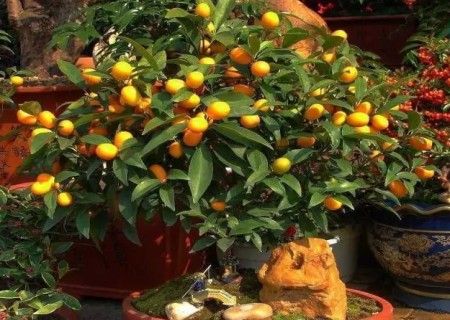
Under normal circumstances, repotting fruit trees once every two years is more suitable. To avoid frost damage in winter and poor nutrition of flower buds in late spring, the best time to repot fruit tree bonsai is usually when the spring freezing period has ended and the flower buds have not yet sprouted; repotting at this time gives the new roots time to grow.
When actually repotting, certain steps should be followed:
1. To prevent the soil ball from falling apart, water the fruit tree to be repotted thoroughly one day in advance;
2. When trimming the roots, cut away the aged thick roots and fibrous roots, and avoid damaging the tips of the medium-sized roots, because the root tips are the most important part for absorbing nutrients and water;
3. Spread nutrient soil evenly over the bottom of the new pot, then slowly place the soil ball into it;
4. When using potting soil to fill the remaining space in the pot, use the method of filling soil in stages and letting water seep in to settle it, to avoid damage to the root system caused by external compression.
Fruit tree bonsai usually needs to be repotted promptly every 2 years, replacing the nutrient soil with new soil. Potted trees grown in soil poor in nutrients, or that have not been repotted and given fresh soil for a long time, should be fertilized more. After repotting, water thoroughly once to promote root growth.
Each time you repot, raise the tree's root system upward once so that the soil surface rises above the rim of the pot; as you water routinely, the base of the trunk will gradually become exposed. You can also gradually scrape away the soil on the surface of the pot with a bamboo skewer, wooden stick, etc., until the desired exposed effect is achieved.
Reasons for repotting:
1. The plant has grown larger, and the volume of the original pot no longer suits the plant's growth requirements; the pot volume must be increased to raise the root system's absorption area.
2. Perennial plants growing in pots become older in age, and the roots grow crossing and crowding each other inside the pot, affecting new root growth and significantly weakening the ability to absorb nutrients; repotting is needed, along with appropriate fertilizer management and root pruning, so the plant can grow healthily.
Potting method:
Because the nutrients in the potting soil will be absorbed by the fruit tree or leached away by frequent watering, the tree should be repotted promptly once every two or three years, replacing the soil with fresh nutrient soil. After turning the old soil ball out of the pot upside down, cut away the old roots on the surface of the soil ball and any large roots affecting its shape. When potting, first mix organic fertilizer with nutrient soil evenly and fill the bottom, then pot the tree with its soil ball, and fill the surrounding space with potting soil mixed with fertilizer. The pH of the potting soil is generally between 4.5 and 7.5. According to the requirements of different tree species, prepare different nutrient soils rich in organic matter, preferably a sandy loam rich in humus.
To prepare potting soil, generally take 4 parts matured garden soil, 2 parts river sand, and 1 part plant ash, mix them thoroughly and evenly, then crush finely and sift. The potting soil should be sterilized before use; generally, mixing in a small amount of sulfur powder evenly is sufficient. Each time you repot and change the soil, you can switch to a suitable pot according to the fruit tree's growth rate, the size of the root ball, and shaping needs.