Causes and Solutions for Yellowing Leaves on Mountain Pine Bonsai
Mountain pine is deeply loved for its rugged, ancient-looking trunk and its evergreen, verdant form. But everyone may have had this experience: among a mass of verdant flowers and trees, one or a few mountain pines with yellowish foliage stand out sharply and look very out of place. Why, under the same natural conditions and the same management methods, do the needles of these few pines show yellowing?
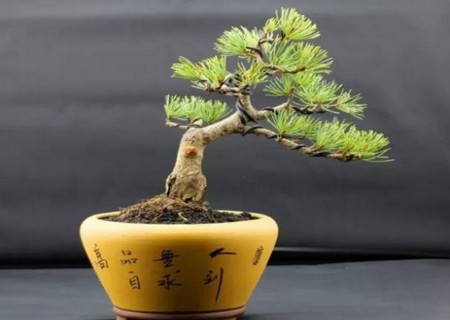
To find the cause, at the beginning of the year I unpotted two of them for inspection. In fact, it was already the growing season for mountain pine, and I found that they had no normal “bean sprout roots” (the tips of healthy new roots are white and crystal-like, commonly called bean sprout roots), and some roots had turned black and necrotic.
Through comprehensive analysis of the air permeability of the substrate and other factors, the possible causes of the yellowing needles are:
1. The cultivation substrate is not loose and airy enough;
2. Watering too frequently keeps the potting soil wet for a long time, so there is insufficient oxygen in the pot;
3. Fertilizing too often or at too high a concentration damages the root system.
In response to the above causes, when repotting, cut off the necrotic roots, remove part of the old soil, add a substrate with good looseness and air permeability (fresh loess plus river sand, or coal cinder that has been soaked in water to remove its fire, 30%), and use semi-shade management; for watering, water thoroughly only after the soil has dried out, and do not water if it is not dry.
After 2 months, the leaf color had gradually turned green again. At this time, do not fertilize. After another two months, if growth is vigorous, apply a thin fertilizer, and in the second half of the year it can enter normal management.
During the care process, note the following:
1. Mountain pine is a full-sun plant, but it must not be exposed to scorching sun in summer; insufficient sunlight will cause poor growth;
2. Regularly clean out old needles and dead needles, and maintain an appropriate amount of needles to facilitate ventilation and light;
3. Keep the care location relatively fixed, and do not move it frequently;
4. Pruning and grafting wounds must be sealed promptly to prevent resin bleeding;
5. Mountain pine is a shallow-rooted tree species and should not be planted deeply;
6. Mountain pine has relatively high soil requirements and must be treated carefully;
7. When there are no branches or leaves on a mountain pine branch, it easily contracts and dies;
8. In the early stage, pay attention to sheltering from wind and preventing vibration, so as not to shake the tree and pull the roots. Small trees should be fixed with stakes, and large trees should be fixed with supports.