How to grow a crabapple bonsai? Master the correct cultivation methods
In ancient times, the crabapple flower was a standout in palace gardens, and people always regarded the crabapple as a symbol of wealth. Keeping a pot of crabapple flowers at home represents blooming wealth and rolling in money. It implies endless glory and wealth for the homeowner.
People love crabapple flowers because, from ancient times to the present, they suit both young and old alike. In addition, crabapples come in many varieties, bloom in different seasons, and have brilliant, colorful flowers. Grown at home as a bonsai, they have high ornamental value, can make the home more lively and energetic, and bring joy to body and mind.
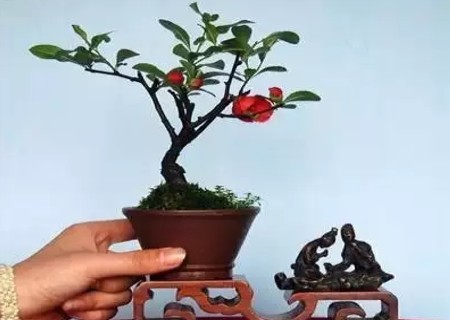
Crabapple bonsai are especially loved by people. In "Dream of the Red Chamber," the sisters of the Grand View Garden once happily formed the Crabapple Poetry Society and praised the beauty of crabapple flowers in verse. But when you face a pot of delicate, lovely crabapple flowers, will you worry because you do not know how to grow them? The following points may be of some help to you.
1. Soil
The soil should be loose and slightly alkaline. Crabapples need relatively loose soil and need it to contain some alkalinity; generally, the soil pH just needs to be no lower than 7. You can use soil from a flower nursery or from the base of a tree and add one-third river sand. The planting depth in the pot should not be too deep, so that the root system can spread out better. It is best to plant at a depth of 12 cm from the bottom of the pot, but the specific depth still depends on the size of the plant.
2. Light
Crabapples like plenty of light and are not shade-tolerant, so they need to be placed in a spot with ample light, such as a balcony or beside a window. At noon in summer, when the sunlight is harsh, appropriate shading is needed to prevent the flowers and leaves from being scorched. At the same time, turn the flower pot frequently so it does not grow crooked toward one light direction.
3. Ventilation
It should be placed in a ventilated spot. Crabapples can be placed in a courtyard, on a balcony, or another ventilated place. Crabapples are relatively cold-tolerant, so in winter they can also be placed outdoors, but if it is especially severely cold, some freeze protection measures should still be taken.
4. Water
Water is the source of all things, and the growth of crabapples cannot be separated from water. For watering, it is best to keep the potting soil moist. The specific watering should depend on the weather. The potting soil should be kept moist, but water should not accumulate. It is best not to let it get rained on, so that too much water does not cause root rot. Do not water when it is too cold. During the spring and summer growing period, the potting soil should not be too dry either, especially during the flowering period, when the potting soil must be kept with sufficient water.
5. Fertilizing
For crabapple bonsai in winter, it is advisable to apply sufficient base fertilizer, with dry cake fertilizer, decomposed barnyard manure, or bone meal being best. During the growing period, except for the plum rain season, frequently apply diluted fertilizer water as a top dressing. To make crabapple flowers bloom brilliantly, fertilizer is indispensable. When the spring buds begin to swell, apply some organic fertilizer to supplement nutrients, and combine it with one thorough watering. When leaves fall in autumn, apply organic fertilizer, also combined with one thorough watering. After the flowers fade, apply phosphorus and potassium fertilizer. For daily care, you can buy some fertilizer specially made for crabapples and apply it appropriately according to the instructions.
6. Pruning
Prune branches and leaves in early spring. To ensure the plant can bloom abundantly, prune branches and leaves after the crabapple drops its leaves and before early spring budding. You can remove weak branches, diseased and pest-infested branches and leaves, individual longer branches and leaves, and overly dense branches and leaves. You can also make hanging cuts on sparsely branched areas to encourage more side branches.
7. Repotting
It is advisable to repot a growing crabapple bonsai once every 2-3 years, preferably after flowering in spring, though autumn is also acceptable. When repotting, combine it with root pruning and place base fertilizer at the bottom of the pot.
8. Pest and disease control
Crabapples have relatively many pests and diseases. The main diseases include scab, leaf spot, and sooty mold, which can be controlled by spraying 0.5-degree Baume lime sulfur mixture. The main pests include aphids, scale insects, red spiders, and longhorn beetles. You can use 80% dichlorvos 1200-fold solution to spray and control aphids, longhorn beetle eggs, and scale insects; use 0.5-degree Baume lime sulfur mixture plus a small amount of chlorfenson to spray and control red spiders.
Notes:
1. If the plant grows larger, it needs to be repotted in time so as not to affect the growth of the crabapple.
2. Do not water too much in daily care; just keep the potting soil moist, so as not to cause root rot.