Potted Growing Methods and Precautions for the Goldfish Plant
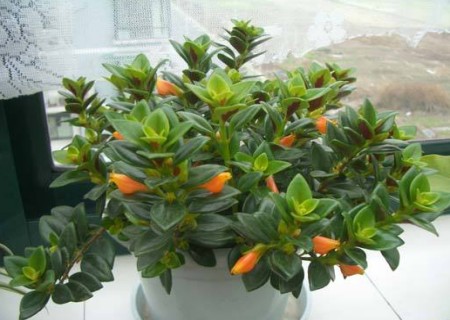
The goldfish plant, also known as the goldfish flower, has unique and lovely blooms that resemble goldfish, and it is a common indoor potted plant. It is a popular flowering plant for home growing; it is not difficult to grow, but it needs daily care to become a beautiful potted goldfish plant. So what are the growing techniques for the goldfish plant? And what precautions should be taken?
The goldfish plant is mostly grown in hanging baskets, though ordinary pots can also be used. It is generally best to place it in a sunny spot, but provide some shade when the midday sun is too strong, and simply keep the soil surface slightly moist. The specific growing methods are as follows:
Soil:
The goldfish plant is suited to growing in a greenhouse, and for planting it is best to use a substrate with good drainage and aeration for the roots. To prevent water leakage when watering, you can use a round, attractive flower pot, cover the bottom of the pot with coarse particles and stones, and then add a small amount of mixed potting soil. For potted goldfish plants, the substrate should be rich in humus, loose, and well-draining; a common mix is equal parts peat soil, perlite, and vermiculite, and the soil should be slightly acidic to promote growth.
Propagation:
The goldfish plant is propagated by cuttings. In spring and autumn, cut branches about 10 cm long with 3 to 4 nodes as cuttings, insert them into a cutting bed with coarse sand as the substrate, keep humidity high, and maintain a temperature of around 20°C; they will root and survive easily.
Light:
The goldfish plant is sensitive to light. If exposed to direct sunlight in summer and autumn, the leaves will turn yellow and withered, and the whole plant may even die. In winter, since the sunlight is not strong, the plant can be allowed to receive some direct sunlight.
Temperature:
The optimal growing temperature for the goldfish plant is 15—25°C. In Guangdong, the temperatures in spring, summer, and autumn are all suitable for its growth, but if the winter temperature drops below 5—7°C, attention must be paid to cold protection and insulation.
Planting:
To improve the survival rate, pay attention to the position of the flowering branches when planting, as this can enhance the ornamental value of the goldfish plant. Choose fresh branches with plump roots, plant them evenly in the potting soil, and fill the pot with soil to complete planting. A suitable fertilizer can be added to the potting soil, and as the branches grow they will hang down around the flower pot. When the potted plant is in full bloom, each plant will produce more than a dozen goldfish flowers. After new branches grow, they can be pinched back, which makes the plant shape more symmetrical and the growth more attractive.
Watering:
The goldfish plant has high water requirements. In spring, summer, and autumn, water it more and often spray the surrounding ground with clean water; never splash water on the leaves. In the hot summer season, it is best to place the flower pot on a shallow tray filled with water. These measures can all prevent leaf drop caused by dry air. Before the goldfish flower blooms in winter and spring, it should also be watered a little more, which helps the flowers open fully and keeps the colors bright.
Fertilizing:
During the growing period, apply a dilute organic fertilizer solution once every 1-2 weeks to promote vigorous growth; before flowering, increase phosphorus fertilizer to encourage more buds and blooms and enhance the ornamental effect; do not fertilize during flowering, and after the flowers fade, prune and reshape the plant and apply more nitrogen-containing fertilizer. Do not fertilize the goldfish plant during flowering, and after the flowers fade, prune and reshape the plant and apply more nitrogen-containing fertilizer.
Precautions:
1. The goldfish plant is sensitive to light and cannot be exposed to direct sunlight; in winter, when the sunlight is not strong, it can receive appropriate exposure.
2. When the goldfish plant lacks water, it can also cause leaf drop or turn the leaves brown, affecting its appearance, so water it promptly.
3. When the climate is dry in summer and autumn, spray water to increase the air humidity around the plant; otherwise, excessive dryness may cause the leaf tips or edges to become scorched.
4. Do not fertilize the goldfish plant during its flowering period; after the flowers fade, prune and reshape the plant.